How to Choose Tamper-Evident Food Packaging for Delivery: A Practical Test Plan
For food delivery, no single tamper-evident format is automatically the right choice. Self-adhesive seals, handle-seal bags, shrink bands, and integrated locking containers solve different parts of the journey. The most dependable approach is to match the seal to the food, packing workflow, and delivery conditions, then validate it with real ride and opening tests. A visible, intact closure can help communicate that an order has not been opened after packing; it does not replace sound food-handling procedures or applicable local requirements.
2026-08-16 - 7 min read
Summary
For food delivery, no single tamper-evident format is automatically the right choice. Self-adhesive seals, handle-seal bags, shrink bands, and integrated locking containers solve different parts of the journey. The most dependable approach is to match the seal to the food, packing workflow, and delivery conditions, then validate it with real ride and opening tests. A visible, intact closure can help communicate that an order has not been opened after packing; it does not replace sound food-handling procedures or applicable local requirements.
Why the Delivery Journey Changes Packaging Decisions
A delivery order can be tilted, stacked, transferred between hands, and exposed to vibration before it reaches the customer. Packaging therefore has two separate jobs:
- Contain the meal: keep lids, sauces, and components together during normal handling.
- Show opening evidence: make an attempted or necessary opening apparent to the recipient.
These jobs are related but not identical. A closed bag may show whether the outer order was opened, while the containers inside may still need their own closure. Likewise, a strong container lid may limit spills without clearly showing whether it was opened and reclosed.
The customer experience matters too. A seal should be easy to identify and intuitive to open. If opening requires excessive force, leaves loose fragments near food, or makes the order feel confusing, it can create a poor final impression even when transport went well.
Compare Four Tamper-Evident Packaging Approaches
Self-Adhesive Tamper-Evident Seals
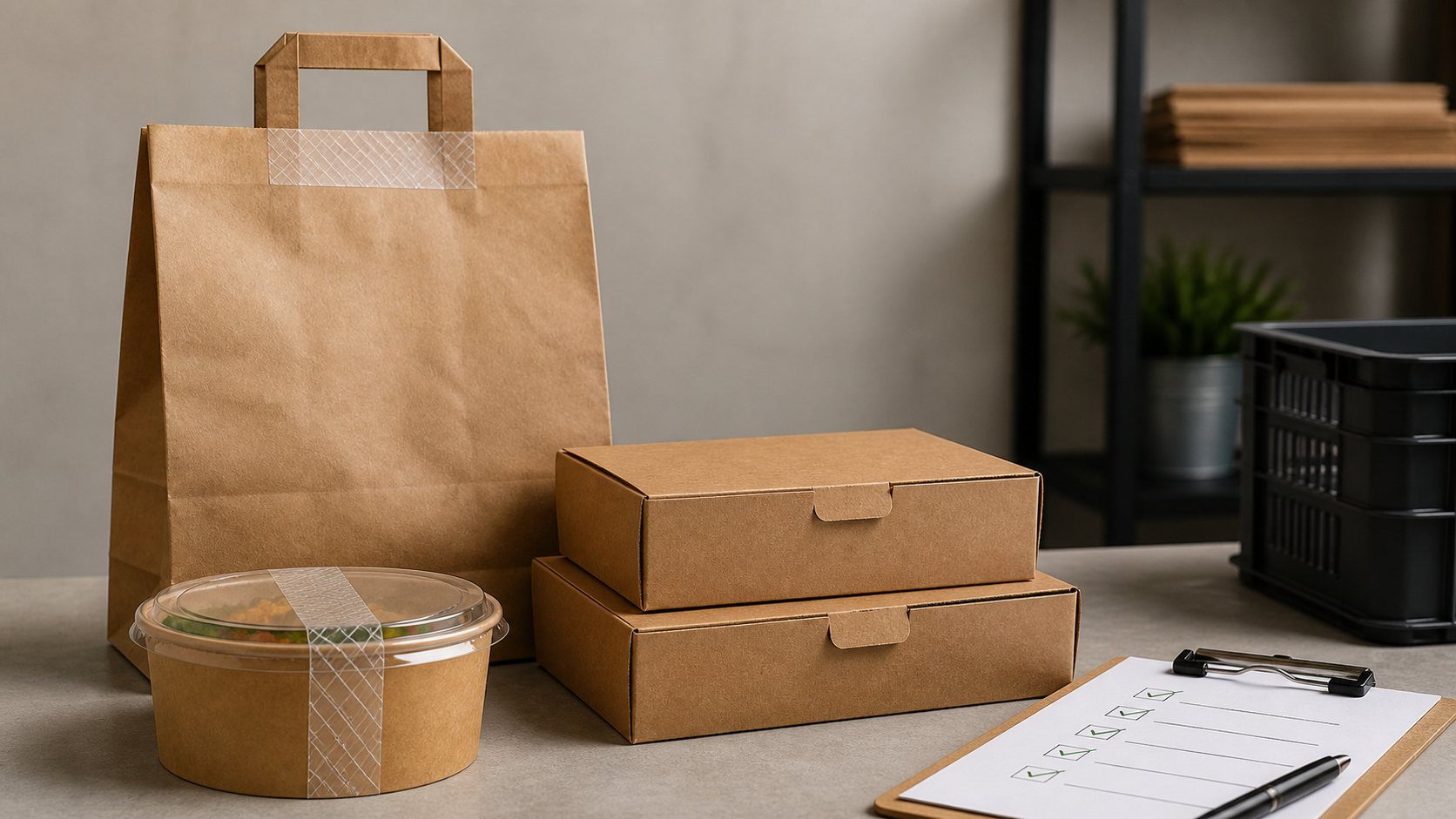
Self-adhesive seals bridge a lid seam, carton flap, drink lid, or bag closure. They are a flexible option when a restaurant already uses several container styles.
Where they can fit: boxes, bowls with compatible lids, clamshells, beverage carriers, and paper bags.
What to evaluate:
- Does the seal bond reliably to the actual packaging surface, including cold, humid, or slightly greasy conditions?
- Does it span the real opening path rather than an area that can be bypassed?
- Is opening visibly evident after a realistic attempt to peel, cut, or lift the closure?
- Can staff place it consistently and quickly during a rush?
A label is only as useful as its placement. Build a short packing instruction that specifies the location, pressing method, and the point at which the order is considered sealed.
Handle-Seal Bags for Multi-Item Orders
A bag with an adhesive closure across or near its handles can create a clear final handoff point for a multi-item order. It is especially useful as an outer layer after individual food containers have been closed.
Where they can fit: orders containing several boxes, drinks, side dishes, or separate hot and cold components.
What to evaluate:
- Is the bag size appropriate so that the contents do not overload or stress the closure?
- Do heavy items sit flat, with liquids upright and supported?
- Does the closure remain visibly intact after the bag is lifted by its handles and carried over uneven surfaces?
- Can the customer open it without pulling the handles apart or disturbing the food inside?
An outer bag closure should not be treated as evidence about every inner container. For spill-prone or high-value individual items, consider whether a container-level measure is also needed.
Shrink Bands Around Lids and Containers
Shrink bands encircle the lid-to-container junction and are opened by tearing or removing the band. This format can provide a highly visible circumferential layer when it is correctly sized and applied.
Where they can fit: round jars, tubs, deli-style containers, bottles, and other packages with a stable, compatible rim.
What to evaluate:
- Is the band compatible with the container geometry and the product's temperature at packing?
- Does the application method fit the available workspace and service speed?
- Is there a defined, safe process for any heat equipment used during application?
- Does the tear feature make the opening action obvious and manageable for the customer?
Because shrink application adds a step, time a normal packing run rather than judging the option only at a quiet workstation. The right choice must be repeatable at peak volume.
Integrated Locking Containers
Integrated locking containers incorporate a closure feature into the container or lid, sometimes with a breakable tab or other one-time opening indication. They can simplify the packing sequence because the primary closure and opening cue are part of the same pack.
Where they can fit: meals, salads, prepared foods, and other items for which a compatible container format is available.
What to evaluate:
- Does the lock remain engaged after simulated bumps, stacking, and side-to-side movement?
- Does the opening indication remain clear after condensation, refrigeration, or hot holding, as relevant to the menu?
- Can staff confirm closure with a simple visual or tactile check?
- Can customers open the pack cleanly without needing tools or risking a spill?
Do not assume that an integrated feature makes a container suitable for every menu item. Test it with the actual fill level, sauce volume, temperature, and delivery duration that the operation uses.
A Decision Matrix for Rough Rides and Easy Unboxing
Rather than choosing a universal winner, score each candidate against the conditions that matter most to your operation.
| Decision factor | Questions to ask |
|---|---|
| Ride stability | Does the closed package remain secure after vibration, tilting, stacking, and handle carrying? |
| Opening evidence | Is the intended opening path covered, and is a disturbed closure easy to notice? |
| Leak and moisture behavior | Does condensation, sauce, or temperature affect the closure or package? |
| Packing speed | Can a trained team member apply and inspect the solution during peak service? |
| Customer opening | Can the recipient recognize the seal and open it without unnecessary force or mess? |
| Menu fit | Is the format appropriate for the actual container shape, fill weight, and food type? |
| Local acceptance | Does the complete packaging and handling process meet the requirements that apply to the business? |
A practical pattern is often layered: use a properly closed primary container for the food, then use an outer bag seal for the completed order. Whether that pattern is appropriate should be verified with the specific menu and workflow.
How to Validate a Tamper-Evident Packaging System
1. Map the Real Packing and Handoff Process
Write down who closes each container, who applies any seal, where the order waits, and who hands it to the courier. Define the exact point at which staff should inspect the final closure. Clear ownership prevents a seal from becoming an inconsistent last-minute step.
2. Run a Representative Transport Test
Pack typical orders at realistic fill levels. Include hot, cold, liquid, and multi-item orders where applicable. Move them through a controlled simulation of the expected journey: lifting by the bag, modest tilting, stacking, and vibration. Inspect the food, closures, and visible opening indicators afterward.
Repeat the test for the longest likely route and the most challenging order configuration—not just the easiest one.
3. Test Customer Opening, Not Only Security
Ask a small group of users to receive and open the package without coaching. Note whether they can see the seal, understand what an intact condition looks like, and open the order without spilling or damaging the meal. Their feedback can reveal a problem that a packing-team review misses.
4. Confirm Requirements with the Right Authority
A tamper-evident feature alone is not a declaration of sanitary approval or legal compliance. Requirements can depend on the jurisdiction, food type, packaging material, handling process, and delivery model. Review the applicable rules and consult the relevant local food-safety or health authority, qualified compliance adviser, or both before making compliance claims or changing procedures.
Keep records of the packaging specification, test observations, staff instructions, and any guidance received. This makes future reviews and retraining more orderly.
Make the Seal Part of a Reliable Operating Routine
Once a format has passed your tests, make application simple enough to repeat. Place materials at the packing station, use a brief visual checklist, and train staff on both the method and the reason for it. Include checks for damaged containers, overfilled items, and a seal that does not fully cover the intended opening path.
Customer-facing wording should be accurate and modest. For example, instructions can explain that the order is sealed at packing and ask the recipient to contact the business if the closure appears disturbed. Avoid language that promises a level of safety, regulatory status, or delivery outcome that the operation has not verified.
Choose by Evidence, Then Improve by Observation
The best tamper-evident packaging choice is the one that your operation can apply correctly, that performs in your own delivery conditions, and that customers can open with confidence. Use test results—not a generic ranking—to decide whether self-adhesive seals, handle-seal bags, shrink bands, integrated locking containers, or a combination should be used for each order type.
If you are comparing packaging categories or planning a branded packaging brief, TakeawayPack can be a starting point for reviewing catalog categories, submitting an RFQ, and discussing customization needs.