How to Compare Factory-Direct and Wholesale Packaging Costs
A low factory quote is not automatically the lowest-cost way to buy food packaging. A fair comparison puts factory-direct, cash-and-carry, and online-wholesale options on the same delivered basis: the identical specification, the same quantity, and every charge needed to get the goods to the operating location. For food-truck operators, this is the practical way to find the real per-unit cost before committing cash or storage space.
2026-08-27 - 5 min read
Compare Packaging Costs on a Delivered Basis
A low factory quote is not automatically the lowest-cost way to buy food packaging. A fair comparison puts factory-direct, cash-and-carry, and online-wholesale options on the same delivered basis: the identical specification, the same quantity, and every charge needed to get the goods to the operating location. For food-truck operators, this is the practical way to find the real per-unit cost before committing cash or storage space.
Start With the Same Specification
Compare like with like before comparing prices. Record the material, size, construction, print requirements, carton pack, and order quantity for each option. A factory quote, a warehouse shelf price, and an online listing can look comparable while covering different pack counts, delivery terms, or product details.
Use the same destination and required date for every option. A cash-and-carry price may exclude the time and vehicle cost of collection; an online price may add freight at checkout; a factory quote may be only the production component. If one route is priced for a different item or delivery basis, it is not yet a valid comparison.
Build the Landed-Cost Total
Landed cost is the cost of getting packaging to the buyer’s door. For a factory-direct order, start with the manufacturing price and add freight, customs and duties, cargo insurance, and local delivery. For local pickup and online wholesale, include the comparable collection or delivery charges that actually apply to that route.
> **Landed cost = product cost + freight + customs and duties + insurance + local transportation**
Keep each cost line visible. Customs duties can depend on the packaging material’s HS classification. Clearance or brokerage, terminal handling, and final-mile transport may be separate charges. Do not treat an unquoted cost as zero: label it as pending until a current quote or invoice confirms it.
Check the Shipping Mode
For an imported factory order, shipping mode can change the result sharply. Less than Container Load (LCL) shares a container with other shippers. It can suit a smaller shipment, but consolidation, deconsolidation, and extra warehouse handling can raise the cost per unit.
Full Container Load (FCL) is charged as a container move. It can avoid the LCL handling steps, so an order that uses much of a container can have a lower delivered cost per unit. That does not make a larger order automatically better: the quantity must still fit realistic demand, available storage, and available cash.
Put Volume Savings in Context
Factory production can have fixed setup work, such as printing preparation, that is spread across more units as the order grows. This can lower the manufacturing cost per box. However, compare that saving against the full delivered total and the operational burden of holding more inventory.
For a mobile food business, the lowest unit figure is useful only if the stock can be consumed before a menu, branding, or demand change makes it difficult to use. Include the practical cost of carrying a large order in the decision, even when the factory price looks attractive.
Use a Route-by-Route Sheet
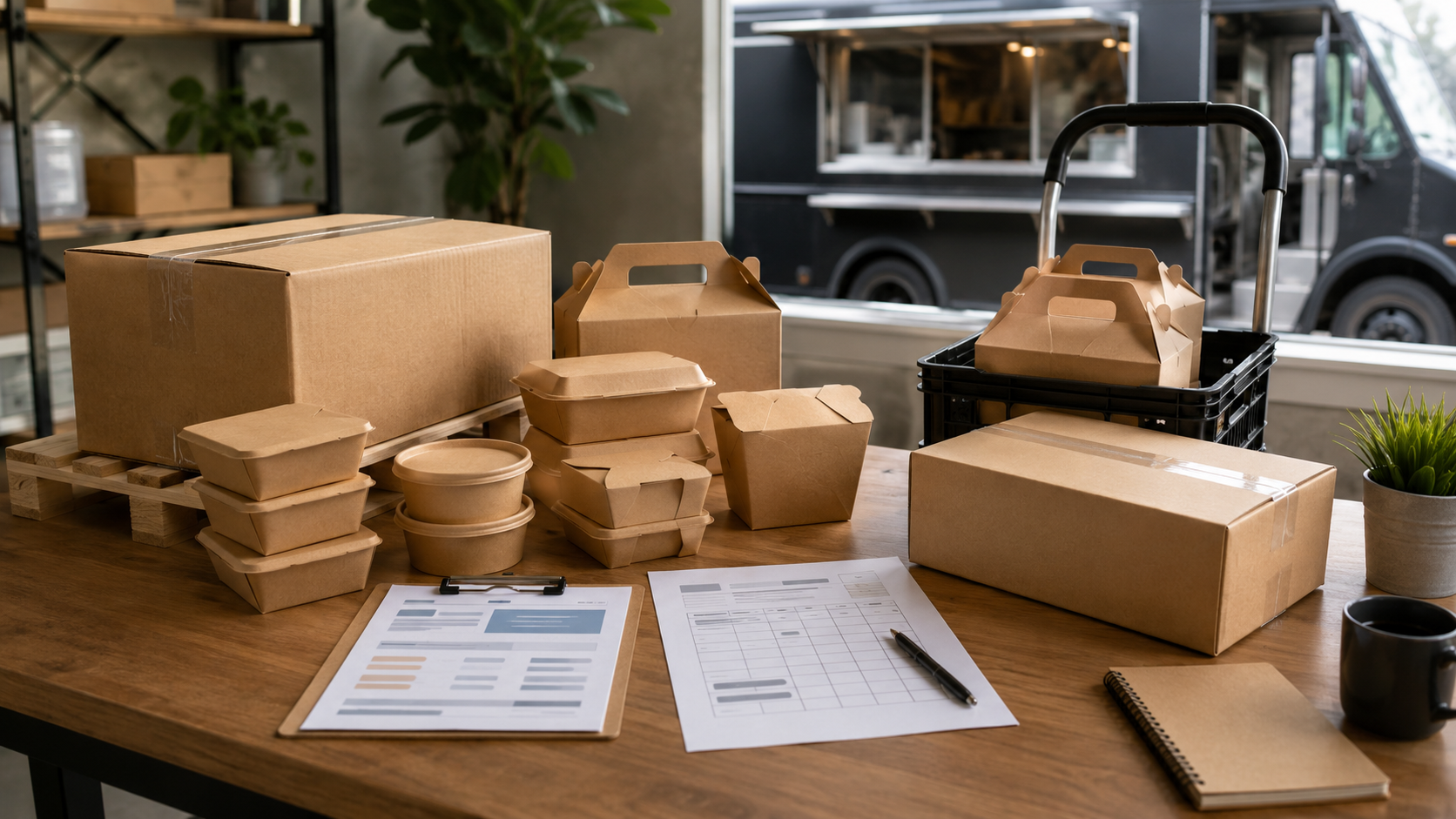
Create one line for each route—factory-direct, local cash-and-carry, and online wholesale—and record:
- the exact packaging specification and pack count;
- product price and order quantity;
- freight, collection, delivery, customs, insurance, and handling charges;
- the delivery point and expected arrival date; and
- whether every cost is confirmed, estimated, or pending.
Then divide each confirmed route total by the units actually covered by that route. This makes the comparison transparent and prevents a product-only factory quote from being compared with a delivered local price.
Make the Decision
Choose the route that works for the required quantity, timing, cash position, and storage capacity—not just the lowest headline quote. Ask for written freight and destination-charge details before approving an imported order, and update the sheet when quantities or transport assumptions change.
For packaging options tailored to your menu, quantity, and delivery location, start with a practical quote conversation at takeawaypack.com.