How to Select the Right Lid for Every Takeout Container Type
The right lid is not a universal item that can be chosen by appearance, material name, or a rough measurement. It is a matched part of a specific food container system. Start with the food, the exact base, the filling process, and the delivery route; then confirm the closure with a filled-package tr…
2026-09-13 - 3 min read
Summary
The right lid is not a universal item that can be chosen by appearance, material name, or a rough measurement. It is a matched part of a specific food container system. Start with the food, the exact base, the filling process, and the delivery route; then confirm the closure with a filled-package trial before standardizing it.
Estimated reading time: 3 minutes
What is the short answer?
Choose a lid only after you have identified the exact container it is designed to close. A lid that looks close enough can still sit unevenly, release under side pressure, interfere with stacking, or trap the wrong amount of moisture for the food. The useful purchasing unit is therefore a base-and-lid pair, not a loose pile of lids.
That approach is especially important when a kitchen has inherited mixed stock. Start by separating containers by their actual rim profile, footprint, capacity, and intended closure. Keep each candidate lid with the container it was supplied for. If the source of a lid is unknown, do not treat it as interchangeable simply because its diameter or outline appears similar.
Why do containers and lids become mismatched?
Rim geometry is usually the hidden variable. Two rectangular containers can have similar outside dimensions while using different rim heights, corner shapes, locking points, or tolerance ranges. Round containers can also differ in the shape and depth of the rim. A lid may rest on the edge without creating a dependable closure.
The packing process can create a second mismatch. A lid that closes easily on an empty container may behave differently after hot food, sauce, garnish, or a high fill level reaches the rim area. A hurried close, an uneven surface, or a bag that presses on one corner can expose a weak pairing. That is why an empty-bench check is not enough.
What do common lid types tell you?
Terms such as snap-on, press-on, hinged, click-lock, and heat-seal describe a closure approach. They do not prove compatibility on their own.
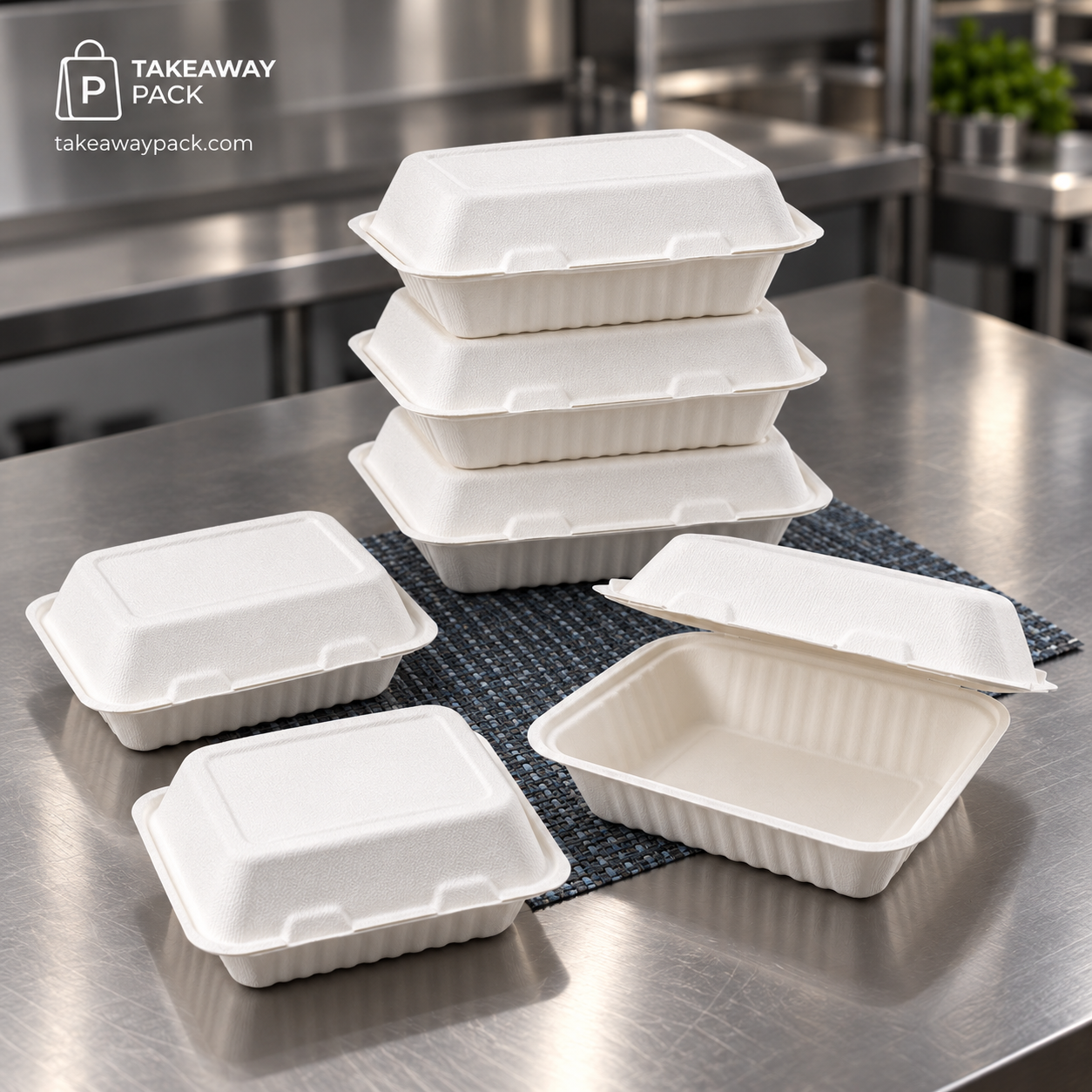
A rim-fit or snap-on lid generally relies on engagement around the container edge. Check that it seats evenly at every corner or around the entire rim. A press-on cover may be quick to apply, but it still needs the base it was designed for. Hinged or click-lock formats introduce tabs or a connected lid, so the open-and-close motion must work with the available counter space and staff routine. Heat-seal film uses a different system altogether: the film, sealing surface, machine settings, and container material must be specified together.
The practical question is not “Which lid type is best?” Ask instead: “Which documented closure system matches this container and this menu item?”
How should the food influence the choice?
Start with the food's behavior after packing. A high-liquid dish needs headspace and a closure that remains properly seated during handling. A crisp hot item may need a package design that manages steam; do not assume that a tightly closed format preserves every texture. Cold dishes, salads, and desserts may prioritize presentation, but visibility does not replace a verified fit.
Record the portion size, normal fill level, temperature at packing, sauce quantity, garnish height, and expected hold time. Then note the route conditions: stacking, courier movement, bag size, and the chance that another order will press on the lid. These details make it easier to compare candidate pairs fairly.
Can one lid be standardized across the operation?
Sometimes, but only within a deliberately limited system. Standardization works when several menu items use the same verified base, the same filling practice, and compatible route conditions. It does not mean one lid should be forced onto every bowl, tray, or box in the kitchen.
A useful target is a small, documented family of matched pairs. For each pair, label the base, lid, menu use, fill limit, and any handling instruction. Keep incompatible lids out of the same storage slot. This reduces the daily guesswork that creates mismatches while keeping the range manageable.
What should a real-world trial include?
Test a normal finished order, not an empty container. Fill it as staff would during service, close it at normal speed, and inspect the rim from every side. Place it in the intended bag with the other items that normally travel beside it. Then check the package after the expected hold and delivery period.
Look for an uneven lid, visible leakage, food pushed into the closure area, condensation that affects the meal, loss of lid engagement, and problems when containers are stacked. Repeat the trial with the food and route conditions that create the greatest risk. A pairing should be added to the standard set only after the business has reviewed its own results.
What should you ask a supplier before ordering?
Ask for the exact base-and-lid references, dimensions, intended pairing, material information, sample availability, and any relevant documentation for the planned food and use conditions. Give the supplier a clear brief: the menu item, portion, fill temperature, route, estimated quantity, and destination. That is more useful than asking for a “universal lid.”
Build a matched container-and-lid shortlist
A tidy lid program is built from verified pairs and repeatable tests, not from visual resemblance. If you are reviewing container-and-lid options for a menu or delivery route, visit Takeawaypack to discuss the required format, food application, and sample-based evaluation with the supplier network.