
How to Source Bubble Tea and Fruit Tea Delivery Packaging That Stays Upright
For milk tea, fruit tea, and 1 L sharing drinks, buy a matched delivery system, not separate cups, film, trays, and bags. Start with the heaviest, tallest drink you will sell. Then lock the cup rim and base dimensions, validate a compatible sealing-film specification on your own machine, and choose carriers and bags around the filled cup—not its advertised volume. Approve only the combinations that pass a repeatable pickup and transport test.
2026-08-30 - 6 min read
Summary
For milk tea, fruit tea, and 1 L sharing drinks, buy a matched delivery system, not separate cups, film, trays, and bags. Start with the heaviest, tallest drink you will sell. Then lock the cup rim and base dimensions, validate a compatible sealing-film specification on your own machine, and choose carriers and bags around the filled cup—not its advertised volume. Approve only the combinations that pass a repeatable pickup and transport test.
Start With One Delivery Specification Sheet
A purchase order called “1 L bubble tea cup” leaves too much open to interpretation. Build a one-page specification for every cup family before requesting samples.
Record:
- nominal fill volume and the practical fill line;
- cup material and wall construction;
- top rim outside diameter, rim profile, base diameter, and overall height;
- weight when filled with the heaviest recipe, ice, and toppings;
- sealing-film material, roll width, core size, and approved sealer settings;
- carrier cavity diameter and depth;
- bag internal width, gusset, height, and handle clearance.
Use actual measurements from samples. A common rim diameter across sizes can simplify sealing operations, but do not force a large cup into a smaller carrier merely because the rims match.
Choose Cup Shapes for Stability, Not Just Shelf Appeal
Separate the standard menu from the sharing size
Keep routine milk tea and fruit tea sizes in a compact cup family where practical. A large sharing drink should be treated as its own transport class. Its greater fill weight and height can make a conventional four-cup arrangement unsuitable even when the cavity appears wide enough.
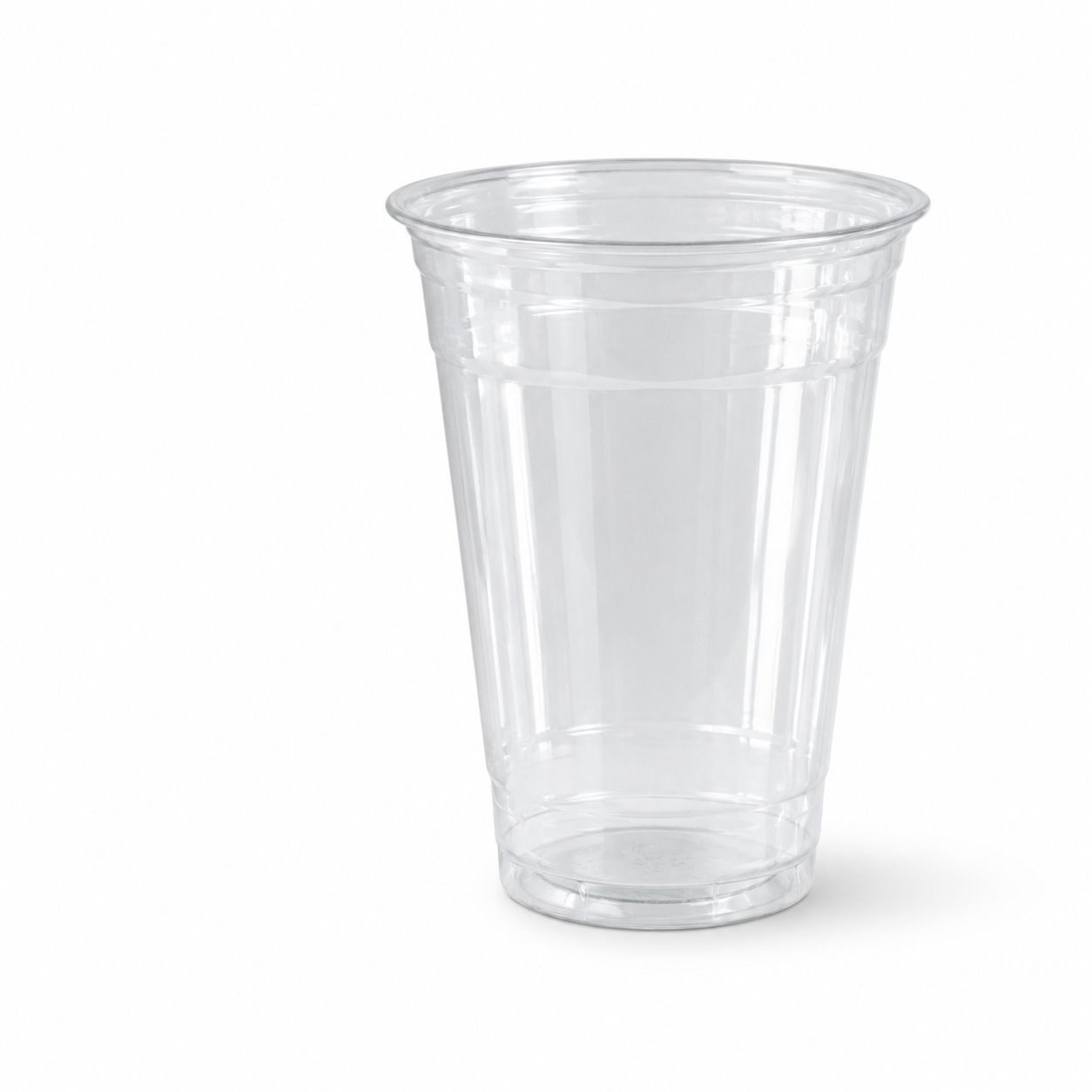
For each candidate cup, place it in the intended carrier fully filled, then check three points: the base must sit down in the cavity, the cup should not rock, and the carrier must support the cup without pushing against the sealed rim.
Specify the geometry suppliers must confirm
Ask for a dimensioned drawing or sample measurement record. Volume alone does not establish compatibility. The key comparison is cup base diameter versus cavity geometry, followed by cup height versus bag clearance. For fresh fruit tea, include the normal amount of fruit, ice, and topping in the sample; an attractive empty cup can behave very differently once packed for sale.
Buy Sealing Film as a Cup-and-Machine Match
Match material, rim, and equipment
The cup’s top diameter and material determine the film specification. Film families are not interchangeable: material compatibility affects whether a seal forms, while the cup rim and sealer setup affect whether that seal is even and continuous.
Ask the supplier to state, in writing:
- compatible cup material and rim diameter;
- recommended sealing-temperature range and dwell setting;
- roll width, roll length, core size, and winding direction;
- compatible sealer model or adapter requirement;
- whether the seal is intended to be peelable or permanent.
Do not treat a stated temperature as an automatic production setting. Run it as a starting point on your own machine, with your own filled cup and actual rim condition.
Test the seal under realistic handling
A film can look sealed at the counter yet fail after squeezing, condensation, or lateral motion. Inspect the seal all the way around the rim. Reject samples that show wrinkles crossing the seal path, lifted edges, leaks after inversion, or tearing when the cup is handled by the body.
Keep rims clean and dry before sealing. Establish an acceptable fill line so liquid, fruit pieces, and toppings do not contaminate the sealing surface or press continuously against the film.
Select Two-Cup and Four-Cup Carriers by Fit
Two-cup carrier for large sharing drinks
For tall or heavy cups, source a dedicated two-cup carrier or compartmented carry bag. The carrier should hold both bases securely, remain flat when loaded, and leave enough clearance that the carrier or bag does not crush the film. A lower, more contained arrangement generally gives the pack less opportunity to sway.
Four-cup carrier for regular drinks
Use a four-cup format only after testing it with the exact cup family. Look for defined cup cavities, meaningful base support, and enough separation that adjacent cups do not rub rims during pickup. If a larger cup sits high, wobbles, or causes the carrier to bow, change the carrier or reduce the order to two-cup packs rather than relying on a larger outer bag.
A tray that is adequate for counter carry is not automatically adequate for delivery. Delivery packaging must manage changes in direction, braking, vibration, and a courier’s grab at pickup.
Make the Outer Bag a Restraint Layer
The bag should contain the carrier without leaving room for it to slide or tip. Specify the bag around the loaded carrier’s outside dimensions, including sealed-cup height and handle clearance.
For one drink, use a bag that limits lateral movement without touching the sealed top. For two or four drinks, load the carrier flat first, then select a bag that keeps it level. Avoid compressing a sealed cup against the bag wall or stacking other products on the drink pack.
If food travels with drinks, define a packing rule: drinks stay upright and separated from hot or heavy items. Do not ask the bag alone to stabilize loose cups.
Run a Delivery-Readiness Test Before Approval
Build a simple pass/fail protocol
Test the final cup, film, carrier, and bag as one unit. Use the heaviest drink recipe and the maximum order size you plan to offer.
- Seal check: Fill to the normal line, seal, and inspect the full circumference.
- Pickup check: Lift the packed order from counter height as a courier would. Confirm the handhold does not squeeze the film or tilt the carrier.
- Tilt check: Tilt the complete pack gently in each direction and return it upright. Look for leaks, carrier deformation, and cup movement.
- Motion check: Carry the pack over a short route with starts, stops, turns, and a rough-surface segment. Keep the test controlled and document the route.
- Post-test check: Inspect the film edge, cup wall, carrier cavities, bag handles, and the outside of every cup. Record any leak, rim damage, crush mark, or movement that would concern a customer.
Set clear acceptance criteria before the test: no visible leak, no open or damaged seal, no carrier failure, no cup-to-cup collision, and no bag contact that deforms the film. Repeat after changing a cup supplier, film, sealer setting, carrier design, or bag size.
Purchase in Linked Sets, Then Control Change
Issue the first order as linked components: cup SKU, film SKU, carrier SKU, bag SKU, and approved sealer settings. Keep a retained sample or dimension sheet at the packing station. A substitution in any one component can undo the fit of the whole system.
For a practical starting conversation about drink packaging options, visit https://takeawaypack.com