How to Test Leak-Proof Takeaway Containers for Soupy Delivery Meals
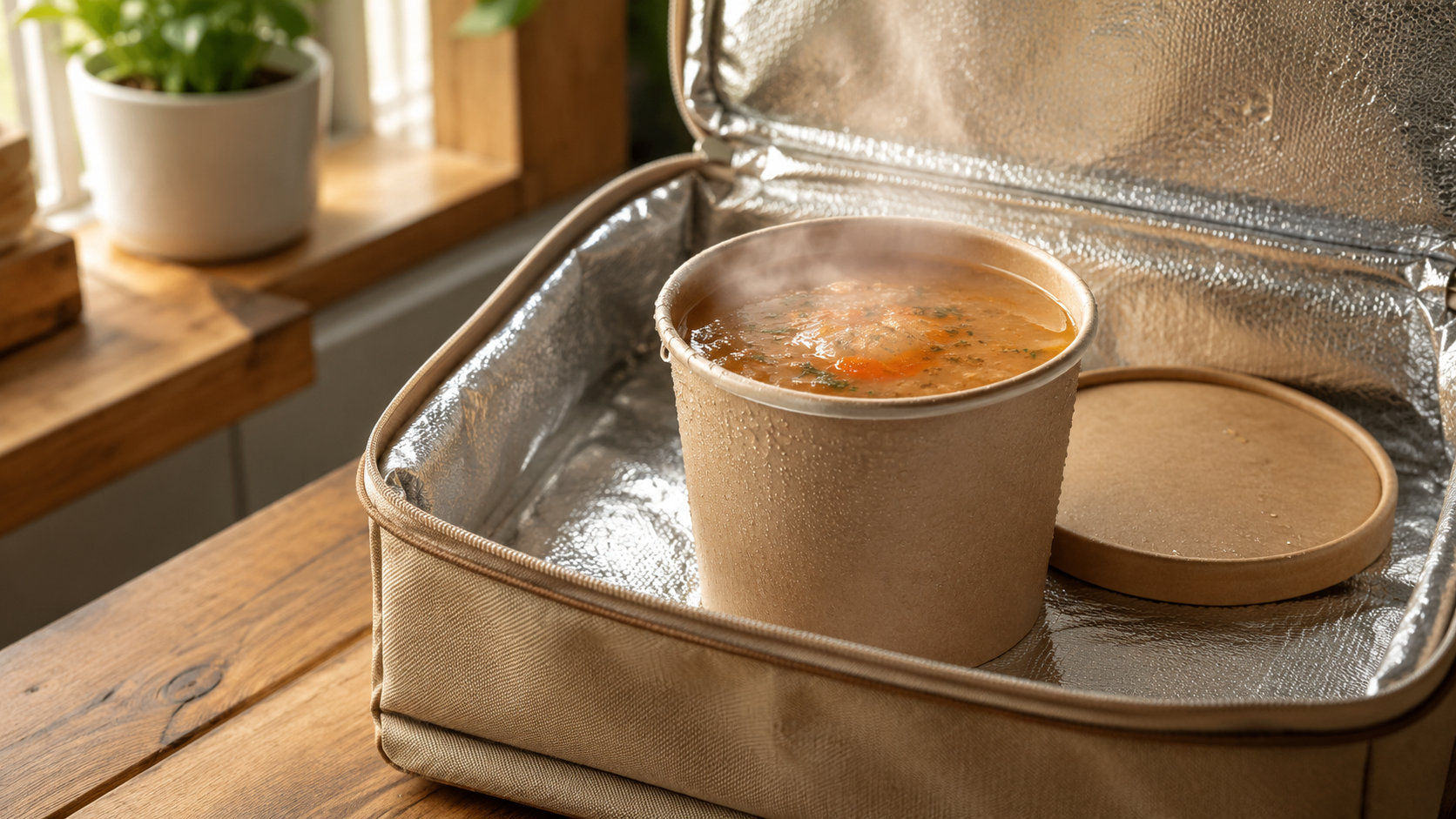
A container that looks secure on a prep table can still leak when a rider brakes, a bag tips, or stacked meals stay under load. For soups, curries, saucy bowls, and oily dishes, test the container-and-lid combination in the same orientation, fill level, temperature, and delivery conditions you expect to use. A practical protocol checks seal integrity, rim performance, sidewall stiffness, lid retention, and repeatability across samples before a larger order.
2026-08-11 - 5 min read
**Summary:** A container that looks secure on a prep table can still leak when a rider brakes, a bag tips, or stacked meals stay under load. For soups, curries, saucy bowls, and oily dishes, test the container-and-lid combination in the same orientation, fill level, temperature, and delivery conditions you expect to use. A practical protocol checks seal integrity, rim performance, sidewall stiffness, lid retention, and repeatability across samples before a larger order.
Why a static leak check is not enough
Most delivery failures are not caused by a single dramatic defect. Liquid can move toward the rim during turns and braking. A lid may remain attached but allow seepage at one corner. Heat, oil, a high fill line, and the weight of stacked containers can all change how the pack behaves.
That is why a useful evaluation treats the container and lid as one system. Test the actual combination you plan to use, rather than testing a container body or lid in isolation. Include the food profile that matters: a thin broth behaves differently from a thick sauce, and an oily dish can reveal a different sealing weakness.
Start by defining the delivery condition
Before comparing samples, write down a simple test brief. It should identify the dish, approximate serving volume, expected holding time, whether the food is hot, and how the order will be packed and carried.
For example, a cloud kitchen delivering noodle soup may need to examine a filled bowl in an upright bag, a brief tilt-and-return movement, and a stacked condition that reflects how orders are actually dispatched. The goal is not to create a universal pass/fail claim; it is to decide whether a specific pack is suitable for that menu and route.
A practical leak-proof container test sequence
1. Check the fill line and rim clearance
Fill each sample to the intended service level, not just to a convenient laboratory level. Leave the same headspace your team can realistically achieve during busy service. Inspect the rim and lid seating before movement.
Then check whether the lid closes evenly around the full perimeter. A lid that appears closed but sits unevenly at one point can become the first place to inspect after transport simulation.
2. Simulate normal handling and rider movement
Move the packed container through controlled, repeatable actions that reflect real dispatch: lift it, set it down, tilt it carefully, return it upright, and carry it in the intended bag. Record any visible seepage on the lid edge, outside wall, or bag.
Keep the method the same for every sample. A repeatable test makes it easier to compare two structures or two lid options without mistaking inconsistent handling for product performance.
3. Test stacking and sustained load
Delivery packs are often stacked in a bag or held under the weight of other items. Place the filled container in the expected stack arrangement for an appropriate period, then inspect the sidewall, base, lid engagement, and any gradual deformation.
Look for more than an immediate collapse. A container can remain upright while a lid fit loosens or the wall slowly flexes under load. Note the food temperature and stack configuration alongside the result, because both affect what the observation means.
4. Inspect for oil, steam, and temperature effects
Repeat the comparison with the actual dish or a representative liquid and oil profile where possible. Steam and condensation may influence the inside surface and lid area, while hot or oily foods may reveal issues not visible with cool water alone.
Do not assume that a result from one menu item applies to every dish. A short list of representative high-risk meals—such as soup, curry, oily noodles, or a sauce-heavy entrée—usually gives a more useful purchasing decision than one generic test.
What to record from each sample
A simple record makes review faster. For each container-and-lid pair, capture the product description, serving volume, fill level, food condition, test steps, stack arrangement, time under load, and the observed outcome. Photos of the rim, lid, and bag after each test can help the kitchen and supplier discuss the same failure point.
When comparing options, separate observations from conclusions. “Moisture appeared at the front-left rim after a tilt-and-return cycle” is more actionable than “poor quality.” It tells the team what to reproduce, whether to change the lid, reduce the fill level, revise the bag orientation, or test another structure.
Ask for samples before committing to a larger order
For a menu with soups or generous sauces, request samples of the exact container and lid combination under consideration. Explain the dish type, approximate capacity, heat condition, expected delivery route, and any stacking requirement. This gives the supplier a clearer basis for discussing structure, capacity, lids, and carton packing.
TakeawayPack can discuss structure, coatings, capacity, printing, lid matching, and carton packing during an inquiry. Its process can also include samples, drawings or print-file alignment, and packaging/export handoff communication. For custom printing, TakeawayPack prepares a digital proof from the customer’s files and proceeds only after written approval.
Make the final choice a menu-and-route decision
The best leak-proof takeaway container is not simply the one with the strongest marketing wording. It is the container-and-lid system that performs consistently for your food, fill practice, dispatch method, and delivery route. Keep the successful sample and test notes as the reference for future reorders or menu changes.
If you are sourcing containers for hot, soupy, oily, or sauce-heavy delivery meals, share your product category, material preference, capacity, expected quantity, customization needs, and destination with TakeawayPack. Their RFQ process is designed to collect those details so the packaging discussion can start with the operating conditions that matter.