Kraft Paper vs White Cardboard for Custom Food Packaging: A 2026 Guide for Restaurants with Mixed Menus
If your restaurant menu runs the gamut from crispy fried chicken to chilled garden salads, choosing the right packaging paper is not just about looks — it is about functionality.
2026-09-07 - 10 min read
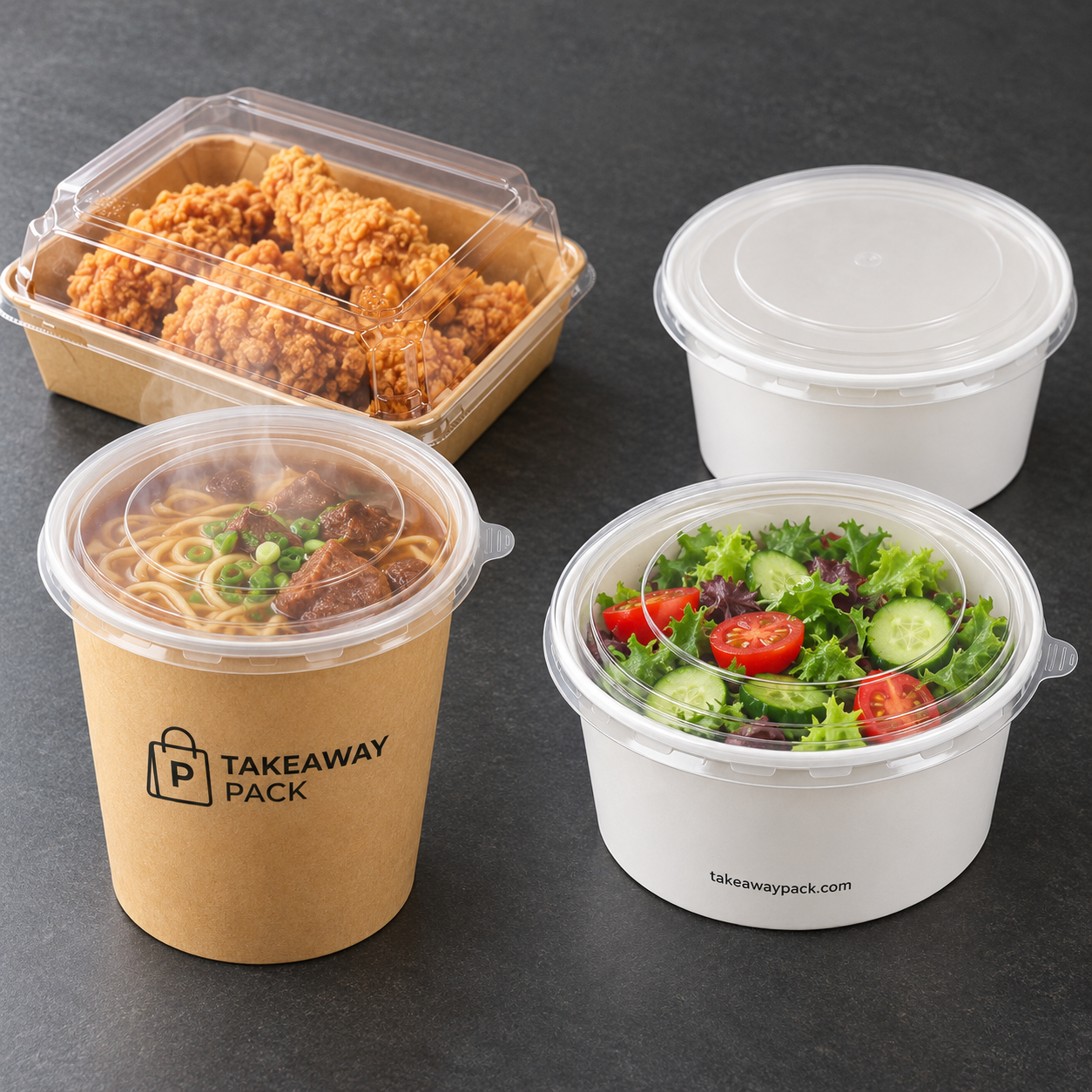
If your restaurant menu runs the gamut from crispy fried chicken to chilled garden salads, choosing the right packaging paper is not just about looks — it is about functionality. Upgrading from plain, unprinted boxes to custom-branded packaging is a smart move for brand recognition, but the paper substrate you pick determines whether that branded box arrives intact or collapsed under grease and condensation.
Both kraft paper and white cardboard (often called white paperboard or SBS — solid bleached sulfate) are widely used in food packaging, and both can be printed with custom designs. But they perform very differently when faced with hot oil, steam, and moisture. This guide breaks down the material science, practical trade-offs, and real-world application scenarios so you can match the right paper to each item on your menu — and avoid the common pitfalls that turn a beautiful box into a soggy mess.
What Is Kraft Paper and What Is White Cardboard?
Kraft paper is made using the kraft (sulfate) pulping process, which preserves long cellulose fibers and strips away most of the lignin. The result is a strong, tear-resistant material with a characteristic brown color. Unbleached kraft paper retains roughly 5 percent residual lignin, giving it that natural earthy look. Bleached kraft (white kraft) goes through an additional bleaching stage to remove the lignin, producing a lighter surface while keeping much of kraft's inherent strength.
White cardboard, or solid bleached sulfate (SBS), is made from bleached chemical pulp. It undergoes extensive refining and bleaching to achieve a bright white surface with an exceptionally smooth finish. SBS is the standard material for premium retail packaging — think boutique bakery boxes, high-end deli containers, and gift packaging. It offers superior print reproduction because the smooth, bright surface holds ink cleanly and produces sharp color contrast.
The key difference at the material level: kraft paper prioritizes structural strength and natural aesthetics, while white cardboard prioritizes print quality and a premium look. Neither is inherently better — they are optimized for different jobs.
Are Both Certified for Food Contact?
Yes — both kraft paper and white cardboard can be manufactured to FDA food-contact standards under 21 CFR 176.170, which regulates paper and paperboard in contact with aqueous and fatty foods. The critical word is "can be." Not every paper product on the market is food-grade.
Brown kraft paper sold for craft projects, gift wrap, or shipping is generally not tested or certified for food contact. It may contain recycled fibers, sizing agents, or inks that are not permitted in food packaging. The same applies to white cardboard — not all bright white paperboard is food-safe. Always verify that your supplier provides food-grade certification and, where applicable, FDA compliance documentation.
A reputable supplier like takeawaypack.com will provide clear documentation on the food-contact status of their materials. If you are moving from generic unprinted boxes to custom printed packaging, this is the first question to ask: is the substrate itself certified for food contact, or just the coating?
Heat and Moisture Resistance: Which Holds Up Better?
When packaging hot food — fried items straight out of the fryer, steamed dumplings, hot soups — unbleached kraft paper generally outperforms white cardboard. The denser, more tightly bonded fiber structure of kraft paper gives it greater rigidity under sustained heat and humidity. Industry testing has shown kraft paper containers maintaining structural integrity at temperatures above 85–90°C, while white cardboard can begin to soften and lose shape under similar conditions.
Why does this happen? The bleaching process used to produce white cardboard slightly disrupts the fiber bonds, reducing the material's wet-strength performance. This does not mean white cardboard is unusable for hot food — many applications work perfectly well — but it does mean that for heavy, hot, or moisture-rich items, kraft is the safer structural bet.
For restaurants with mixed menus, a practical rule of thumb: use kraft paper boxes for anything that is hot, fried, or steaming. Reserve white cardboard for cold items, dry goods, and ambient-temperature service where print quality matters more than heat resistance.
Oil and Grease Resistance: The Coating Does the Real Work
This is where many restaurant owners make their most expensive mistake. Neither raw kraft paper nor raw white cardboard is grease-proof on its own. Both require a barrier coating to hold up against oil, sauce, and grease.
The industry has fully transitioned away from PFAS-based grease-proofing agents following the FDA's confirmation in early 2024 that these substances have been phased out of U.S. food packaging. The modern alternatives are water-based coatings, PLA (polylactic acid) linings, and plant-based barrier formulations.
Here is the nuance: white cardboard's smoother, more uniform surface tends to allow slightly more even coating distribution, which can give it a marginal edge in oil resistance consistency. Kraft paper, with its more textured surface, performs very well with water-based coatings and is often preferred for high-volume production because it tolerates a broader range of coating application conditions without performance loss.
What matters most is the KIT rating — the industry-standard oil resistance scale for paper, running from 0 to 12. A KIT rating of 6 or above is generally adequate for fried food packaging. When you order custom-printed boxes from a supplier like takeawaypack.com, ask for the KIT rating of the coated material. If your menu includes fried chicken, onion rings, or saucy dishes, do not accept a KIT rating below 6.
Print Quality and Branding: Where White Cardboard Leads
This is the area where white cardboard has a clear and undeniable advantage. The bright white, smooth surface of SBS produces print results that kraft paper — even bleached white kraft — cannot match. Colors appear more vibrant, contrast is sharper, and fine details reproduce cleanly.
For a restaurant with a mixed menu, this creates a strategic decision. Fried items and hot soups work best in kraft boxes for functional reasons, but those kraft boxes can still carry your branding through flexographic or digital printing. The natural brown background of kraft creates a particular aesthetic — earthy, rustic, eco-conscious — that many fast-casual and food-truck brands lean into deliberately.
White cardboard boxes, on the other hand, give you a clean canvas for full-color, high-definition printing. If your salad bowls, cold deli containers, or bakery boxes need to look premium on a retail counter or delivery photo, white cardboard is the better choice.
Many restaurants solve this by using both: kraft boxes for the hot, greasy items and white cardboard boxes for cold items and premium presentations. The brand consistency comes from the design — logo placement, color palette, typography — not from forcing one material to do everything.
Sustainability: Comparing Environmental Footprints
From an environmental perspective, unbleached kraft paper holds a meaningful advantage. The kraft pulping process retains more of the wood fiber's natural lignin and skips the multi-stage chemical bleaching that white cardboard requires. Bleaching — even with modern elemental chlorine-free methods — adds energy consumption and chemical processing, resulting in a higher carbon footprint.
Industry lifecycle assessments indicate the following approximate ranges:
- Unbleached kraft paper: 1.1–1.4 kg CO₂e per kilogram of material
- Bleached white paperboard: 1.6–1.9 kg CO₂e per kilogram of material
The bleaching process alone increases energy consumption by 22–30 percent depending on the method used.
Both materials are widely recyclable and can be compostable when coated with certified compostable barriers. However, white cardboard often requires optical brighteners and additional coatings to achieve its bright white appearance, which can complicate the composting process. If your own brand is working toward a forestry or compostability certification, or toward supply chain emissions reduction, unbleached kraft paper is the lower-effort path.
On the supply side, select kraft and molded-pulp lines at takeawaypack.com are available with compostable or recyclable certification, while other lines in the same catalog are not. Certification attaches to a specific product and material, never to a supplier's whole range — so ask for the certificate covering the exact SKU you are quoting, and check that its scope matches the item on your purchase order.
Matching Paper to Your Menu: A Practical Framework
For restaurants with mixed menus — the exact scenario of serving both fried snacks and salads — here is a straightforward decision framework:
Fried items (french fries, onion rings, fried chicken, tempura): Use unbleached kraft paper boxes with a PFAS-free barrier coating and a KIT rating of 6 or higher. The kraft structure handles the heat and steam, and the coating manages the oil. Custom printing works well on kraft with flexographic or one-to-two-color designs.
Hot soups, noodles, and steamed items: Kraft paper bowls or tubs with a PLA or water-based barrier coating. The structural rigidity of kraft under sustained moisture and heat is essential for delivery scenarios where containers sit in bags for 20–30 minutes.
Cold salads, wraps, and deli items: White cardboard boxes are ideal here. No heat stress, no grease load — the material's superior print quality shines. Full-color branding, ingredient photography, or nutritional graphics reproduce beautifully.
Dry baked goods (cookies, pastries, bread): Either material works well. The choice comes down purely to brand aesthetic. Rustic bakery? Kraft. Premium patisserie? White cardboard.
Ambient-temperature items (chips, crackers, cold sandwiches): Again, either works. Consider using white cardboard if the item is displayed on a retail shelf where visual appeal drives purchase decisions.
Common Mistakes and How to Avoid Them
Mistake 1: Assuming kraft paper is automatically grease-resistant. It is not. Uncoated kraft paper will soak through with oily foods within minutes. Always verify the coating and KIT rating.
Mistake 2: Ordering white cardboard boxes for hot fried items. The print looks great, but the box may soften and collapse under heat and grease. If you must use white boxes for hot items, specify a heavy-duty barrier coating and test the boxes under real delivery conditions before committing to a bulk order.
Mistake 3: Confusing food-grade paper with general-purpose paper. Craft paper, builders paper, and shipping paper can look identical to food-grade kraft but are not certified for food contact. Always source from a supplier who provides food-contact documentation.
Mistake 4: Overlooking PFAS compliance. Some older-stock packaging may still use PFAS-based coatings. Always request written confirmation of PFAS-free barrier materials, especially if you operate in states with active PFAS packaging restrictions — the list is growing.
Mistake 5: Using the same packaging for every menu item. A one-size-fits-all approach forces compromises. Splitting your packaging between kraft and white cardboard based on the food type gives you better performance and better branding outcomes.
Frequently Asked Questions
Is kraft paper food safe?
Yes, when it is manufactured and certified as food-grade under FDA 21 CFR 176.170. General-purpose kraft paper sold for crafts or shipping is not tested for food contact and should not be used for packaging.
Can white cardboard handle hot food?
It can handle moderate heat, but unbleached kraft paper generally performs better under sustained heat and moisture. White cardboard is best suited for cold, dry, or ambient-temperature items.
What is a KIT rating, and why does it matter?
The KIT rating measures oil resistance on a scale of 0 to 12. A rating of 6 or above is adequate for fried food packaging. Always ask your supplier for the KIT rating before ordering custom boxes for oily items.
Can I print custom branding on kraft paper?
Yes. Kraft paper accepts flexographic, digital, and offset printing. The natural brown background creates a different visual effect than white paper, but many brands use this intentionally for a rustic, eco-friendly aesthetic.
Which is more sustainable — kraft or white cardboard?
Unbleached kraft paper has a lower carbon footprint (approximately 1.1–1.4 kg CO₂e per kg) compared to white cardboard (approximately 1.6–1.9 kg CO₂e per kg) because it skips the energy-intensive bleaching process. Both are recyclable and can be compostable with the right coatings.
What type of coating should I use for fried food packaging?
PFAS-free water-based coatings, PLA linings, and plant-based barrier formulations are the current industry standard. Ensure the coating is applied to a food-grade substrate and that the finished material has a KIT rating appropriate for your application.
Should I use the same packaging for every item on my menu?
Not necessarily. Using kraft boxes for hot, greasy items and white cardboard boxes for cold, premium items is a common and effective strategy. The brand consistency comes from the design, not the substrate.
Choose the Right Paper for Every Item on Your Menu
Upgrading from plain unprinted boxes to custom-branded packaging is one of the most effective ways to build brand recognition and create a professional impression. But the paper you choose matters as much as the print that goes on it. Kraft paper delivers strength, heat resistance, and a lower environmental footprint. White cardboard delivers superior print quality and a premium look. The right choice depends on what you are serving.
For restaurants with mixed menus, the smartest approach is to use both — matching the substrate to the food type while maintaining brand consistency through design. A supplier that offers both kraft and white cardboard options, with documented food-grade certification and PFAS-free barrier coatings, makes this strategy straightforward.
Ready to upgrade your packaging? Check with a supplier like takeawaypack.com to explore custom-printed kraft boxes and white cardboard containers that fit your menu, your brand, and your budget. Your customers will notice the difference — and so will your bottom line.