How to Choose Leak-Resistant Takeout Containers for Soups and Saucy Delivery Orders
For soup, curry, noodle broth, and sauce-heavy delivery orders, the safest packaging decision is not a container label alone. Match the bowl or container, lid, fill level, and delivery route to the food, then verify the chosen combination with samples before a full order. For cloud kitchens and delivery-only brands, a structured sample check is especially useful when orders travel by scooter or bike.
2026-08-11 - 4 min read
**Summary:** For soup, curry, noodle broth, and sauce-heavy delivery orders, the safest packaging decision is not a container label alone. Match the bowl or container, lid, fill level, and delivery route to the food, then verify the chosen combination with samples before a full order. For cloud kitchens and delivery-only brands, a structured sample check is especially useful when orders travel by scooter or bike.
Start with the food and the delivery route
A container that works for dry rice may fail with hot broth, oily sauces, or a long ride over uneven streets. Begin with the actual menu item: its temperature at packing, liquid volume, oil content, and whether it will be eaten soon after delivery. Then consider the route. A short hand-carry trip and a scooter delivery with repeated turns, vibration, and stacking place different demands on the same pack.
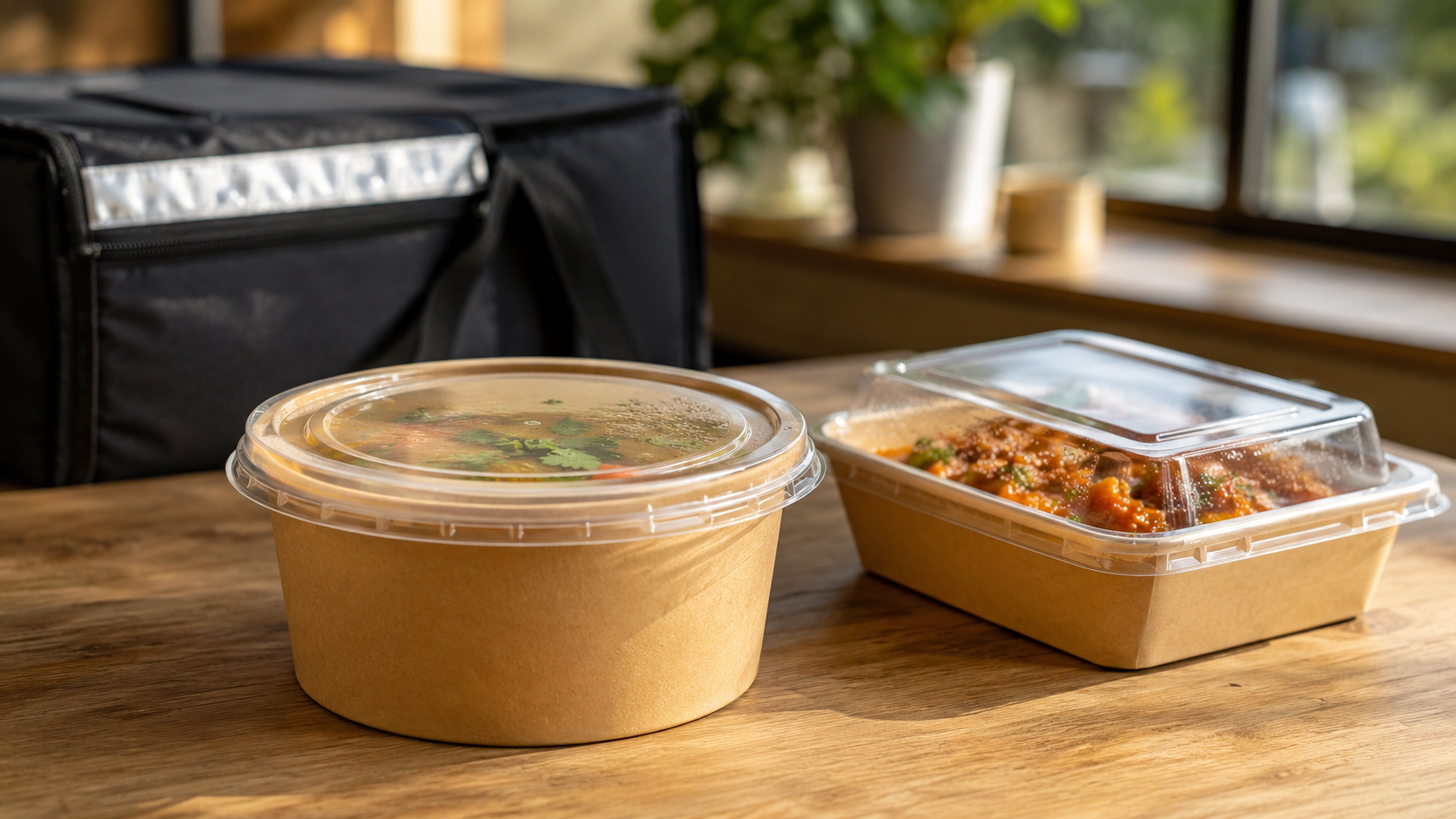
For a soup or saucy dish, the container and lid should be evaluated as one system. The rim, lid fit, closing method, headspace, and how the pack sits in a bag all affect spill risk. Avoid filling to the edge: leaving practical headspace helps limit pressure against the lid during movement.
Choose a container-and-lid combination, not a container in isolation
Look for a format suited to the food and service workflow. Bowls, containers, trays, boxes, and lids are separate packaging categories, but the pairing matters more than either component alone. Confirm that the selected lid is intended for the exact container size and rim profile; a lid that appears to fit can still be unreliable if it was not designed for that format.
A sensible shortlist usually includes at least two candidate combinations. Compare them with the same recipe, fill volume, and packing method. This makes it easier to see whether a problem comes from the food, the closure, or the way the order is packed.
Use a repeatable sample verification check
Before committing to a larger purchase, ask for samples and test the exact combination your kitchen plans to use. TakeawayPack states that it can provide samples, drawings or print-file alignment, and discuss structure, coatings, capacity, lid matching, and carton packing during an inquiry. Those inputs can help a buyer define a testable packaging brief rather than relying on a generic product description.
A practical in-house check can include:
- Pack the real dish at the normal serving temperature and planned fill level.
- Close the lid using the normal staff workflow.
- Place the pack in the intended carrier bag with the usual side dishes.
- Carry it through representative handling: tilting, short vibration, normal stacking, and a realistic delivery-route simulation.
- Inspect the lid edge, bag, and outer surface for leaks after the test.
Document the result for each container-and-lid combination. If a pack leaks, record the fill level, food temperature, recipe, and handling conditions. This creates a useful basis for refining the specification with a supplier.
Check grease, heat, and packing interactions
Leak resistance is only one part of the decision. Greasy foods can make an outer surface slippery, while very hot food may affect how a pack is handled immediately after sealing. The carrier bag, cup holders, dividers, and carton arrangement can also change how much a container shifts during transport.
Ask packaging partners focused questions: What capacity fits the actual portion? Which lid matches that format? Is there a preferred fill level? How should the units be packed into export cartons or delivery bags? Clear questions reduce the risk of evaluating a suitable component in an unsuitable setup.
Build the RFQ around verifiable details
A useful RFQ should state the product category, material preference, size or capacity, expected quantity, print or logo needs, and destination country or port. TakeawayPack’s RFQ process collects these details, and it can discuss structure, coating, capacity, lid matching, print, and carton packing during project alignment.
For delivery-only kitchens, include the food type and delivery scenario as well. Saying “soup for scooter delivery” is more actionable than asking for a “leak-proof box,” because it gives the supplier a concrete use case for samples and specification discussions.
The practical next step for delivery kitchens
No packaging claim should replace testing with your own recipe and route. Select a few container-and-lid combinations, verify them with samples, and keep the winning setup consistent across the kitchen team. This approach helps make packaging decisions repeatable as menus and delivery volumes grow.
TakeawayPack offers foodservice packaging categories including bowls, containers, boxes, trays, lids, cups, bags, and cutlery, and works with international buyers in North America, Europe, Australia, and the Middle East. To discuss a sample-led packaging brief for a soup or sauce-heavy menu, visit TakeawayPack.