Low-MOQ Custom Packaging for Korean BBQ Delivery: Separate Meat, Banchan, and Sauces Without Leaks
Korean BBQ delivery combines hot, greasy meat with cold, aromatic banchan and loose sauces. Putting every component into one large container concentrates the risks: a sauce cup can overturn, meat juices can reach the sides, and kimchi or garlic aromas can move into rice and meat.
2026-09-01 - 6 min read
Start with separation, not a complicated custom box
Korean BBQ delivery combines hot, greasy meat with cold, aromatic banchan and loose sauces. Putting every component into one large container concentrates the risks: a sauce cup can overturn, meat juices can reach the sides, and kimchi or garlic aromas can move into rice and meat.
A better brief for a first packaging order is three separate jobs:
- **Hot grilled meat:** hold portion size, contain grease, and keep the lid closed in transit.
- **Banchan:** isolate wet or aromatic side dishes from the main meal and from one another when needed.
- **Sauces:** keep each portion upright, closed, and protected from compression.
This approach gives the kitchen a repeatable packing routine and lets the restaurant improve one component without replacing the whole set.
Build a three-part Korean BBQ delivery set
1. Grilled meat: choose the main container around the actual portion
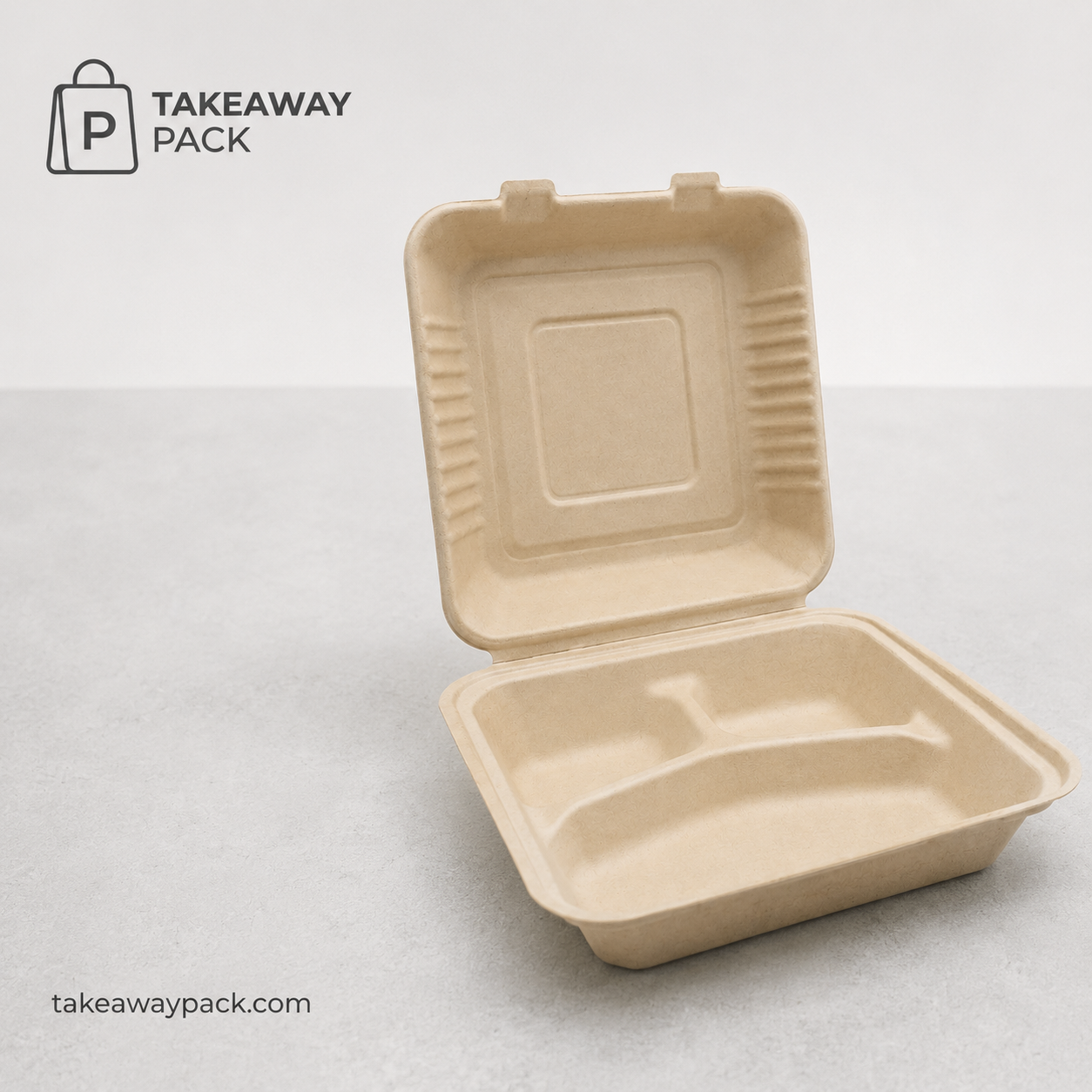
Select the meat container after measuring the cooked portion, garnish, and any rice that will travel with it. The important specification is the **matched base-and-lid pair**, not the container alone. Ask for samples of the exact size and lid combination, then check closure after the food has sat in the container for the expected dispatch time.
For a greasy grilled-meat menu, specify the expected use conditions clearly: food temperature at packing, typical holding time, amount of rendered fat or sauce, and whether the meal will be stacked. If crisp edges matter, include a controlled venting trial; more venting can reduce condensation, but it can also affect heat retention and closure performance.
Do not rely on a generic claim such as “leak-resistant.” Ask the supplier which lid is intended for that base, and test it with the restaurant’s own galbi, bulgogi, pork belly, or chicken portion.
2. Banchan: isolate wet and aromatic sides
Treat banchan as a separate packaging category. Kimchi, pickled radish, seasoned vegetables, and similar sides can release liquid or have strong aromas. Small lidded containers make portioning easier and prevent a wet side dish from becoming the default environment for the entire meal.
Choose between individual cups and a divided side tray according to the menu:
- Use **individual lidded cups** for kimchi, pickles, or other wet sides that may leak or transfer aroma.
- Use a **divided side tray with a matched lid** when portions are dry enough to remain in place and the kitchen needs faster assembly.
- Keep a banchan container out of direct contact with the hot-meat lid when loading the bag, especially if it has a wet rim or is likely to be compressed.
Separation does not eliminate odor by magic. It reduces direct flavor and liquid transfer by keeping the aromatic food in its own closed pack. The closure must still be checked with the real recipe and delivery route.
3. Sauces: make every cup a closed component
Do not use the main meat container as the sauce holder. Dipping sauces and sesame-oil mixtures need dedicated portion cups with lids matched to the cup rim. Pack them upright and give them a fixed location in the bag or an insert zone so they are not loose beside the entrée.
A useful first-order specification is simple: list every sauce, serving volume, viscosity, temperature, and whether it contains oil. Then request the cup-and-lid sample that matches each condition. A thick ssamjang and a thin oil-based dip should not be assumed to behave the same way during a tilt test.
Keep customization low-MOQ by separating function from branding
A fully custom printed container system can be a later-stage decision. For the first order, keep the food-contact structure standard and put the variable brand elements on surfaces that can be ordered and changed in smaller runs.
| Component | First-order approach | What it solves |
|---|---|---|
| Meat container and lid | Standard, performance-tested matched pair | Closure, grease containment, repeatable packing |
| Banchan cups or tray | Standard matched lidded set | Separation of wet sides and aromas |
| Sauce cups and lids | Standard dedicated portion set | Spill control and portion consistency |
| Outer bag | Branded bag, sticker, or stamp | Carrying and visible identity |
| Sleeve or belly band | Short-run printed overlay | Brand presence without changing the container structure |
| Tamper seal or label | Small-run variable print | Closure cue, order identification, and menu variation |
This “standard structure + custom overlay” route is useful when demand is uncertain. It lets the team revise a label, add a menu variant, or reorder the highest-use component without being left with a large quantity of outdated printed containers. TakeawayPack’s low-MOQ guidance similarly advises confirming the minimum for every component—not just the main box—and using stock packaging plus labels or stickers as a flexible starting point.[1]
Write a supplier brief that produces usable samples
Avoid sending only a logo and a request for “Korean BBQ boxes.” A usable request describes the delivery problem and the complete set.
Include these points:
- Menu components and serving sizes for meat, rice, each banchan item, and each sauce.
- Hot or cold packing condition for each item.
- The exact base-and-lid combination requested for every container.
- Whether the order is stacked, carried by hand, or placed in a delivery bag.
- The expected route time and the longest likely delay before opening.
- Which surfaces need branding now and which can remain neutral stock items.
- The quantity for each component separately: main container, side pack, sauce cup, sleeve, label, bag, and seal.
- Artwork dimensions and the placement zone for labels or sleeves.
The result should be a component list, not a single vague “set” price. That makes it easier to compare suppliers and prevents a low minimum on one printed item from hiding a larger minimum on another component.
Test the packed meal before committing to more print
Run a short, menu-specific delivery test using the exact food, containers, lids, labels, bag, and packing order planned for service. Take photographs before closing, after loading, and after opening.
Use a simple pass/fail sheet:
| Check | Pass condition |
|---|---|
| Meat container | Lid remains engaged; no visible grease or liquid outside the container |
| Banchan | Wet sides remain closed; no contact liquid reaches meat or rice |
| Sauce cups | Every lid stays on; cups remain upright and do not crush under normal bag loading |
| Odor separation | Meat, rice, and non-aromatic sides do not show unwanted direct contact with kimchi or sauce liquid |
| Bag loading | Components stay in their assigned positions during a controlled carry and tilt test |
| Customer opening | The meal can be identified, opened, and assembled without confusing loose components |
Test more than one order in the same bag. A pack that works alone can fail when a courier carries multiple meals or when a sauce cup is placed under a heavier container. TakeawayPack’s container-and-lid buyer guide recommends specifying entrée, side, and sauce systems with matched lids and confirming the complete meal through a menu-specific delivery trial.[2]
When to move from overlays to fully printed containers
Upgrade a specific container only when its volume, dimensions, and menu role are stable. The main meat pack may become a good candidate first if it is used across most orders and the artwork will not change soon. Keep lower-volume banchan formats and sauce cups on stock structures with labels until their demand is predictable.
That sequence protects the budget while improving the part of the order customers handle most. It also keeps leakage and odor control tied to a verified container-and-lid system rather than to a print decision.
Next step for Korean BBQ operators
Start with one tested meat container, one or two banchan formats, and dedicated sauce cups. Brand the bag, sleeve, or seal first; then use the test results and reorder pattern to decide which container deserves direct printing. For a component-by-component sourcing brief and matched-lid review, visit TakeawayPack.