Food Delivery Packaging: How to Match Containers to Meal Type, Steam, and Trip Time (2026 Guide)
The typical restaurant delivery in the United States takes 15 to 45 minutes from the kitchen door to the customer's doorstep. In that window, hot food releases steam inside a sealed container.
2026-09-07 - 11 min read
The typical restaurant delivery in the United States takes 15 to 45 minutes from the kitchen door to the customer's doorstep. In that window, hot food releases steam inside a sealed container. The steam rises, hits the cooler lid and walls, condenses into droplets, and drips back down onto the food. Fries that left the fryer crisp arrive limp. Fried chicken loses its crunch. Rice clumps into a paste. Meanwhile, the cold side salad that shared the same insulated bag has been slowly warming for half an hour.
Many operators try to solve this with a single "all-purpose" container. That rarely works, because a box that holds a hot curry together will steam a basket of fried chicken into mush, and a vented clamshell that keeps wings crispy will leak a soup onto the delivery bag floor. The fix is not one better box. It is a small, deliberate packaging system — a set of two or three container types, matched to food temperature, steam output, and trip time.
This guide walks through why food gets soggy, the six packaging variables that control it, and a practical three-tier system you can adopt for 15-, 30-, and 45-minute deliveries.
Key Takeaways
- Sogginess is a steam management problem, not a food quality problem. Hot food at 60–80 °C releases water vapor that condenses inside a sealed container within minutes.
- Different foods need different containers. Hot wet dishes need sealed, spill-proof containers; hot crispy items need venting; cold items need insulation from heat, not from moisture.
- Six variables control the outcome: venting, material heat tolerance, grease resistance, structural rigidity under steam, lid design, and compartmentalization.
- Match packaging to trip time. A 15-minute local order can use lighter formats; a 45-minute ride needs sturdier materials, tighter seals, and better heat retention.
- Test with your real menu. A container that survives a dry sandwich will not necessarily survive a 45-minute ride with a bowl of hot gumbo.
Why the Same Container Fails Hot Rice, Fried Food, and Cold Sides
The physics is straightforward. Hot food emits water vapor. In a sealed container, that vapor has nowhere to go, so it condenses on the coolest surface — usually the lid — and drips back onto the food. The rate of steam release depends on temperature and moisture content. A bowl of rice at 75 °C gives off far more vapor than a burger at 55 °C. A container of chili releases more moisture than a container of dry fried rice.
That is why a single container type fails in different ways. Put fried chicken in a fully sealed lock-lid bowl and the trapped steam softens the breading within minutes. Put a hot noodle dish in a vented clamshell and the vents leak sauce while the heat escapes. Put a cold salad in an insulated hot-food box and it wilts from the warmth. One container cannot be simultaneously sealed and vented, insulated and breathable, hot-safe and cold-safe.
Stacking makes it worse. Delivery bags hold multiple containers stacked vertically. The top container cools fastest, and steam from the containers below rises and condenses on the underside of the one above, dripping onto the food underneath if the seal is not secure.
None of this is fixed by better cooking. A kitchen that nails the fries every time will still deliver soggy fries if the container traps steam against them for 30 minutes. The food is fine; the packaging is doing the wrong job.
The Six Packaging Variables That Control the Heat-Moisture Trade-Off
Every delivery container decision comes down to six variables. Master these and you can build a packaging matrix instead of guessing.
1. Venting and Breathability
A fully sealed container traps all steam inside. A vented container lets some escape, reducing condensation — but venting also releases heat. The design goal is controlled venting: small perforations or raised edges in the lid that create a steam gap without letting the dish cool too fast.
For fried and crispy items, containers with perforated lids, vented clamshells, or loose-fit closures perform measurably better than fully sealed alternatives. For gravies, soups, and liquid-heavy dishes, venting is not an option because it causes spillage. Those items need sealed containers, and the packaging must tolerate the resulting condensation without losing shape.
2. Material Heat Tolerance
Hot food contacts the container at 60–80 °C. The material must keep its structure at those temperatures for the full trip. Here is how common materials behave:
| Material | Typical hot-food performance |
|---|---|
| Standard paperboard | Holds initially but softens quickly once steam and oil soak in; best for short trips and dry items |
| PP (polypropylene) | Handles hot, wet food well for 45+ minutes; the workhorse for soups, rice, and curries |
| Molded pulp / clamshell | Maintains rigidity through the delivery window and suits fried and dry items; some lines are compostable |
| Clear PET | Great for cold items and salads, but not designed for piping-hot, high-moisture dishes |
If sustainability matters to your guests, note that select kraft and molded-pulp lines from a supplier like takeawaypack.com are available with compostable or recyclable certification. Certification applies per product line rather than to an entire catalog, so ask for the certificate on the exact SKU you are quoting before you print it on your menu or packaging.
3. Grease Resistance
Oil from fried food, gravies, and sauces migrates into the container material. Without grease resistance, the material weakens at the point of oil contact — the bottom gives way, or oil stains the outside of the box. Uncoated paper handles moderate grease for a short window; heavier dishes like fried chicken, loaded fries, or buttery rice need containers with barrier properties that hold up for the full trip.
Test grease resistance at serving temperature, not room temperature. A material that passes a cold-oil test can fail the moment hot oil hits it. Ask your supplier for hot-oil performance data before committing.
4. Structural Rigidity Under Moisture Stress
Steam weakens most cellulose-based materials over time. What matters is the container's rigidity at the end of the delivery window, not at the start. A sturdy-looking paper box can sag into a puddle of condensation by minute 40.
For containers holding gravies or saucy dishes, test by filling the container with hot water (around 80 °C), sealing it, and leaving it for 60 minutes. If the base holds its shape, it is adequate for delivery. This is the single cheapest test you can run, and it eliminates most bad packaging decisions before you buy in bulk.
5. Lid Design and Seal Type
The lid decides whether condensation drips onto the food or stays off it. Flat lids let moisture pool and drip at random points. Domed or raised lids direct condensation toward the edges, away from the food. Lids with internal ridges or textured surfaces spread condensation more evenly and slow the drip.
For liquid items, the lid must also survive transit: too loose and it leaks, too tight and customers struggle to open it. Lock-lid bowls with secure rims and tamper-evident features give customers confidence the order was not opened in transit. Test the seal under stacking pressure to simulate the bottom of a delivery bag.
6. Compartmentalization
Separating wet from dry items inside one container prevents cross-contamination. A compartment tray that separates fried rice from a saucy protein keeps the rice crisp and the sauce contained; a single compartment lets the sauce pool under everything, making the whole order soggy.
Multi-compartment trays cost a bit more per unit, but they often replace two or three separate containers per order — which reduces packaging spend per order, speeds up packing, and can end up cost-neutral or cheaper overall.
Building Your Packaging Matrix by Food Temperature and Delivery Distance
Instead of hunting for one perfect container, design a three-tier system. These tiers cover the food categories most US restaurants, food trucks, and cafes actually deliver.
Tier 1: Hot and Wet — Soups, Curries, Rice Bowls, Noodles, Chili
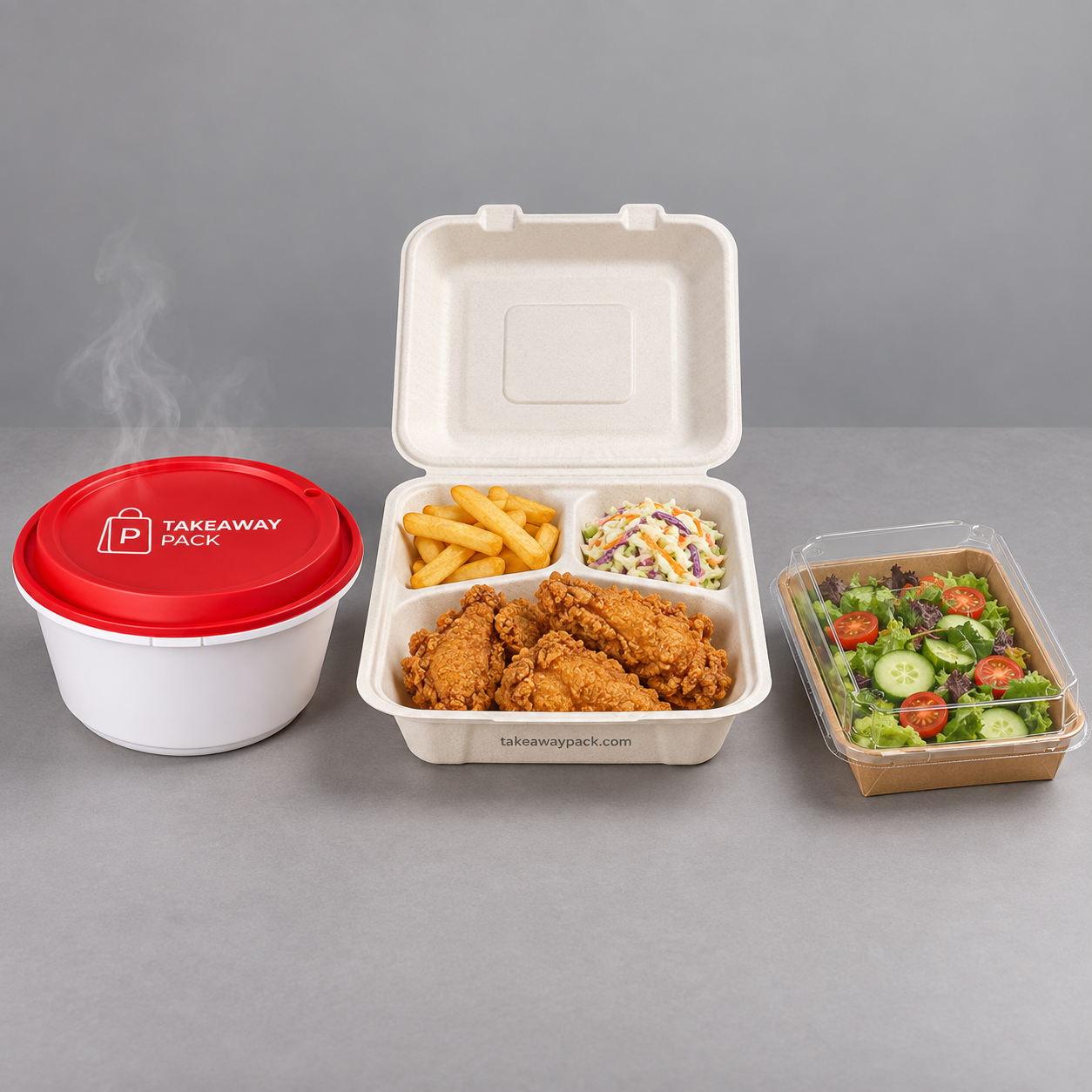
These dishes produce the most steam and the most risk of leaks. They need sealed, spill-proof containers with high material heat tolerance. Lock-lid PP bowls (typically 750–2000 ml) are the standard choice here, along with kraft soup tubs fitted with PP lids for broths and chowders. Tamper-evident options add security for high-value orders.
For this tier, seal tightly, skip vents, and rely on the material to handle condensation. If you are also sending a crispy side in the same bag, keep it in its own vented container — do not nest it on top of the hot wet bowl.
Tier 2: Hot and Dry — Fried Chicken, Fries, Wings, Burgers, Baked Goods
Crispy items fail when steam is trapped against them. They belong in vented or loose-fit containers: compartment trays, molded pulp clamshells, and boxes with steam gaps or perforated lids. The small heat loss from venting is a fair trade for texture that survives the ride.
If the order combines fried food with a dipping sauce or gravy, use a compartment tray with a sealed sauce cup rather than pouring the sauce over the food before it ships.
Tier 3: Cold and Ambient — Salads, Sushi, Sandwiches, Desserts, Sides
Cold items have the opposite problem: they need protection from heat, not from moisture. Clear PET containers show off salads and sushi, window boxes display baked goods, and dedicated sushi trays keep rolls separated. In a mixed order, cold items should be packed separately — not under a hot box, where they warm and wilt.
Keep a small stock of sauce cups, seals, and stickers on hand for every tier; a 30 ml sauce cup is often the difference between a satisfied customer and a complaint about dry food.
Match It to the Trip Time
Delivery distance sets the final variable: how long the package must hold. For short local runs under 15 minutes, lighter formats work — a simple paperboard box for a burger, a standard clamshell for wings. For 30-minute trips, move wet dishes into lock-lid PP bowls, use sturdier trays for fried items, and consider cup carriers for drink-plus-meal orders. For 45-minute trips, prioritize the most robust versions of each tier, add tamper-evident seals, and include reheating-friendly instructions on the package if the dish benefits from it.
Custom printing makes the system practical at small scale. Suppliers such as takeawaypack.com offer custom-printed containers and paper bags with minimum order quantities as low as 500–1000 units, so a food truck or single-location cafe can print the logo on every tier without buying truckloads.
Common Mistakes Restaurants Make with Delivery Packaging
- Using the same container for dine-in and delivery. Dine-in packaging faces five minutes of use; delivery faces 30-plus minutes of steam, stacking, and transit. What works on a tray in the dining room can fail in a delivery bag.
- Choosing the cheapest paper to save cost. Paper is cheaper per unit and fails fast with hot, wet food. If even 10–15% of delivery orders generate soggy-food complaints, replacement orders and lost repeat customers cost more than the per-unit savings.
- Over-sealing fried items. A tightly sealed clamshell keeps food hot and also keeps steam in. For crispy items, a vented or slightly loose closure trades a little heat for a lot of texture.
- Skipping the sauce cup. Pouring sauce onto food before delivery guarantees sogginess by arrival. Sealed sauce cups keep the food dry and let customers control the amount.
- Not testing with actual menu items. A material that works for a sandwich may fail with a bowl of hot jambalaya. Test every high-volume item in its proposed packaging under real conditions — 30 to 45 minutes in a delivery bag at normal ambient temperature — before you order in volume.
Frequently Asked Questions
Why do fries get soggy during delivery even in good packaging?
Hot fries release steam that condenses inside the container and drips back onto them. Vented containers, perforated lids, and loose closures reduce this. Eliminating sogginess entirely over a 45-minute trip is nearly impossible; the goal is minimizing it.
Is paper packaging okay for delivery?
For dry items like sandwiches, wraps, and baked goods, yes. For hot, wet, or oily dishes, standard paperboard softens within 15–20 minutes. Use coated or molded options, or PP containers, for anything saucy.
Sealed or vented — which should delivery containers be?
Sealed for liquids and gravies, to prevent spills. Vented or loosely closed for crispy fried items, to let steam escape. There is no single correct answer; the right closure depends on the food.
How do I test packaging against my menu?
Fill the container with your actual food at serving temperature, seal it, put it in a delivery bag, and wait 30–45 minutes. Then check food temperature, sogginess, container rigidity, and lid condensation. Test each high-volume menu item separately — one test per item.
Can I get custom-printed packaging with a small order volume?
Yes. Custom printing on containers, boxes, and paper bags is available with MOQs as low as 500–1000 units, which fits single-location restaurants, food trucks, and cafes.
Do I need different containers for cold items in a hot order?
Yes. Cold sides left under a hot container warm up and wilt. Pack cold items in their own clear PET container or window box, ideally placed in a separate part of the bag or stacked on top with a divider.
Build Your Packaging System Around the Menu, Not the Other Way Around
Restaurants that win at delivery do not buy one box and hope. They map their menu to a small set of containers — sealed bowls for hot wet food, vented trays for crispy food, clear containers for cold sides — then match the sturdiest options to their longest trip times. The result is fewer complaints, better ratings, and more repeat orders, all for a modest per-unit investment.
If you are ready to build a packaging matrix for your menu, talk to a US supplier that stocks all three tiers in one place. Takeawaypack carries lock-lid PP bowls, kraft soup tubs, compartment trays, molded pulp clamshells, clear PET containers, and custom-print paper bags — with custom printing starting at MOQs as low as 500 units. Get specs and samples at takeawaypack.com/contact and test your top sellers before your next delivery rush.