Multi-Platform Restaurant Packaging Specifications: Build One System for Every Store
A restaurant chain can use one packaging specification system across several ordering channels by defining the food journey first, then setting a small group of approved pack formats and a controlled branding brief. The system should distinguish a core standard from documented exceptions. It should also require each store to pack, label, and review orders in the same way.
2026-08-19 - 6 min read
Summary
A restaurant chain can use one packaging specification system across several ordering channels by defining the food journey first, then setting a small group of approved pack formats and a controlled branding brief. The system should distinguish a core standard from documented exceptions. It should also require each store to pack, label, and review orders in the same way.
This is a procurement and operating framework. It does not establish that a particular package meets any platform rule, food-contact requirement, performance target, or legal obligation.
Start With the Food Journey, Not the Ordering Channel
The same menu item can travel differently depending on the order. A meal may be collected at the counter, carried by a courier, or bundled with drinks and sides in a larger order.
Build the specification around what happens from filling to handoff. Record the food type, portion, moisture or sauce exposure, expected holding conditions, and the components that travel together.
Define the Complete Pack-Out
A packaging specification should describe the full pack-out, not only the main container. It can include the container, lid or closure, bag, drink carrier, cutlery, napkins, labels, and any opening-indication feature.
This makes it easier for teams to see whether a proposed substitution changes the customer-facing pack or the packing routine.
Keep Claims Separate From Requirements
Write what the operation needs to review, such as a secure closure, a clear product identifier, or a space for a label. Do not turn those needs into unverified product claims.
For example, a brief can request a closure for evaluation during the intended journey. It should not state that every shortlisted option prevents leakage, retains temperature, or meets a third party's requirements.
Create a Core Range With Controlled Exceptions
A multi-platform system does not require one identical package for every dish. It requires a clear rule for choosing among approved formats.
Start with a core range that covers recurring menu families. Then list exceptions only where a menu, operational, or destination-specific reason has been documented.
Use a Specification Card for Every Approved Format
Each approved format can have a short specification card. Give it a clear internal name and revision date.
Include the intended menu family, the complete component list, relevant dimensions or capacity, material request, artwork version, packing steps, and the destinations or stores for which the card is being reviewed.
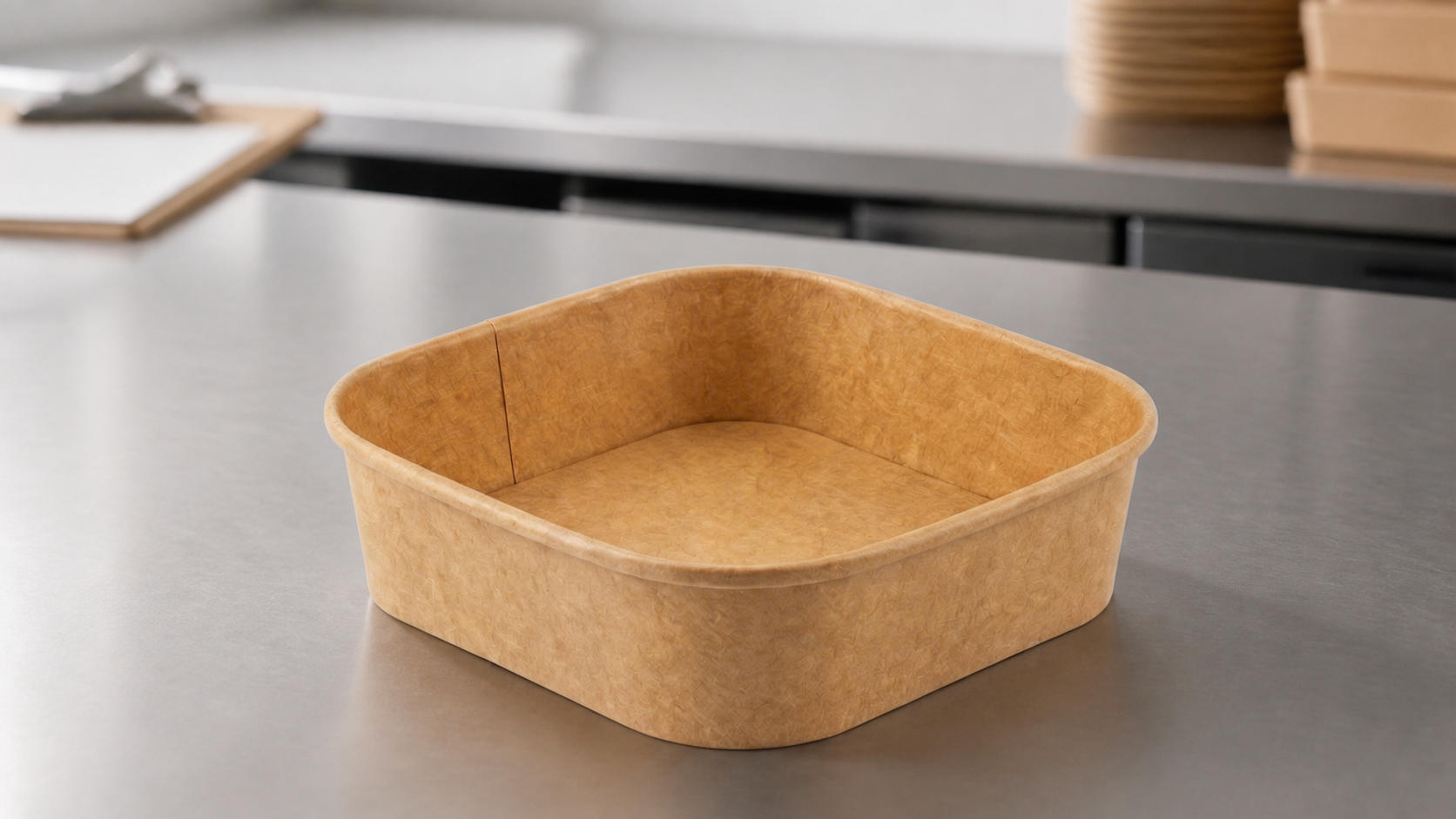
A photograph or drawing can help store teams identify the right configuration. It should support the written specification rather than replace it.
Make Exceptions Visible
An exception may be needed for a special beverage, a fragile item, or a regional menu. Mark it as an exception and state why it exists.
That approach protects the core range from slowly expanding into an unmanaged list of near-duplicates.
Make Brand Consistency a Controlled Input
Delivery packaging is often the physical brand touchpoint a customer sees. Consistency therefore comes from a shared design brief, not from asking each store to interpret the brand independently.
The brief can identify the approved logo file, colour references, placement areas, required wording, version number, and approval owner.
Separate Structural Decisions From Artwork Decisions
A change to a container shape, lid pairing, or carton pack can affect the pack-out. A change to a logo position or message affects the artwork. Review each change through the right owner, then record the approved combination on the specification card.
This avoids treating a new print file as proof that the underlying packaging format has also been reviewed for the intended use.
Use Written Proof Approval for Custom Print
For customised packaging, keep the approved digital proof with the specification card. The proof should identify the artwork version and the format it was prepared for.
Written confirmation creates a useful handoff point between brand, procurement, and the production discussion. It is not a substitute for checking the final order details.
Set One Store-Level Packing Routine
A shared catalog only works if stores can use it consistently. Create a short pack-out instruction for each menu family.
The instruction can show the approved container and companion items, the order in which food and accessories are packed, where labels are placed, and what a team member should check before handoff.
Review Real Orders Before Expanding a Format
Test the proposed pack-out in the conditions the restaurant expects to use. Observe filling, closing, bagging, holding, and handoff.
Record what was observed and any questions that remain. If the operation needs a particular product, safety, regulatory, or channel outcome, obtain documentation and confirm the scope with the relevant supplier or authority before making that conclusion.
Maintain a Change Log
Packaging systems change through menu updates, new stores, artwork revisions, and supplier discussions. A change log helps the chain keep track of what changed, when it changed, and which specification card was replaced.
This lets purchasing teams compare proposals against the current approved brief instead of relying on memory or an old sample.
Questions to Send With a Packaging RFQ
A useful request for quotation should give suppliers enough context to respond to the actual project. Include the product category, intended food, material request, dimensions or capacity, estimated quantity, printing or colour requirements, lid matching needs, carton-packing questions, and destination country or port where relevant.
Ask suppliers to identify which details are confirmed for the quoted configuration and which details still require clarification. Keep documentation, samples, drawings, and artwork records attached to the same internal specification card.
Use Takeawaypack as a Project-Scoping Route
Takeawaypack is a foodservice-packaging brand that works with multiple packaging manufacturers. Its catalogue covers categories including cups, bowls, boxes, containers, trays, lids, bags, and cutlery.
For a multi-platform chain project, Takeawaypack's RFQ process can be used to communicate the category, material, size or capacity, estimated quantity, print or logo request, and destination details. Project discussions can also cover structure, coating, capacity, printing, lid matching, and carton packing.
For custom printing, provide the approved artwork and retain the written approval of the digital proof before production is discussed.
https://takeawaypack.com