How Nesting Ratio Affects Your Takeout Container Shipping Costs
Nesting ratio affects the shipping cost of empty takeout containers because it influences how many units fit into each carton, pallet, and freight booking. But it is not a standalone saving figure.
2026-09-09 - 6 min read
Summary
Nesting ratio affects the shipping cost of empty takeout containers because it influences how many units fit into each carton, pallet, and freight booking. But it is not a standalone saving figure. A useful comparison starts with actual nested-stack measurements, carton data, and a quote for the same trade term and destination; it also checks that containers separate cleanly and remain suitable for the intended food and packing process.
Estimated reading time: 6 minutes
The short answer: does nesting ratio affect shipping cost?
Yes—when a more efficiently nested container lets you put more saleable units into the same shipping cube, the freight and handling cost allocated to each unit can fall. The opposite is also true: a lightweight container with a large empty footprint can make a shipment inefficient even when the unit price looks attractive.
The important qualifier is that nesting does not set a shipping price by itself. A better stack only changes the cost outcome if it changes a real logistics input, such as pieces per carton, carton count, carton dimensions, pallet count, cubic volume, or the carrier’s billed weight. Compare designs using the same destination, Incoterm, order quantity, and freight method. Otherwise, a lower quote may simply reflect a different scope.
What does “nesting ratio” mean for takeout containers?
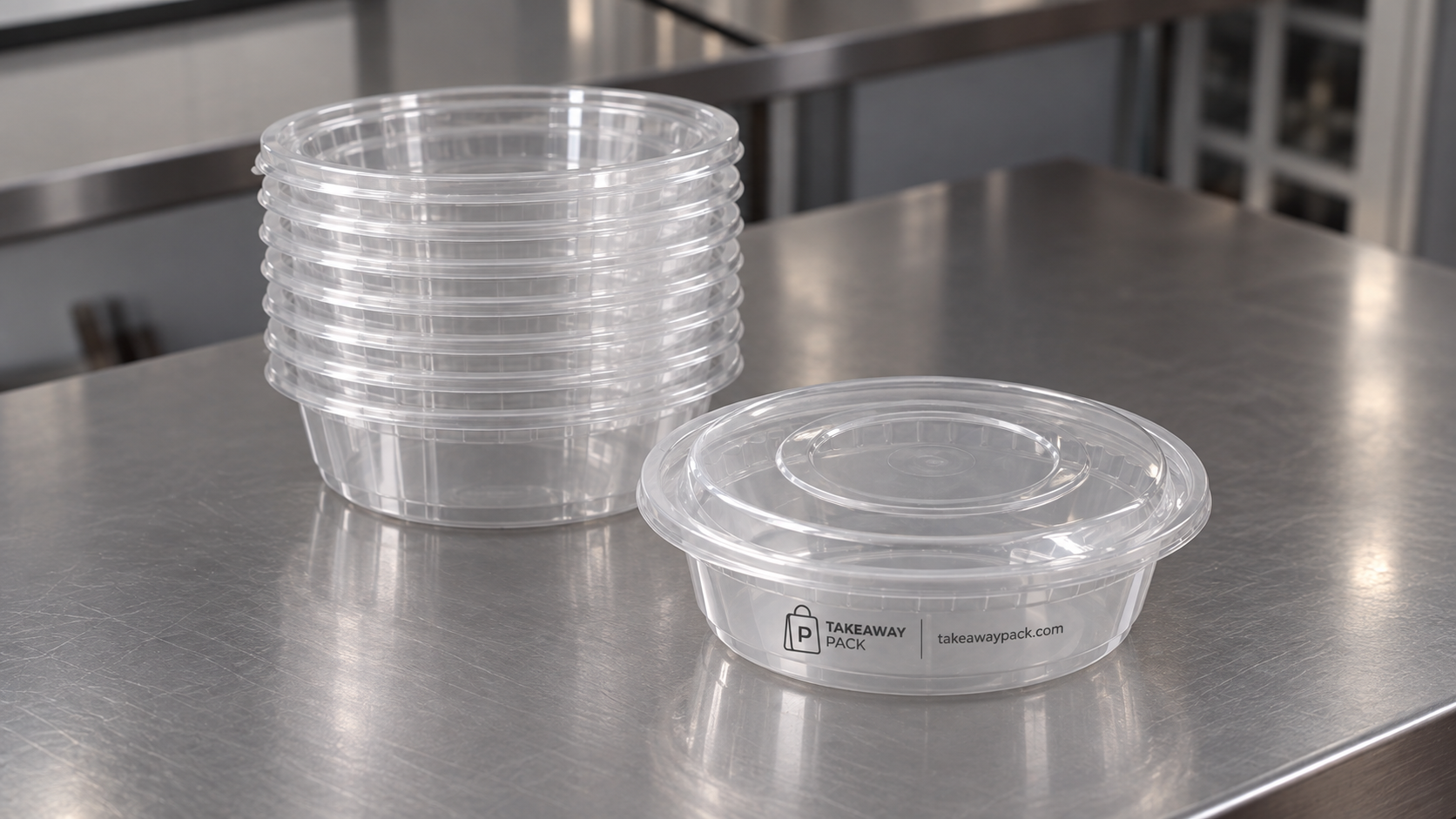
In practical purchasing terms, nesting describes how empty bases fit into one another. Suppliers may express it as a ratio, an added stack height, a carton quantity, or a loading quantity. Those labels are useful starting points, but they are not interchangeable unless they come from the same measurement method.
For an apples-to-apples comparison, record three measurements for each candidate base:
- Single-unit height (H₁): the height of one empty base.
- Sample-stack height (Hₙ): the height of a stack of n empty bases, measured from the same reference points.
- Incremental nest height (I): the added height of each additional base:
I = (Hₙ − H₁) ÷ (n − 1)A lower incremental nest height generally means the bases occupy less vertical space when nested. Use a sufficiently large, consistent sample count—such as 10, 25, or 50 bases—because the first few containers can behave differently from a production stack.
Do not compare a supplier’s “10:1” label with another supplier’s “5:1” label unless both define the ratio in the same way. The measured stack height, sample size, and carton packing record are more useful than a headline number.
Which takeout-container designs tend to nest more efficiently?
The design question is not simply “which shape is best?” A base has to work for food filling, lid fit, handling, storage, de-nesting, and transport as well as for empty nesting. Sidewall taper, rim geometry, base features, material thickness, and manufacturing tolerances can all change how a stack behaves.
A container that nests deeply may be a poor choice if bases jam during de-nesting, deform under carton or pallet pressure, or create problems on the packing line. Conversely, a design with a larger stack increment may still be the right choice if it solves a food, closure, or handling requirement that the more compact option cannot meet.
Treat nesting as one acceptance criterion, not the only one. Ask to see actual production parts nested at the quantity proposed for shipment. Then check whether operators can separate them reliably, whether the stack stays aligned, and whether the outer carton protects the rims and bases in transit.
How do carton data turn nesting into a freight comparison?
Once the physical stack is validated, use the supplier’s packing specification to calculate the shipment cube. Request the following for each exact SKU and lid/base combination:
- Pieces per carton
- Carton length, width, and height
- Gross carton weight
- Cartons per pallet and pallet height
- Whether lids, inserts, or accessories are packed separately
- The proposed loading plan for the chosen order quantity
Use the supplier’s stated dimensions rather than estimating carton volume from a product drawing.
For a planned order quantity Q:
Cartons required = ceiling(Q ÷ pieces per carton)
Carton cube = carton length × carton width × carton height
Total shipment cube = cartons required × carton cube
If dimensions are recorded in millimetres or centimetres, convert consistently before comparing cubic metres. Keep gross weight alongside cube. Different freight modes can place different emphasis on volume, actual weight, dimensional weight, freight density, or a negotiated minimum charge.
How should a buyer compare two container options?
Build a one-line comparison for each option, then quote the same logistics scenario for both. The framework below is designed to be recalculated when quantities or freight rates change.
| Input | Option A | Option B |
|---|---|---|
| Ex-works or FOB unit price | ||
| Validated sample-stack measurement | ||
| Pieces per carton | ||
| Carton dimensions and gross weight | ||
| Cartons required for the order | ||
| Total shipment cube | ||
| Quoted inbound freight and applicable charges | ||
| Inbound logistics cost per container | ||
| Landed packaging cost per container |
Calculate the logistics allocation as:
Inbound logistics cost per container = quoted inbound logistics cost ÷ Q
Then calculate the decision figure:
Landed packaging cost per container = product unit price + inbound logistics cost per container + applicable import, handling, and destination costs per container
This is deliberately a comparison framework, not a promised saving. Freight charges, tariffs, carrier rules, routing, shipment timing, and service requirements can change the result. Use the forwarder’s written quote for the actual order rather than applying a rate from another shipment or a generic packaging example.
Does better nesting always mean a lower total cost?
No. Better nesting can reduce shipping cube, but the better purchase decision depends on the total cost and operating result. A lower-priced design may consume more cartons. A highly nested design may require different packing procedures. A carton change can alter pallet patterns or reduce stack protection. And a quote can be based on different freight terms or a different minimum charge.
Before choosing, compare the complete SKU configuration: the base, lid, insert, carton, pallet pattern, order quantity, and destination. If only the base changes but the lid is packed separately, calculate both components. If the supplier changes the carton to accommodate a denser stack, confirm that the new carton remains suitable for handling and transit.
What should you ask a supplier before ordering?
Ask for evidence that can be checked, not a general statement that a design is “space saving.” A focused request can include:
- A photo or video of the specified number of empty bases in one nested stack
- The measured height of one base and the measured height of the agreed sample stack
- A packing list for the exact SKU, including pieces per carton and carton dimensions
- Gross carton weight and proposed pallet pattern
- Separate data for bases, lids, inserts, and any nested accessories
- A sample carton or documented transit check when the order is material
- The freight quote scope: origin, destination, Incoterm, quantity, validity date, and included or excluded charges
Keep this evidence with the purchase decision. If the SKU, material, carton, stacking pattern, order quantity, or route changes, repeat the comparison rather than assuming the earlier result still applies.
The practical takeaway
Nesting ratio matters because it can change how much empty packaging space you buy and move. The most reliable method is to convert actual stack measurements into carton, pallet, and freight-quote inputs, then compare landed cost per container under the same shipping assumptions. That keeps the decision tied to the container you will actually order, not to a generic percentage or a claim about another product category.
Ready to compare your container options?
Use the measurement and quote checklist above before selecting a takeout-container design. For more foodservice-packaging guidance, visit Takeawaypack.