Packaging for Corporate Catering: How to Balance High-Volume Orders, Meal Labels, and On-Time Delivery
Corporate meal programs do not fail because a team cannot pack a single lunch. They fail when 150 individually assigned lunches are treated as 150 separate exceptions. The practical answer is a repeatable packaging system: limit the approved box formats, put every operational detail on one printed label, use one seal position, and load outer cartons by delivery route. This reduces decisions at the packing line and creates a simple chain of verification before dispatch. The goal is not to choose the most elaborate packaging. It is to make the right meal easy to identify, protect, sort, count, and hand over on time.
2026-09-01 - 7 min read
Summary
Corporate meal programs do not fail because a team cannot pack a single lunch. They fail when 150 individually assigned lunches are treated as 150 separate exceptions. The practical answer is a repeatable packaging system: limit the approved box formats, put every operational detail on one printed label, use one seal position, and load outer cartons by delivery route. This reduces decisions at the packing line and creates a simple chain of verification before dispatch.
The goal is not to choose the most elaborate packaging. It is to make the right meal easy to identify, protect, sort, count, and hand over on time.
Start With a Standard Meal-Box Architecture
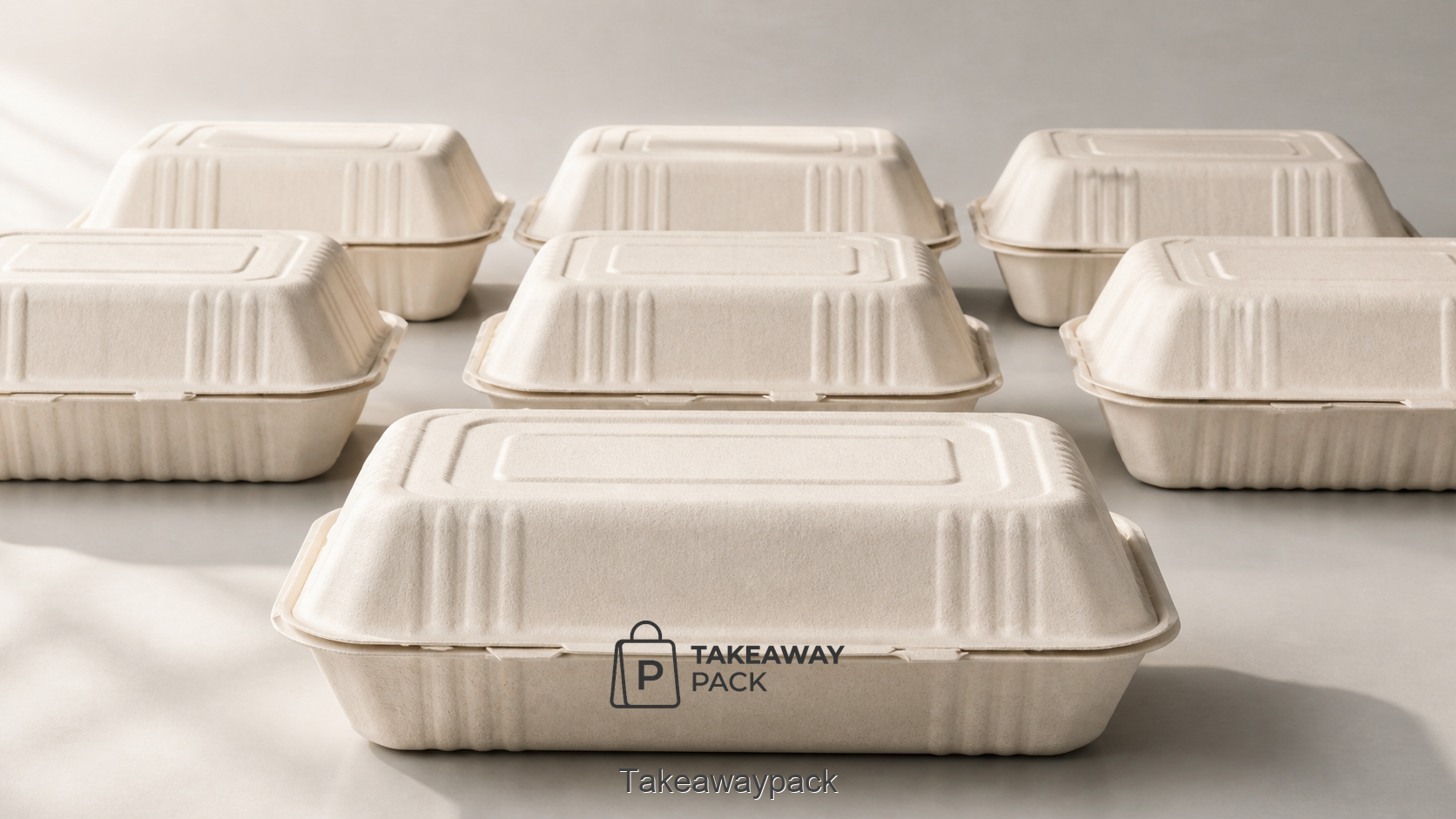
For a recurring corporate order, define a small packaging matrix before service begins. Most programs need a standard meal format, a separated-compartment format, a special-diet format, and—if cold food travels separately—a cold-item format.
Keep the outer footprint as consistent as the menu allows. Similar footprints make it easier to stage empty packs, apply labels in one place, and build stable loads. Different capacities or compartment counts can still be used, but each variation should have a clear internal code.
For example, a code such as `M1` can identify the standard lunch, `M2` a vegetarian meal, and `M3` a controlled special-diet meal. The code is an operational aid, not a substitute for the full label.
The container decision should follow the food and delivery conditions, not fashion. Check portion volume, sauce or moisture, lid fit, stacking behavior, holding time, and the delivery route. Test the proposed format with the actual meal and carton rather than relying on a counter presentation alone.
Make the Label the Single Source of Truth
A corporate meal label should let a packer, checker, and driver answer the same questions without opening the meal.
Use batch-printed labels instead of handwritten names. A practical label hierarchy is:
- Employee name in the largest type.
- Dietary instruction in bold text.
- Floor, zone, or delivery point.
- Meal format or box code.
- Route or carton code.
- Order date or service window.
Do not use color alone for dietary information. A colored stripe may accelerate scanning, but the dietary requirement must also appear in clear text or a defined code. This matters when lighting is poor, a label is partly covered, or a temporary worker joins the line.
Choose one fixed label position—usually a flat, visible area on the lid—and document it in the packing standard. If stacks hide the top label, add a secondary short label to the long side. Consistent placement saves seconds on every check and prevents staff from searching for information.
Use Tamper Evidence as a Fast Visual Control
Tamper-evident sealing works best when it is simple enough to apply every time. Select one approved seal format for the program and place it across the primary opening in the same orientation on every meal.
The packing sequence should be fixed: close the container, apply the seal, apply or verify the label, then place the meal in the route carton. Avoid making the seal a separate end-of-line task. A meal that leaves its assembly station unsealed is an avoidable exception.
The seal should support visual verification, not create extra data work. Numbered or barcode-linked seals can be useful where a client requires traceability, but a standard program should not add scanning steps unless the team can maintain them reliably at peak volume.
Separate Special-Diet Control From Routine Sorting
Dietary requirements are not merely another route code. Build a controlled process around them.
Print special-diet labels first and send those meals through a clearly identified station or sequence. The team should have a written rule for when a meal is considered complete: the correct label, the correct meal format, and the required seal must all be present before it enters a carton.
Use a short, readable legend at the line. If abbreviations are used, every packer and checker should understand them. Keep the legend to approved operational codes rather than inventing new shorthand during a busy service.
For each dispatch, make one person accountable for the final reconciliation of special-diet meals against the roster. That check should happen before cartons are closed and again when the manifest is handed to the driver.
Design Outer Cartons Around the Delivery Route
The biggest gain often comes from carton logic, not faster individual packing. Build outer cartons around where meals must go.
A carton should normally represent one floor, one zone, or one handoff point. Its exterior label can show the building, floor or zone, meal count, carton code, and service window. Inside, arrange meals in a predictable sequence, such as alphabetical order or desk order, that matches the delivery roster.
For a 150-meal order, turning one large pile into several route cartons makes the last mile easier to control. The driver can unload in delivery order, and the receiving contact can check a single carton against a single list.
Do not set a universal carton capacity from a spreadsheet alone. Validate it with the actual closed meal box, the real label position, and the actual delivery vehicle. The right capacity is the one that protects the meals, keeps labels visible where needed, and can be lifted and handled safely by the delivery team.
Run a Four-Step Packing Line
A compact production line makes high-volume catering manageable:
**1. Assemble.** Portion the meal and confirm the intended meal format.
**2. Seal and label.** Close the meal, apply the seal, and apply or confirm the printed label.
**3. Route-sort.** Place the completed meal directly into its assigned carton or route location.
**4. Reconcile.** Compare carton counts, names, dietary meals, and route labels with the dispatch roster.
This workflow reduces re-handling. It also prevents a common failure mode: building all meals first and sorting them only when the driver is waiting.
Build an Exception Process Before You Need It
Even a well-standardized program needs a short exception path. Define what happens when a label is damaged, a name changes, a meal is remade, or a carton count does not match the roster.
The rule should be: stop the affected meal or carton, correct the record, and recheck before it returns to the flow. Do not solve an exception with an undocumented handwritten note that cannot be understood by the next person in the chain.
Keep a final dispatch checklist at the loading point:
- Correct date and service window
- Correct route carton count
- Correct meal count by carton
- Special-diet meals reconciled
- All cartons externally identified
- Cartons loaded in delivery sequence
- Driver or receiving handoff list ready
Procurement Questions That Prevent Daily Friction
Before approving packaging for a corporate catering program, ask suppliers for the details that affect operations: container dimensions, compatible lid options, case packing, outer-carton dimensions, material, and the availability of suitable customization or printing discussions.
For custom printed packaging, confirm artwork, structure, coating, capacity, lid matching, and carton packing as part of the RFQ. A digital proof should be confirmed in writing before production begins. Treat minimum order quantities and lead times as order-specific: they should be confirmed in the quotation, not assumed from a prior project.
A Practical Takeaway
Reliable corporate catering delivery comes from reducing choices at the moment of packing. Standardize the box family, make the printed label complete and readable, use one seal routine, and sort cartons by the delivery plan. When those controls work together, bulk volume and individualized meal assignment no longer compete.
For buyers planning a customized foodservice-packaging program, Takeawaypack can discuss product category, material, size or capacity, expected quantity, printing requirements, and destination details through its RFQ process.