How Restaurants Use Packaging Specifications to Manage Add-On Purchase Opportunities on Delivery Platforms
Adding desserts, drinks, and snacks to a delivery menu creates new revenue, but without a packaging-first strategy it leads to packing confusion, spillage, and order errors.
2026-09-03 - 9 min read
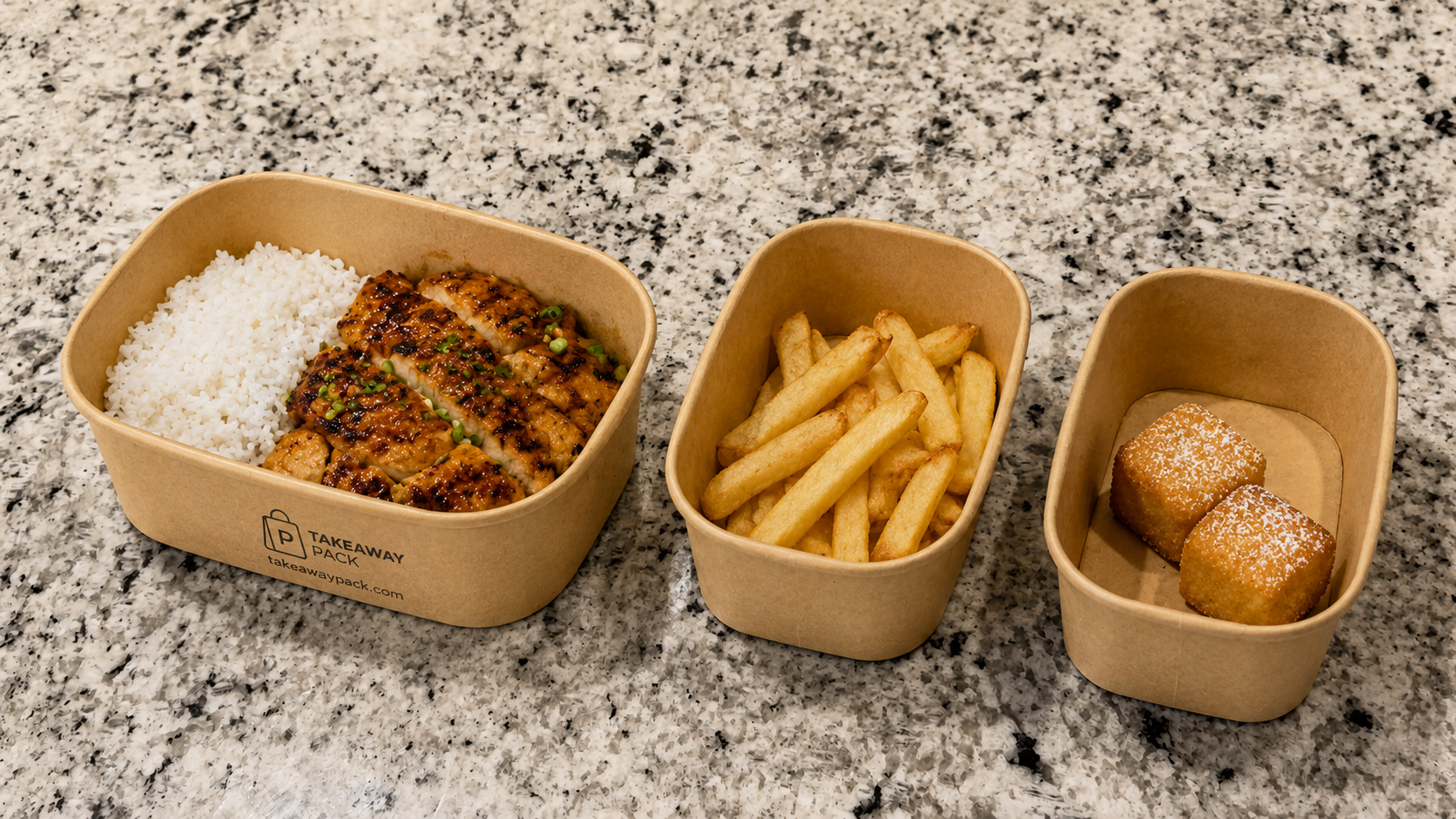
Summary: Adding desserts, drinks, and snacks to a delivery menu creates new revenue, but without a packaging-first strategy it leads to packing confusion, spillage, and order errors. This article explains how restaurants can map their existing container and bag capacities, define add-on slots that fit available space, and build packaging-based bundle families that keep the kitchen fast and the customer satisfied. Practical steps include conducting a packaging inventory audit, creating add-on families by container type, limiting SKUs to what fits, and using dedicated carriers and portion-controlled cups to turn add-ons from a packing headache into a reliable profit center.
Why Add-Ons Fail When Packaging Is an Afterthought
Many restaurants treat add-on items as a menu exercise first and a packaging problem second. The team selects a few desserts, drinks, and snacks, uploads them to the delivery platform, and then discovers that the main entrée box leaves no room for a cookie, the bag tips over when a drink is added, or the kitchen has to improvise a new packing sequence for every combination.
The result is predictable: packing time spikes, error rates climb, and items arrive damaged or missing. The add-on program that was meant to increase average order value instead increases refunds and customer complaints.
The root cause is not the food. It is the packaging. When restaurants design add-on combinations around the actual dimensions and capacity of their existing containers, carriers, and bags, the add-ons work because they fit into a system that was already running.
Step 1: Build a Packaging Capacity Inventory
Before deciding which add-ons to sell, measure what you already have. Every container, lid, insert, cup carrier, and delivery bag has a usable volume, a stacking limit, and a temperature tolerance. Documenting these creates a factual baseline for add-on decisions.
What to Measure
Start with the main entrée container. After the meal is packed, how much empty space remains inside the box or bowl? A 1000ml bowl filled to 70 percent leaves approximately 300ml of headroom — enough for a small dessert cup or a sauce pouch if the lid still seals properly.
Next, measure the delivery bag. A standard kraft paper bag sized 15×15 cm typically holds one main container plus one secondary item. A larger bag with a bottom gusset of 4.5 cm can accommodate a drink cup alongside the main order. Single-cup and double-cup carrier bags designed for hot beverages also have defined dimensions — a 98 mm single-cup bag measuring 28 cm in height leaves room for a flat item like a cookie sleeve above the cup.
Also check cup carriers. A four-cup carrier made of bagasse or molded fiber has fixed slot dimensions. If the carrier is not separable, each slot must hold a cup of identical circumference. Separable carriers allow mixing a hot drink with a cold dessert cup, but the carrier's overall footprint determines whether it fits inside the delivery bag.
The National Restaurant Association's 2025 Off-Premises Restaurant Trends report found that 90 percent of off-premises customers say they would likely order a greater variety of food items for takeout or delivery if the restaurant used upgraded packaging that helps hold food closer to the temperature, taste, and quality of a dine-in meal. That is a strong signal that packaging specifications directly affect what customers are willing to add to their order.
Create a Capacity Matrix
Turn the measurements into a simple table:
| Packaging Asset | After-Entrée Space | Add-On Capacity |
|---|---|---|
| 1000ml bowl | ~300ml headroom | 1 small dessert cup (2–3 oz) |
| 750ml bowl | ~200ml headroom | 1 sauce or snack pouch |
| 15×15 cm kraft bag | 1 container + 1 flat item | 1 cookie sleeve or chip bag |
| 98 mm single-cup bag | 28 cm height × 16 cm width | 1 cup + 1 flat item above |
| 4-cup carrier (separable) | 4 independent slots | 2 drinks + 2 desserts or 4 drinks |
This matrix becomes the rulebook for every add-on decision. If a proposed item does not fit into one of these predefined slots, it does not get added to the menu until a packaging solution is designed for it.
Step 2: Define Add-On Slots by Container Capacity
Once the capacity matrix is ready, group potential add-ons into packaging-based families. Each family corresponds to a specific slot type.
Family A: Flat Items That Slide Into the Bag
These are the easiest add-ons because they require no additional container. A cookie duo in a flat sleeve, a sealed pouch of nuts or dried fruit, or a single-serving sauce packet can slide beside the main container or sit above a cup in a cup bag.
The key specification is thickness. If the bag's internal height after the main container is 2 cm, every flat add-on must be under that threshold. Vendors can supply flat pouches, paper sleeves, and flexible packaging that fits these narrow gaps.
Family B: Portion-Controlled Dessert and Snack Cups
For items that need their own container, choose a standard cup size that matches the residual volume in the main box or bag. Sauce cups with hinged lids are a practical example — they come in 1 oz (25 ml), 1.5 oz (45 ml), 2 oz (62 ml), and 3 oz (80 ml) capacities. A 2 oz hinged cup has a diameter of approximately 6 cm and a height of 2.8 cm, which fits inside the headroom of most 750 ml and 1000 ml bowls or can sit in the side pocket of a delivery bag.
For cold desserts like pudding or mousse, a 4 oz cup with a separate lid (150 ml capacity, 7.3 cm diameter) provides a substantial portion while still fitting within a standard bag's footprint. The dimensional consistency is critical — if every dessert uses the same cup diameter, the kitchen only needs to stock one lid size and one bag position.
Family C: Drink-and-Dessert Bundles Using Standard Carriers
When a drink and a dessert are sold together, the carrier choice determines whether the combination works. A separable four-cup carrier made from bagasse allows one slot for a hot drink and another for a chilled dessert cup. If the carrier is non-separable, both items must be the same cup type.
The carrier's footprint also affects bag selection. A four-cup carrier is wider than a typical 15×15 cm paper bag, so it will not fit inside one. Restaurants that offer drink bundles need either a larger bag or a dedicated drink carrier bag such as a 98 mm double-cup bag (31 cm wide, 28.5 cm tall) designed to hold two cups side by side with a handle for carryout.
Step 3: Limit Add-On SKUs to What the Packaging Can Handle
The most common mistake restaurants make when launching add-ons is offering too many choices. Every new SKU introduces a new packaging variable — a different cup size, a different lid, a different bag position. The packing team has to memorize more combinations, error rates rise, and the speed of assembly drops.
A practical rule for delivery add-ons: limit the menu to two desserts, two drinks, and two snacks. Each item must pass a packaging compatibility test:
- Does it fit the existing container headroom or bag slot?
- Does it require a new lid type or cup size?
- Does it add more than 30 seconds to packing time?
- Does it create a hot-and-cold conflict inside the same bag?
If an item fails any of these checks, it should be redesigned or removed until a compatible packaging solution is sourced.
Use Shared Components to Increase Variety Without Adding SKUs
Variety does not have to come from different containers. A single 2 oz hinged cup can hold chocolate mousse, seasonal pudding, fruit parfait, or caramel sauce — four menu items from one packaging format. A single flat pouch can hold cookies, crackers, nuts, or trail mix. By rotating the contents rather than the packaging, the kitchen keeps inventory simple while the customer sees a changing menu.
This approach is also easier on the supply chain. Ordering one cup size in larger quantities is cheaper and more predictable than ordering six different sizes in small batches.
Step 4: Design a Packing Decision Tree
Even with a simplified add-on menu, packing staff need clear rules. A one-page decision tree posted at the packing station removes ambiguity:
- Customer orders an add-on
- Does it fit inside the main bag?Yes → pack together at the designated slot
- No → use a second bag or a separate carrier
- Is the add-on cold?Yes → separate from hot food; use a divider or a separate bag section
- No → pack normally
- Is it fragile (e.g., a dessert cup or pastry)?Yes → place in the top position of the bag
- No → place at the bottom
These rules are especially important for delivery because the order passes through multiple hands and travels in a vehicle. The packaging must protect the add-on through stacking, movement, and temperature changes. A dessert cup that is packed at the bottom of a bag under a heavy entrée box will likely arrive crushed.
Step 5: Choose Packaging That Makes Add-Ons Easy to Pack
The physical packaging itself can make add-on packing faster or slower. Here are specification choices that help:
Compartmented Containers for Combo Meals
A main container with integrated compartments eliminates the need to find separate space for sides and add-ons. A 9-inch compartmented lock box, for example, divides the main entrée from a side slot that can hold a small dessert or a snack. Because the compartments are part of the same container, there is no loose item to position, and the lid seals everything together.
Hinged Sauce and Dessert Cups
Cups with attached lids reduce packing time because there is no separate lid to align and snap. A 2 oz hinged cup can be filled, closed, and placed in the bag in one motion. The same cup works for sauces, dips, dressings, mousse, and small desserts, which means the kitchen team does not need to distinguish between sauce packaging and dessert packaging.
Dedicated Cup Carrier Bags
For restaurants that sell drinks as add-ons, a bag designed specifically for cups is more reliable than a general-purpose bag. A single-cup bag with a gusseted bottom and a handle keeps the cup upright and prevents tipping during transport. The bag's dimensions (typically 28 cm height × 16 cm width) leave space above the cup for a flat item, allowing a drink-plus-dessert bundle without a second bag.
Kraft Paper Snack Bags
Dry snacks like cookies, chips, or pastries pack well in small kraft paper bags. A 15×15 cm paper bag with a food-grade coated interior is large enough for a single cookie or a small pastry and small enough to slide into the gap beside the main container. The paper format also aligns with the growing preference for recyclable and compostable packaging among delivery customers.
How Takeawaypack Supports Add-On Packaging Design
Takeawaypack is a foodservice packaging supply chain partner that works with restaurants to match packaging specifications to real operational needs. The product catalog covers cups, bowls, boxes, containers, trays, lids, bags, and cutlery — all of the components that go into a delivery-ready add-on system.
For restaurants building an add-on program, the practical starting point is a packaging audit. Takeawaypack's team can help identify the right cup sizes for desserts and sauces, the carrier formats that fit inside existing bags, and the bag dimensions that accommodate a meal-plus-drink-plus-dessert bundle. The catalog includes sauce cups from 1 oz to 5 oz with hinged and separate lid options, compartmented containers for combo meals, bagasse cup carriers in separable and non-separable configurations, and single-cup and double-cup carrier bags with defined dimensions.
Customization is available for restaurants that need branded packaging for their add-on program. Takeawaypack operates its own printing facility and works with multiple partner factories, supporting flexible MOQs and custom printed packaging. The process starts with a digital proof based on the buyer's artwork, and production proceeds after the proof is approved. Food contact documentation is confirmed per SKU, order, and destination market.
The goal is to turn add-on packaging from a recurring operational friction into a repeatable, reliable system. When the container sizes, cup capacities, carrier dimensions, and bag volumes are all specified and documented, the packing team can execute every combination without improvisation, and the customer receives every item they ordered in the condition they expect.
Visit Takeawaypack.com to browse the catalog, request samples, or discuss your restaurant's add-on packaging requirements with the sales team.