PET Packaging for Cold and Ambient Fresh Food: A Buyer Evaluation Framework
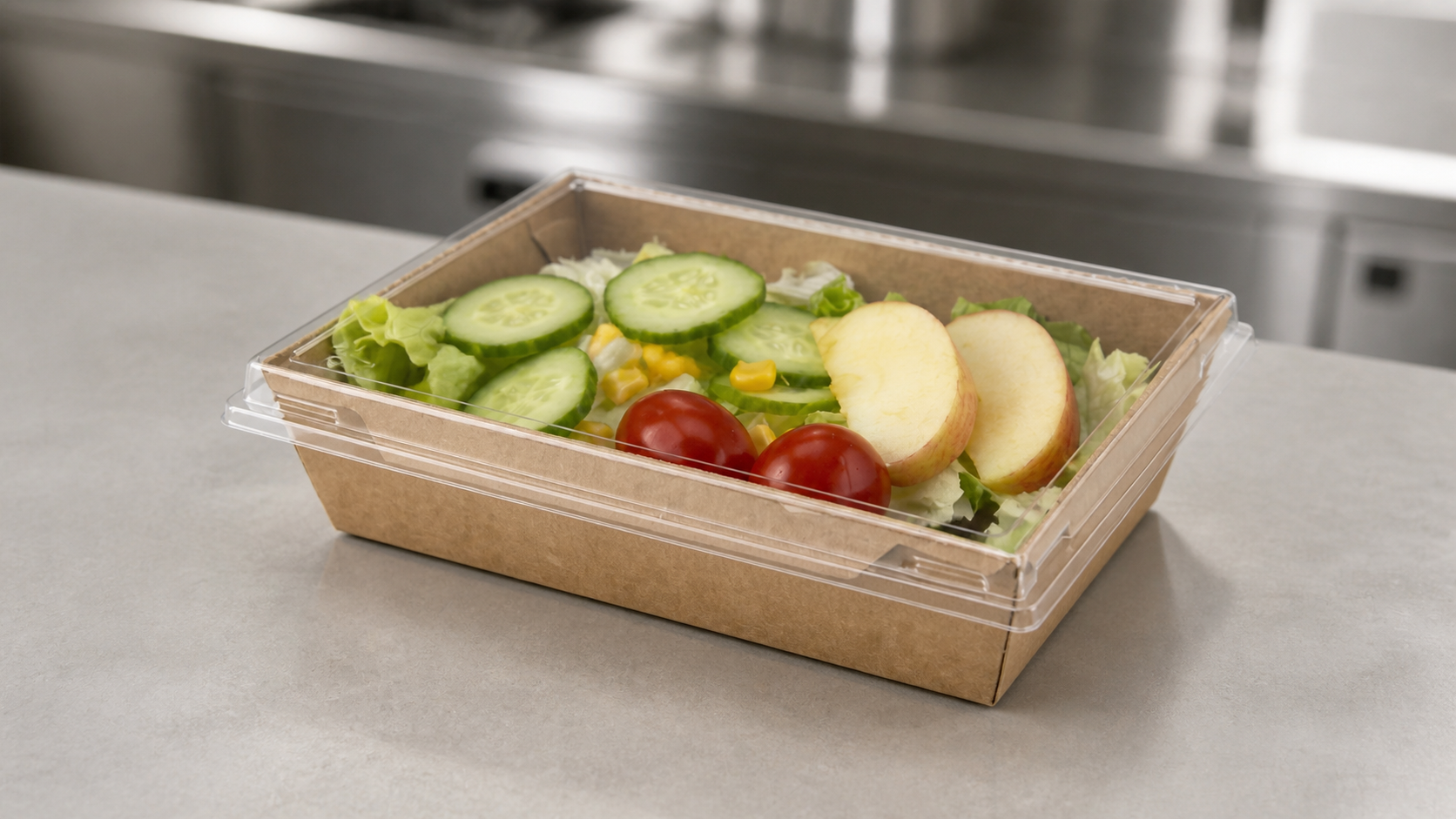
PET is often considered for clear packs used with salads, sandwiches, fruit cups, and other cold or ambient fresh foods. The right decision is not established by the material name alone. Define the food, filling process, closure, storage and display route, visibility target, and required evidence, then evaluate the proposed pack as one configuration.
2026-08-19 - 4 min read
Summary
PET is often considered for clear packs used with salads, sandwiches, fruit cups, and other cold or ambient fresh foods. The right decision is not established by the material name alone. Define the food, filling process, closure, storage and display route, visibility target, and required evidence, then evaluate the proposed pack as one configuration.
Define the Food Journey Before Comparing PET Formats
Cold and ambient fresh foods do not create the same packaging conditions. A dressed salad, cut fruit, and a layered sandwich can differ in moisture, exposed surface, handling sensitivity, and visual expectations.
Start with the actual product rather than a generic container category. Record the ingredients, dressing or sauce, fill condition, target holding period, and where the pack will be handled and displayed.
Separate Appearance From Shelf-Life Decisions
A buyer may want a product to remain easy to see in a refrigerated display. That is an appearance requirement, not by itself a shelf-life conclusion.
Likewise, an observation about product condition at one point in the route does not establish the outcome at every stage. Define the acceptance criteria first, including what the team will observe and when.
Map the Conditions That Matter
Consider the pack from filling through storage, transport, stocking, display, and customer opening. Temperature changes, movement, condensation, and the relationship between wet and dry components may all affect the result that the team sees.
This route map gives the packaging conversation a specific basis. It also helps prevent a sample checked immediately after packing from being treated as evidence for the full food journey.
Treat PET as a Configuration, Not a Promise
PET may be part of the proposed format, but a material label alone does not establish oxygen management, moisture behavior, fogging resistance, crispness, food suitability, or a shelf-life result for a particular pack.
Review the material together with the food, container shape, closure, headspace, fill method, temperature route, and display objective. Each proposed combination needs its own project evidence.
Specify What “Clear” Needs to Mean
Clear packaging is useful when it supports the planned view of the product. The relevant question is whether the selected viewing area remains acceptable after the representative chilled or ambient route.
Define the observation points in advance. They might include post-fill inspection, arrival after handling, stocking, and the end of the intended display period. Record condensation, product visibility, and any change that affects the agreed presentation standard.
Keep Barrier Questions Separate
Oxygen and moisture questions should be stated as separate requirements. Do not assume that clarity establishes either one.
If gas control or moisture management is important, ask for information and evaluation tied to the exact food-and-pack configuration. A general statement about PET cannot replace review of the selected system.
Evaluate the Closure and the Pack Together
A food container performs as a system. The closure relationship, pack geometry, filling process, and expected handling sequence can all matter to the observed result.
Review whether the proposed pack remains appropriately closed and protects the food through the intended route. Do not convert a satisfactory first inspection into a claim about transport, storage, or display performance without representative evaluation.
Use a Practical Test Record
For each evaluation, document the food application, proposed container and closure, fill method, packing date, storage conditions, handling steps, and observation times.
At each point, note visible product condition, condensation, closure condition, and physical damage. A consistent record allows the team to compare configurations against its own criteria rather than relying on a broad material claim.
Refine the Brief When Results Differ
If the evaluated configuration does not meet the defined requirements, update the brief. The next review may need a different format, closure approach, viewing area, pack size, or handling condition.
For projects with demanding atmosphere or shelf-life requirements, obtain project-specific information for the food and packaging system. Packaging review does not replace the food-safety controls applicable to the operation.
Build a More Useful TakeawayPack Inquiry
TakeawayPack’s online directory includes foodservice packaging categories such as cups, bowls, boxes, containers, trays, lids, bags, and cutlery. Its inquiry process can collect the product category, material, size or capacity, expected quantity, customization requirements, and destination information.
For a cold or ambient fresh-food project, add the food application, proposed PET format, closure relationship, storage and display route, required viewing area, and the evaluation questions that matter to the team. Treat oxygen, moisture, fogging, and shelf-life questions as separate requirements that need confirmation for the selected configuration.
A project discussion can also cover structure, coating, capacity, printing, lid matching, and carton packaging. These points should be confirmed for the selected configuration and order rather than inferred from a category description.
To start a project-specific packaging discussion, visit TakeawayPack.
https://takeawaypack.com