Quoted Hot Food Bowls and Lids Should Be Shortlisted Only When Their Intended Pairing Is Verified
A quoted hot-food bowl and lid should remain a conditional option—not a final shortlist choice—until the intended pairing and use conditions are identified for that configuration.
2026-08-07 - 8 min read
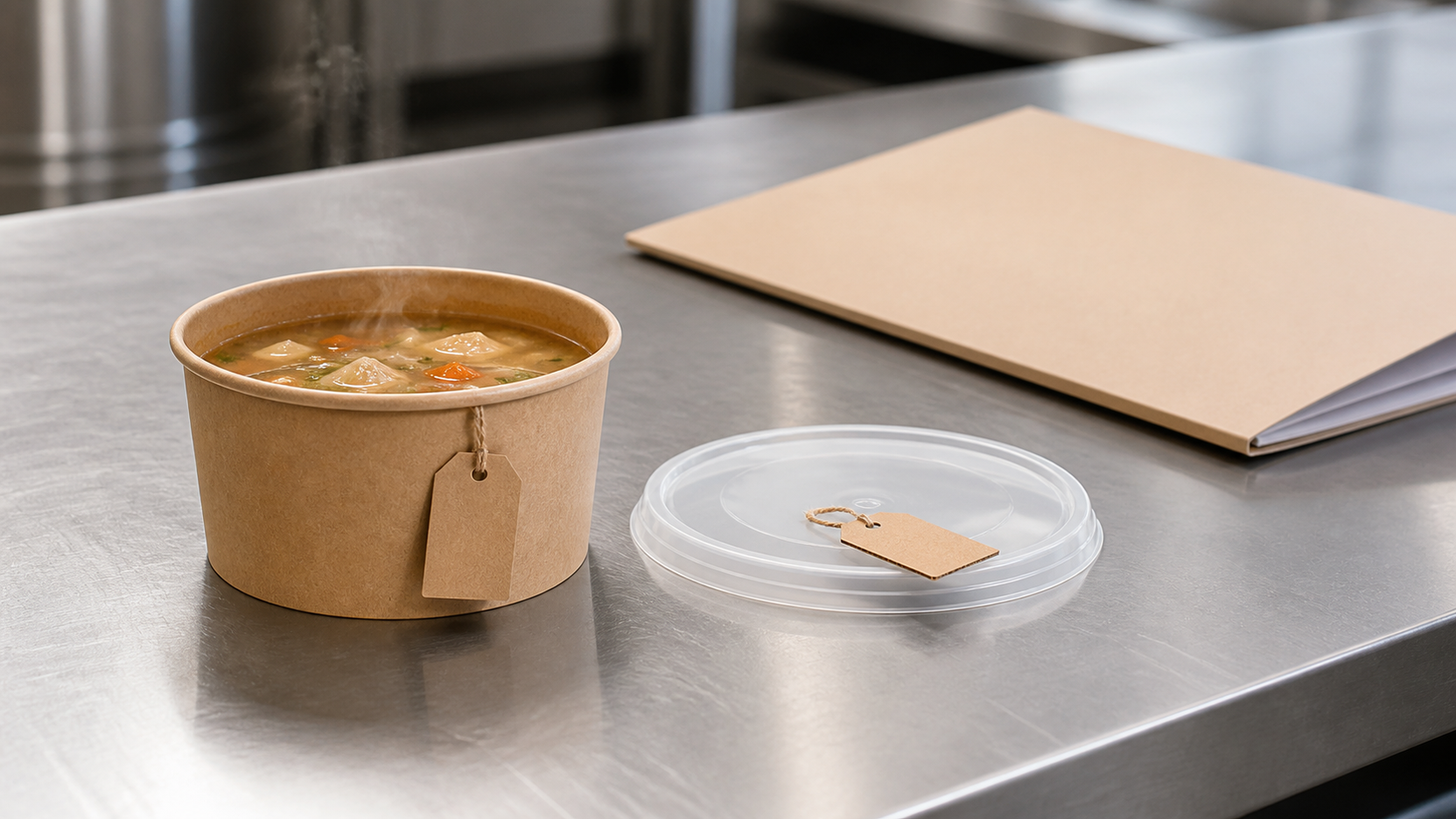
A quoted hot-food bowl and lid should remain a conditional option—not a final shortlist choice—until the intended pairing and use conditions are identified for that configuration. This applies to buyers preparing a US or Canada launch when a lid is included in the quotation, requested for the service format, or necessary to assess the packed meal. Ask for the bowl and lid identifiers, their proposed pairing, and product-specific supporting records before advancing the configuration.
Food-contact documentation is detailed because the use case is detailed
For a food-service buyer, a declaration or compliance document is useful only when it helps distinguish the manufacturer, the product, and the conditions for which the product was assessed. It should not be treated as a generic label that transfers automatically from one bowl, coating, size, or lid to another.
That distinction matters when evaluating a hot-food takeaway system. A bowl may be quoted with a lid, but the quotation alone does not establish whether that lid is the intended match, whether the materials are the same across variants, or whether the documentation covers the finished bowl-and-lid configuration. A document may support a defined product under defined conditions; it does not make every product in a catalogue, every size, or every food application equivalent.
A buyer screening suppliers for a US or Canada launch should therefore start with the exact configuration under review:
- the quoted bowl identifier and capacity;
- the lid identifier and the supplier's intended-pairing statement;
- the material and any relevant coating or barrier description for each component;
- the intended food type, fill temperature, holding time, and destination market; and
- the product-specific document or records offered for that configuration.
At TakeawayPack, the RFQ discussion can cover product or category, material, size or capacity, expected quantity, printing or colour requirements, destination country or port, and lid matching. Those details are not administrative extras. They are the information needed to define what a buyer is actually asking a supplier to support.
What a useful declaration should allow a buyer to see
A technical data sheet can be valuable for product handling, assembly, and functional use. It is not, by itself, a substitute for documentation that identifies the reviewed product and its food-contact use conditions. For a buyer, the practical question is whether the supplied records connect the specific product to the intended use, rather than whether a document carries a reassuring general title.
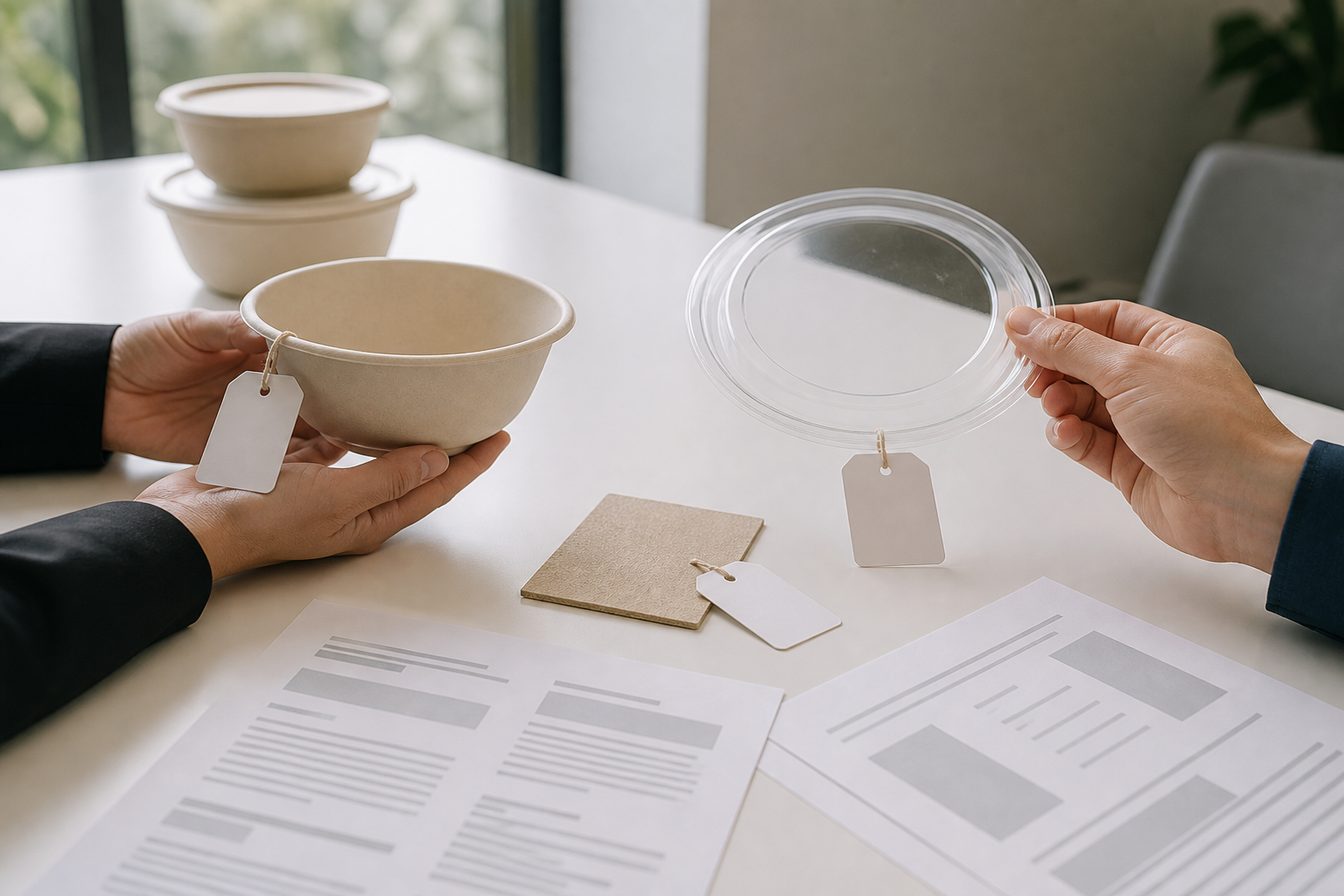
Request records that make the scope clear. Depending on the proposed item and market, that normally means checking whether the document identifies the manufacturer or responsible supplier, the product or product family, the applicable material or component, and the stated conditions of use. Where test reports or declarations are presented, compare their product description with the quoted bowl and lid rather than assuming that a similarly named item is identical.
The document trail should also be read alongside the commercial record. The quotation should name the selected bowl and lid. If a custom print is involved, the printed version should follow the approved artwork route: TakeawayPack prepares a digital proof from the customer's files and production begins after written approval. That approval process confirms the artwork direction; it should not be used as evidence that an unnamed lid, material change, or food-contact claim has been assessed.
Why temperature, contact time, and food type cannot be skipped
Food-contact assessment is not a single, context-free question. Materials can behave differently according to the type of food, contact time, temperature, and the nature of the contacting surface. This is why supplier documentation must be read against the real service situation.
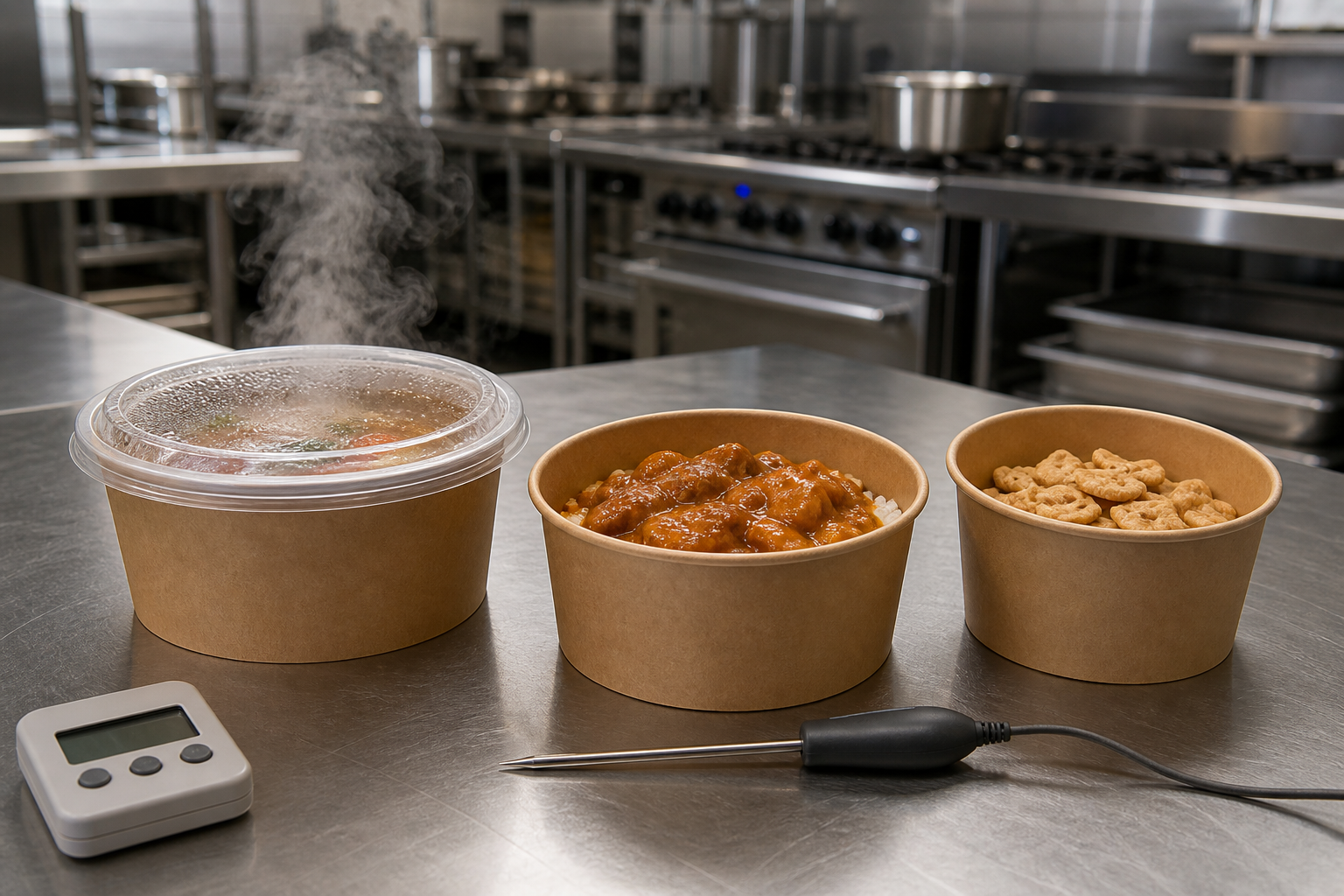
In food-contact assessment, migration describes the transfer of substances from a material into food. Testing approaches may use food simulants—standardized substitutes representing broad food categories—because testing every material against every food on the market is impractical. The important procurement lesson is not to memorize a list of simulants. It is to ensure that the proposed bowl and lid have been considered for the food and conditions that the buyer expects to use.
A hot soup or sauced meal held under a fitted lid is not the same use case as a dry snack in an uncovered container. Likewise, a short takeaway journey is not automatically the same as prolonged holding, reheating, or use at elevated temperatures. If the planned service includes these conditions, they should be stated in the supplier inquiry and reflected in the scope of the records being reviewed.
For that reason, a buyer should not infer microwave suitability from the phrase “hot food,” from a bowl's appearance, or from the presence of a lid. Microwave use is a separate condition that must be confirmed for the exact product and configuration if it is required. The same caution applies to high-temperature filling, extended contact, oily foods, acidic foods, and repeated use.
Food-Contact Evidence Must Match the Actual Temperature, Duration, and Finished Packaging Structure
The bowl and lid must be reviewed as a defined configuration
A declaration can be strong evidence when it identifies the exact product and its intended conditions. It becomes weak evidence when the link between the document and the quotation is unclear. The buyer should therefore ask a simple sequence of questions:
- Which bowl is being quoted? Confirm the product identifier, capacity, material, and relevant variant details.
- Which lid is intended to pair with it? Ask for the lid identifier and an explicit pairing statement rather than relying on a generic “compatible” or “universal” description.
- What food and use conditions are contemplated? Specify the meal type, expected fill temperature, holding time, and any reheating requirement.
- Which document supports that configuration? Check that the record can be traced to the proposed bowl, lid, material, and stated use conditions.
- Does the destination affect the required document set? Identify the market before treating a declaration as adequate for a US or Canada launch.
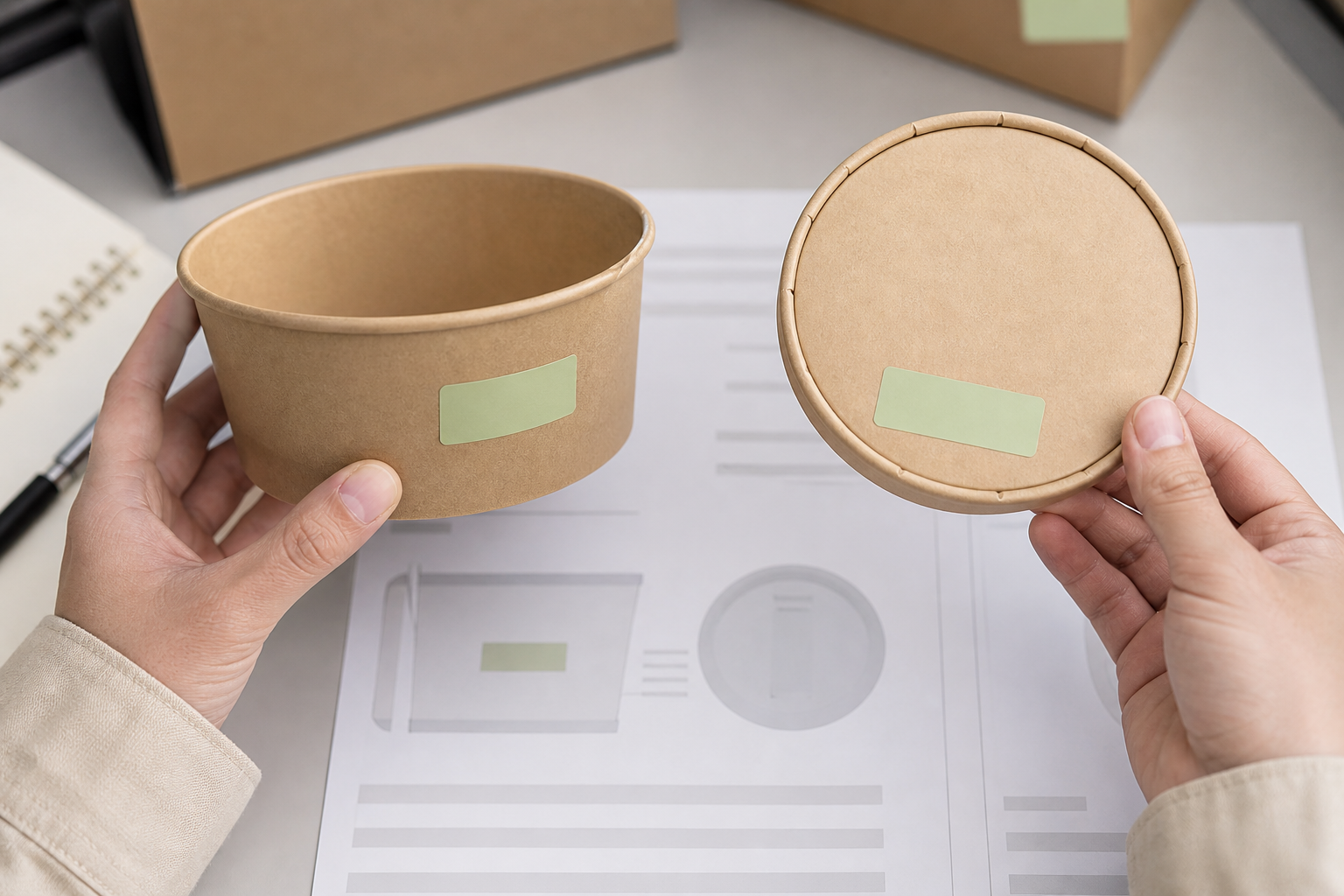
The same disciplined approach applies to coatings and barriers. A coating is not merely a background feature: where it is relevant to the food-contact surface or product structure, it belongs in the product description and in the documentation scope. A buyer should not accept a broad statement about a paper bowl family if the quoted item uses a different coating, construction, or lid arrangement from the item described in the records.
Evidence should be compared, not merely collected
The most useful procurement file is a connected set of records rather than a folder of unrelated certificates. Begin with the quotation and the item identifiers. Then compare the supplier's pairing statement, material description, product-specific declaration, and any available test or supporting records. Make sure the names, variants, and conditions do not conflict.
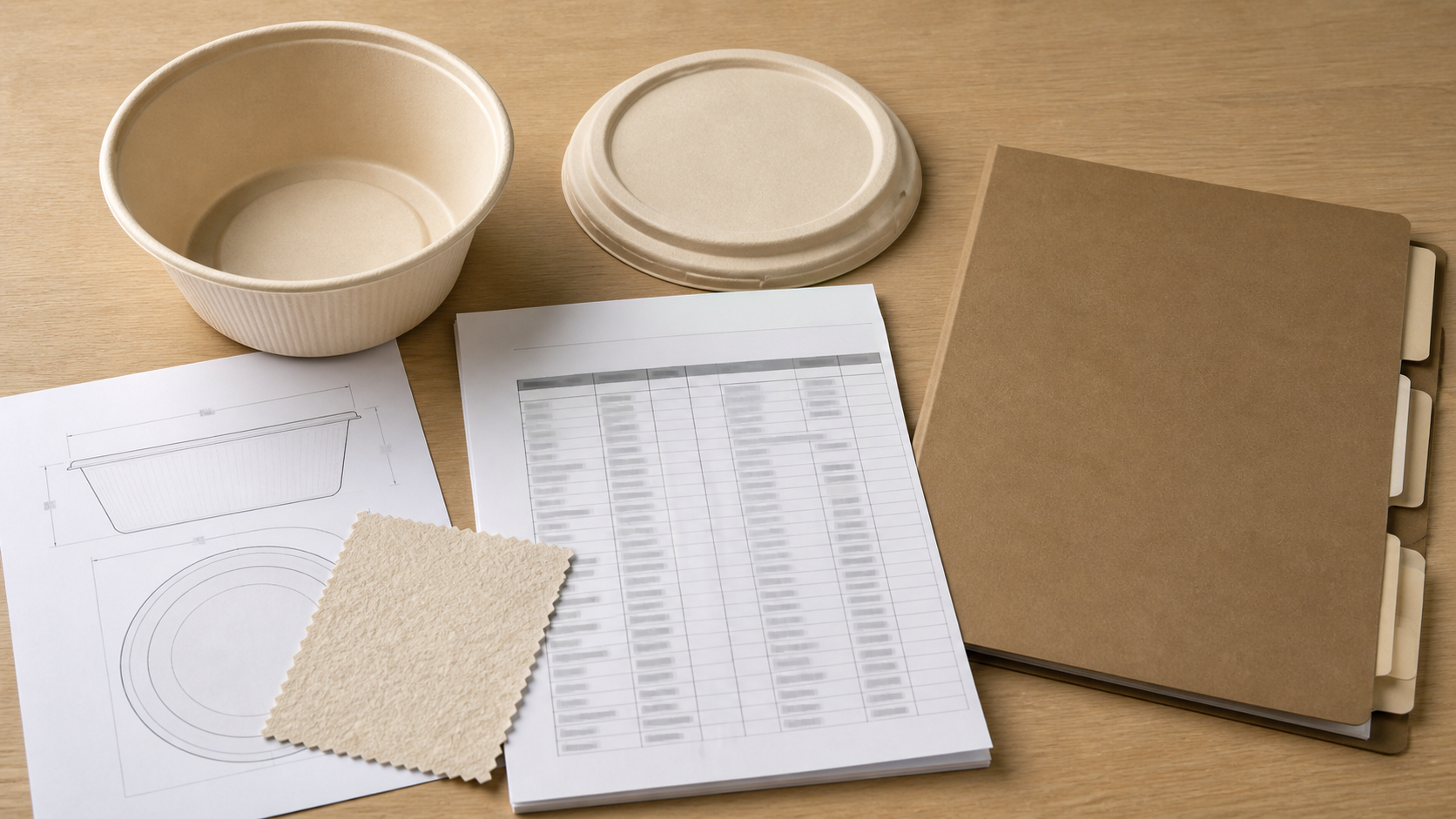
This comparison also helps prevent a common error: treating a registration number, a general quality certificate, or a company-level statement as proof that a particular bowl-and-lid configuration is suitable for the planned service. Such records may help identify an organization or describe a management system, but they do not by themselves define the food-contact scope of an unnamed product.
When evaluating a supplier, ask for clarification if any of the following is missing or inconsistent:
- the bowl SKU or lid SKU is absent from the quotation or supporting records;
- the proposed pairing is not stated;
- the material, coating, capacity, or variant in the document does not match the quoted item;
- the document does not state conditions relevant to the planned food or service temperature;
- the records are tied to a different market, product family, or component; or
- a claim is broad while the supporting product scope is narrow or undefined.
Do not move the configuration to a final shortlist on the basis of a generic declaration, a catalogue image, or an unlinked document. Hold it as conditional until the missing connection is supplied.
A practical request for a bowl-and-lid quotation
A clear request reduces the chance that a supplier responds with documents for a different item. For a hot-food takeaway bowl, provide or request the following information in one thread:
Please confirm the quoted bowl SKU, matching lid SKU, material and relevant coating or barrier for each component, intended food and use conditions, destination market, and the product-specific records that support the proposed bowl-and-lid configuration.
If the project includes custom printing, provide the artwork, colour requirements, quantity, and destination details as part of the RFQ. If a sample, drawing, or print file is used, align it with the selected product identifiers rather than treating it as a substitute for the configuration record. TakeawayPack can support discussion of those RFQ details, including structure, coating, capacity, printing, lid matching, and carton packing; the final scope still needs to be confirmed for the quoted product.
Food-Contact Packaging Reviews Should Confirm the Regulatory Basis of Every Migrating Component
The conclusion: transparency is only useful when it is product-specific
A food-contact declaration is most valuable when it makes a defined product easier to evaluate for a defined use. For hot-food takeaway bowls, the buyer should expect the record to lead back to the actual bowl, the actual lid, and the intended pairing—not just to a general product category or company statement.
Shortlist the configuration only after the bowl and lid identifiers, their intended relationship, the planned conditions of use, and the relevant product-specific records have been aligned. Until then, treat the quotation as a candidate for clarification rather than evidence that the bowl-and-lid system is suitable for every hot-food application or for microwave use.