Restaurant Food Containers for Mains, Sides, and Sauces: A Practical Pack-Out Method
A combination meal does not need one universal takeaway container. It needs a pack-out in which the main, side, and sauce are given different jobs: contain moisture, preserve the intended texture, and stay stable in the bag. Select the container and lid as a pair, keep incompatible foods apart, and approve the setup only after testing the actual filled order.
2026-08-23 - 7 min read
Summary
A combination meal does not need one universal takeaway container. It needs a pack-out in which the main, side, and sauce are given different jobs: contain moisture, preserve the intended texture, and stay stable in the bag. Select the container and lid as a pair, keep incompatible foods apart, and approve the setup only after testing the actual filled order.
Begin With What Each Menu Component Does in Transit
A packed meal changes after the kitchen closes the lid. Hot food releases moisture. Oil and sauce move when the bag is carried. A crisp component can lose its surface texture if it sits beside a steaming one.
For that reason, start with a component list rather than a catalogue. Mark each item as one of the following:
- a moist main or a dish with loose sauce;
- a dry or crisp side;
- a cold side or dessert;
- a dip, dressing, gravy, or other add-on; or
- a liquid item that needs especially careful validation.
The list does not prescribe one material. It clarifies what the pack has to do. The main must remain contained, the side must not be flooded by moisture, and the sauce must not become a loose object inside the delivery bag.
Give the Main Its Own Stable Container-and-Lid Pair
Saucy mains need room below the closure
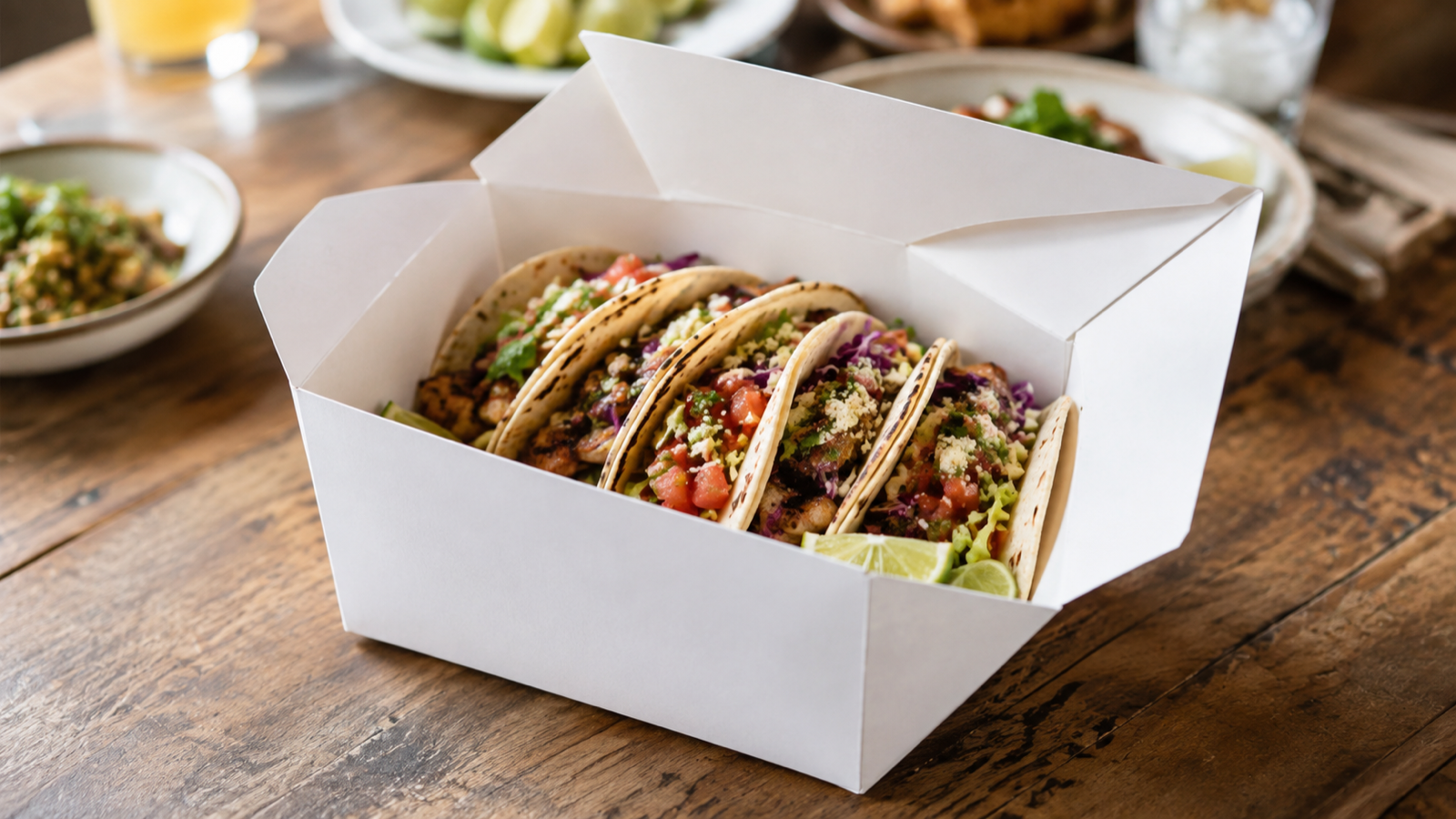
Rice bowls, pasta dishes, curries, and similar mains are easier to close consistently when the food is not pressed against the lid. A reasonable space between the portion and the closure reduces the chance that sauce is smeared across the rim before the order leaves.
Choose a container shape that fits the portion and a lid intended for that exact rim. A deep format may make sense for a wet main; a wider, shallower format may suit another dish. The useful question is not whether a container looks substantial when empty. It is whether the filled serving stays below the closing line and remains stable through the restaurant's normal handoff.
Compartments solve separation only when the portion fits
A divided tray can keep rice, protein, vegetables, and a small wet element from meeting too early. It should not be treated as a shortcut. Check the volume of every section with the real serving utensil, then close the intended lid and inspect the boundaries after the tray has been moved.
If a sauce can flow over a divider, a separate cup is usually a clearer solution. Separation on paper is not the same as separation in a moving bag.
Protect Sides From Moisture Rather Than Sealing Them Like Soup
Crisp sides need a different moisture strategy
Fries, fried items, and other crisp sides can be affected when heat and moisture collect around them. They should not automatically share a tightly closed, humid space with a saucy main.
Depending on the menu and the chosen format, a side may be better in a pack that allows some moisture to escape or in a separately packed portion. Any opening or vent should be evaluated for that particular food and route; it is not a substitute for a secure closure on liquid items.
Cold sides benefit from a clean, protected presentation
Salads, fruit, and desserts have a different set of priorities. Avoid crushing, keep wet additions from spreading across delicate ingredients, and consider whether a separate dressing cup gives the customer more control. Visibility may be helpful for a menu item, but it should not override fit, stacking, or lid compatibility.
Treat Sauces as a Separate Delivery Risk
A dip can be small yet create the biggest mess in an order. Give it a dedicated cup and the matching closure instead of relying on a compartment intended for solid food.
Do not fill the cup to its edge. Close it as a separate station check, then locate it so that it cannot roll, lean against a lid edge, or press into a crisp item. A tray insert, divider, or deliberate bag position can reduce free movement; the right choice depends on the complete order.
Gravy, broth, and thin sauces deserve the most conservative trial. Test the cup, lid, fill level, carrier, and bag arrangement together. A conclusion about one of those elements alone does not prove that the finished order will travel as expected.
Compare Materials by the Meal and the Evidence Available
Restaurants often compare paper-based, fibre-based, plastic, aluminium, and other formats. Each category can contain many configurations, coatings, walls, and lid systems. Material names therefore do not replace product-specific checks.
For each shortlisted option, ask the supplier for the exact configuration, intended use information, compatible lid, and documentation appropriate to the order and destination. If a claim concerns food contact, heat use, compostability, recycled content, or a certification, ask for supporting records that match the exact item—not a broad category description.
This approach also avoids overstating sustainability. Local collection systems, final configuration, and customer handling can all affect what happens after use. Describe a packaging choice precisely and avoid turning a material label into a universal environmental claim.
Add a Pack-Out Trial Before Changing the Menu
A short trial is more informative than an assumption made from an empty sample. Run it with the actual recipe, portion, temperature, container, lid, sauce cup, carrier, and delivery bag.
- Fill and close each component as staff would during service.
- Arrange the order in its normal packing sequence.
- Recreate expected stacking, carrying, and moderate tilting without claiming that the result represents every route.
- Reopen the meal after the expected holding period.
- Record sauce movement, rim residue, lid shift, condensation, compression, and contact between components.
Change one part at a time after a failure. For example, reduce a fill level before changing the container, or change the bag layout before concluding that the container format is unsuitable. A simple record makes later menu changes easier to assess and gives the team a clear packing instruction.
Ask Suppliers Questions That Lead to a Usable Quote
A supplier cannot identify a suitable configuration from “containers for delivery” alone. Describe the food, target portion, whether a lid is needed, estimated quantity, any print requirements, destination, and the way the order will be carried. Ask which lid is paired with the proposed container and what information is available for that specific combination.
TakeawayPack presents foodservice packaging sourcing around cups, containers, bags, trays, and branded packs. Its current site also identifies material, size or capacity, and lid matching as topics for a quote-ready request, with sample support and order details to be confirmed for the exact requirement. That makes a meal map useful input to an RFQ rather than a promise that any listed category will suit every dish.
Do not infer a particular SKU's performance, certification, commercial terms, availability, or delivery suitability from a category page. Confirm those points for the selected item, market, and order.
Frequently Asked Questions
Can one container hold the main, side, and sauce?
It can when the real portion, divider layout, and lid all keep the components stable. When the meal combines a wet main with a crisp side, separate formats or a dedicated sauce cup can make the requirements easier to manage.
Should every hot item have a vented lid?
No. A feature that may help a texture-sensitive side can create the wrong risk for a liquid dish. Decide according to the food's moisture and movement, then validate the chosen container-and-lid pairing.
What is the most useful pre-launch check?
Test the completed order, not an empty container. The filled meal, lid, sauce cup, carrier, and bag must be reviewed together because they interact during handling.
Make the Packaging System Match the Meal
Reliable takeaway packing is a set of connected choices, not a single container purchase. Give the wet main adequate room and a compatible closure, protect the side from unwanted moisture, secure sauces independently, and test the complete pack-out before standardising it.
For a quote-ready conversation about foodservice packaging requirements, visit https://takeawaypack.com