Seasonal Menu Packaging Procurement: How to Avoid Dead Stock After the Campaign
A limited-edition dessert menu does not require limited-edition packaging at every layer. Build the purchasing plan around a small set of reusable structural SKUs, then make the seasonal moment visible through components that can be ordered later, changed quickly, and exhausted first. The result is a festive Mid-Autumn or Christmas presentation without turning every leftover box, bag, or cup sleeve into obsolete inventory.
2026-08-30 - 6 min read
Summary
A limited-edition dessert menu does not require limited-edition packaging at every layer. Build the purchasing plan around a small set of reusable structural SKUs, then make the seasonal moment visible through components that can be ordered later, changed quickly, and exhausted first. The result is a festive Mid-Autumn or Christmas presentation without turning every leftover box, bag, or cup sleeve into obsolete inventory.
Start With a Core-and-Overlay Architecture
Separate every packaging decision into two questions: what must protect, carry, or contain the product, and what must communicate the campaign.
The first job belongs to the core. The second belongs to the overlay. When those jobs are mixed into one fully holiday-printed box, the entire purchase becomes unusable as soon as the promotion ends.
Make core SKUs deliberately ordinary
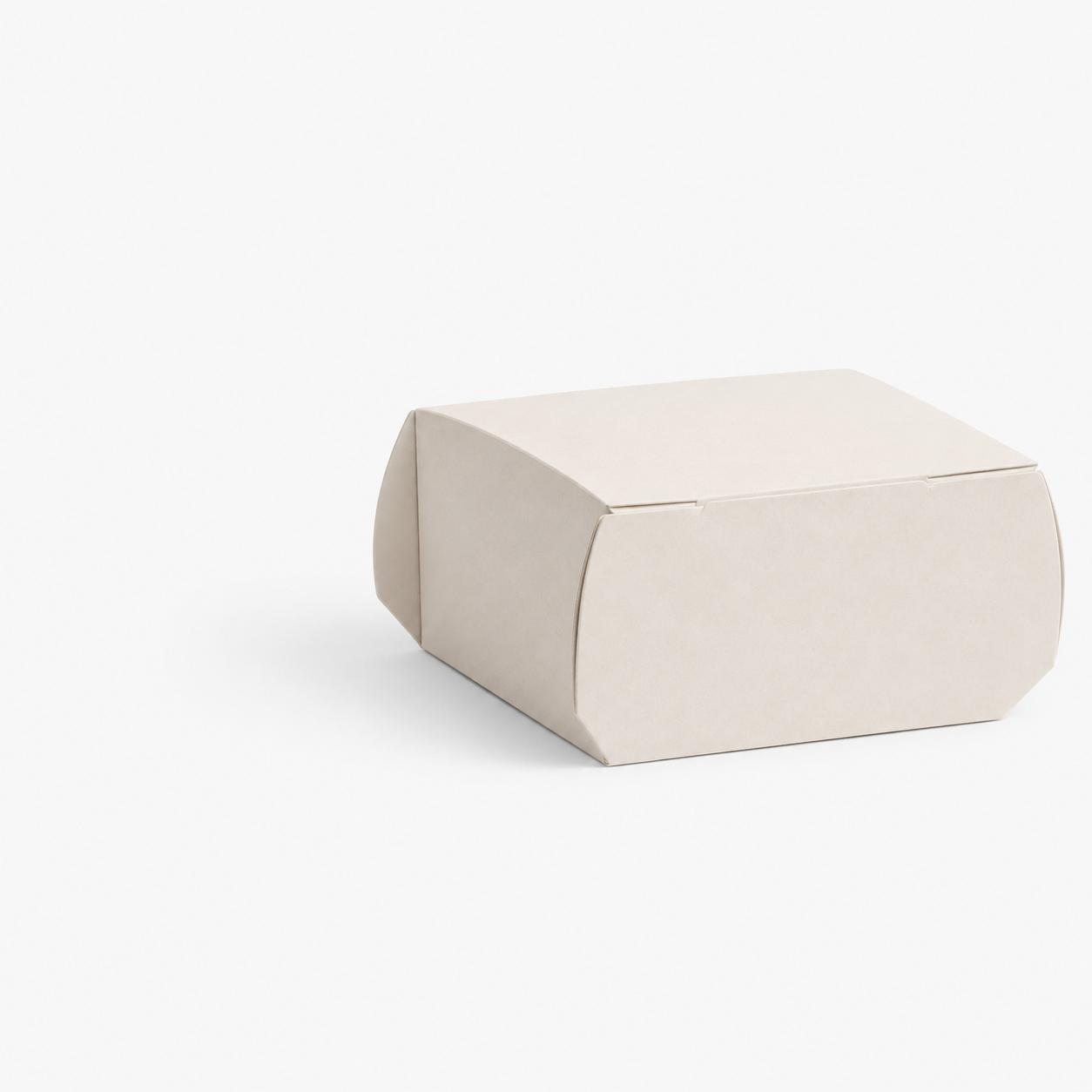
Choose a compact permanent range: for example, one or two box footprints, compatible inserts, one bag format, and the everyday food-contact formats already used in normal service. Give these pieces a neutral brand treatment and no holiday name, year, date, menu price, or event-specific claim.
The core still needs to fit the actual product. Test dessert dimensions, closure, stacking, delivery handling, and any insert before approving a run. A reusable box that fails in transit is not a low-risk SKU.
Standard structures and existing dielines are usually easier to buy in smaller or more flexible quantities than a new structural format. When comparing quotes, ask suppliers to separate one-time setup, per-unit cost, lead time, permitted over/under delivery, and ownership of any excess production.
Put the Festive Identity on Replaceable Layers
Seasonality should be most visible where it is cheapest to remove.
Labels, seals, and cards
Use labels or seals for the campaign name, date-sensitive language, collection name, limited-edition message, and product variant. These are the first components to stop using at campaign close, so they should be ordered against a conservative demand case and replenished only when sell-through supports it.
A small insert card can add a gift message or menu story without changing the box. Keep it outside the food-contact area and make sure the operation can apply it consistently during busy service.
Sleeves and belly bands
A wrap around a standard box can create the strongest visual transformation without committing the box itself to one holiday. Keep the dimensions tied to the chosen core box; do not create a separate structural SKU merely to accommodate an illustration.
For cups, an interchangeable sleeve can carry the seasonal palette while the cup remains an all-season item. Confirm that the sleeve fits the real cup, remains readable after handling, and does not interfere with lids or hot-drink use.
Gift bags and finishing touches
Keep the bag usable beyond the campaign. A neutral bag can become festive with a tag, tissue, ribbon, or seal that is removed or replaced after the holiday. Avoid printing dates, campaign names, or highly specific motifs directly on the bag unless the expected volume is genuinely repeatable every year.
Buy in Waves, Not as One Bet
Do not treat the full forecast as a single irreversible print run. Use the forecast to set a ceiling, then release production in stages.
Set three demand cases
Prepare conservative, expected, and upside cases for each core SKU and each overlay. Base the cases on comparable menu periods, planned launch activity, store or channel capacity, and the actual campaign selling window. The most uncertain component should receive the smallest first commitment.
Core packaging may justify a larger order because it can continue into regular service. Seasonal labels, bands, and cards should be tied more tightly to the conservative case.
Match the wave to the component
Place the core order early enough to protect availability and allow sampling. Place the first overlay order later, after artwork, menu quantities, and launch timing are firmer. Reserve a pre-agreed replenishment option or production capacity where possible, rather than assuming a rush reorder will be available.
Track daily consumption separately for boxes, bags, sleeves, and labels. A campaign can sell the same dessert through different channels with different packaging mixes; a single total order count hides that risk.
Approve a sample before scaling
Review the actual materials and artwork, not only a digital proof. Pack the real dessert, close the package, stack it, and run a delivery-style handling check. Confirm that colors, adhesives, inserts, and sleeves work together before the larger release.
Define an Exit Plan Before You Place the PO
Every seasonal purchase order should state what happens if demand lands below plan.
Consume the neutral core first
After the campaign, remove dated overlays and route clean, approved core packaging into the standard menu program. This only works if the design, dimensions, food-contact suitability, and condition remain appropriate for the new use.
Do not relabel a box in a way that obscures required product information, creates a misleading claim, or defeats traceability. Keep a clear rule for which elements may be removed, replaced, or reused.
Use surplus overlays only within their honest scope
Undated, generic celebration elements may work for another compatible event if the message is still accurate. Holiday-specific, year-specific, price-specific, or campaign-specific pieces should not be forced into everyday service simply to clear inventory.
For surplus that cannot be reused, decide in advance whether the approved path is controlled storage for a future matching campaign, supplier return or buyback where agreed, donation of unused non-food-contact materials where suitable, or disposal through the applicable local waste route. Record the quantity and reason so the next forecast improves.
Set a stop-and-switch rule
Name the date or inventory threshold at which the team stops applying festive overlays and returns to standard presentation. This prevents a campaign from drifting past its intended window and protects the remaining core packaging for normal use.
Use a Simple Decision Rule for Every New Detail
Before adding a special finish, ask four questions:
- Does it change the package structure or only its surface?
- Can it be removed or swapped without damaging the core SKU?
- Can it be ordered in a smaller, later, or repeatable run?
- If demand is low, does it have a truthful use after the campaign?
If the answer to the last three questions is no, keep that detail out of the first run. Reserve fully custom, holiday-specific boxes for a proven hero product with a realistic sell-through plan, not for the entire limited menu.
A modular system makes the seasonal offer feel intentional while keeping the expensive, high-volume packaging useful after the calendar changes. For a neutral starting point for packaging discussions, visit https://takeawaypack.com.