Selected Hot Food Bowls Should Be Reviewed Against Requested Product Specifications
A selected hot food bowl should be reviewed against requested product specifications before a supplier is retained on a shortlist. This applies to buyers preparing a hot-food takeaway bowl project for the United States or Canada after identifying a bowl they may wish to purchase. Buyers should state the requested specification and compare each supplier’s response to it before relying on general product descriptions or documents. No specific bowl SKU, material, temperature condition, or independent test result is available here, so this article does not approve any individual bowl for a particular use.
2026-07-30 - 4 min read
Use the selected bowl as the review object
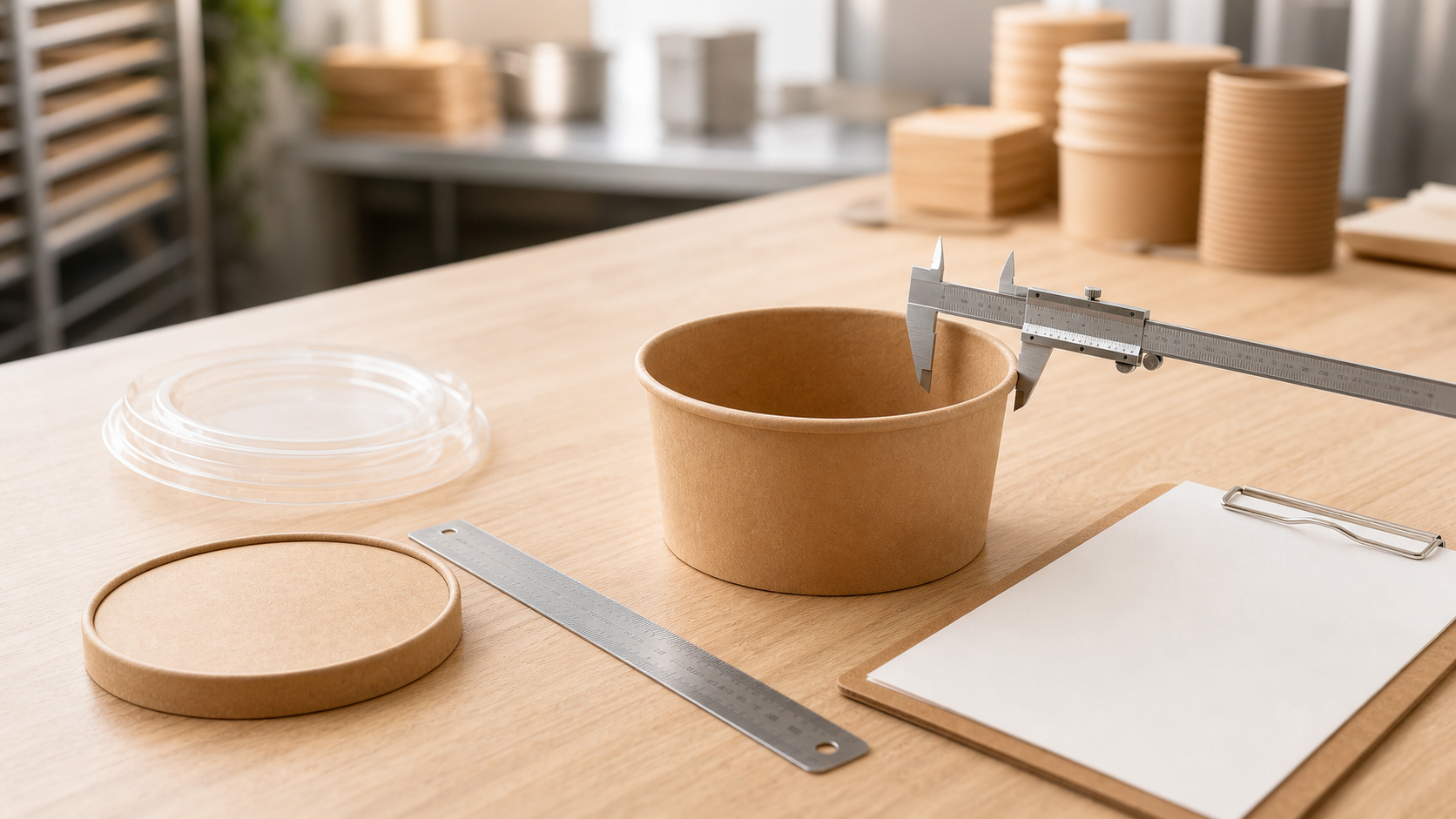
The review should concern the bowl that the buyer intends to quote or source, rather than a broad bowl category or an image of a similar product. A selected bowl needs a traceable identifier, such as the supplier’s product name, SKU, drawing reference, or another record that can be carried across the RFQ, quotation, specification information, and supporting documentation.
Turn the request into a usable specification
A usable request identifies the features that matter to the purchase decision. Depending on the project, those may include capacity or size, material description, structure, intended food, lid relationship, expected quantity, customization needs, and destination. TakeawayPack’s public RFQ materials request product or category, material and size or capacity, estimated quantity, printing or colour or logo requirements, and destination port or country. Those inputs are a practical starting point, but the buyer should add any project-specific hot-food conditions that affect the evaluation.
Compare the response, not the category label
Keep a candidate comparable when its submitted description can be checked against the requested specification. The buyer should look for agreement between the selected bowl identifier, the stated configuration, and the features requested for the project. A supplier response that names only a product family, a generic capacity range, or a similar visual style does not by itself demonstrate that the selected bowl meets the buyer’s requested scope.
Request records that make the match assessable
Ask for a quotation, product image, drawing, or specification record that identifies the reviewed bowl, together with any available food-contact documentation relevant to the request. TakeawayPack states publicly that document scope can be confirmed by SKU, quantity, destination market, and claim category. For that reason, the buyer should examine whether each record can be connected to the selected bowl and the intended project, rather than treating a general supplier statement as proof of the requested specification.
When not to proceed
Put the review on hold if the selected bowl cannot be identified in the supplier’s response, if key requested characteristics are missing or inconsistent, or if the supplied evidence refers to a different product or unclear configuration. The appropriate outcome is clarification, not an inferred match. A product should not remain comparable merely because it appears broadly similar to the requested bowl.
Next step
Issue one written specification request for the selected bowl and ask every candidate to reply against the same fields. Include the bowl identifier, intended food and use conditions, expected destination, required capacity or dimensions, material or structure request where applicable, lid relationship, quantity, and any documentation required for the review. Retain only responses that make the requested-versus-submitted comparison clear.
Sources and scope
TakeawayPack’s public RFQ process identifies the project information it can collect, and its public certifications and materials information describes documentation discussions by SKU, quantity, destination market, and claim category. These sources support asking for a defined specification and traceable evidence. They do not establish the specifications, food-contact status, temperature suitability, or performance of a particular hot food bowl.