Should You Use Vented Takeout Containers for Crispy Foods?
Vented takeout containers can be a useful packaging direction when a hot menu item leaves the kitchen with a crisp, browned, or breaded exterior. They are not a universal default. The right decision starts with the dish, its moisture, the likely delivery journey, and the type of customer experience the restaurant wants to protect.
2026-08-23 - 4 min read
Summary
Vented takeout containers can be a useful packaging direction when a hot menu item leaves the kitchen with a crisp, browned, or breaded exterior. They are not a universal default. The right decision starts with the dish, its moisture, the likely delivery journey, and the type of customer experience the restaurant wants to protect.
Start With the Food, Not the Container
A delivery pack is part of the final serving experience. During the journey, a hot item can release steam inside the pack. For foods defined by a dry outer texture, that changing environment is worth considering before a format is selected.
The key question is simple: would added humidity change the way this dish is meant to be eaten? If the answer is yes, a vented-format discussion may be relevant. If the answer is no, ventilation may solve a problem that the menu item does not have.
Menu items that merit a ventilation review
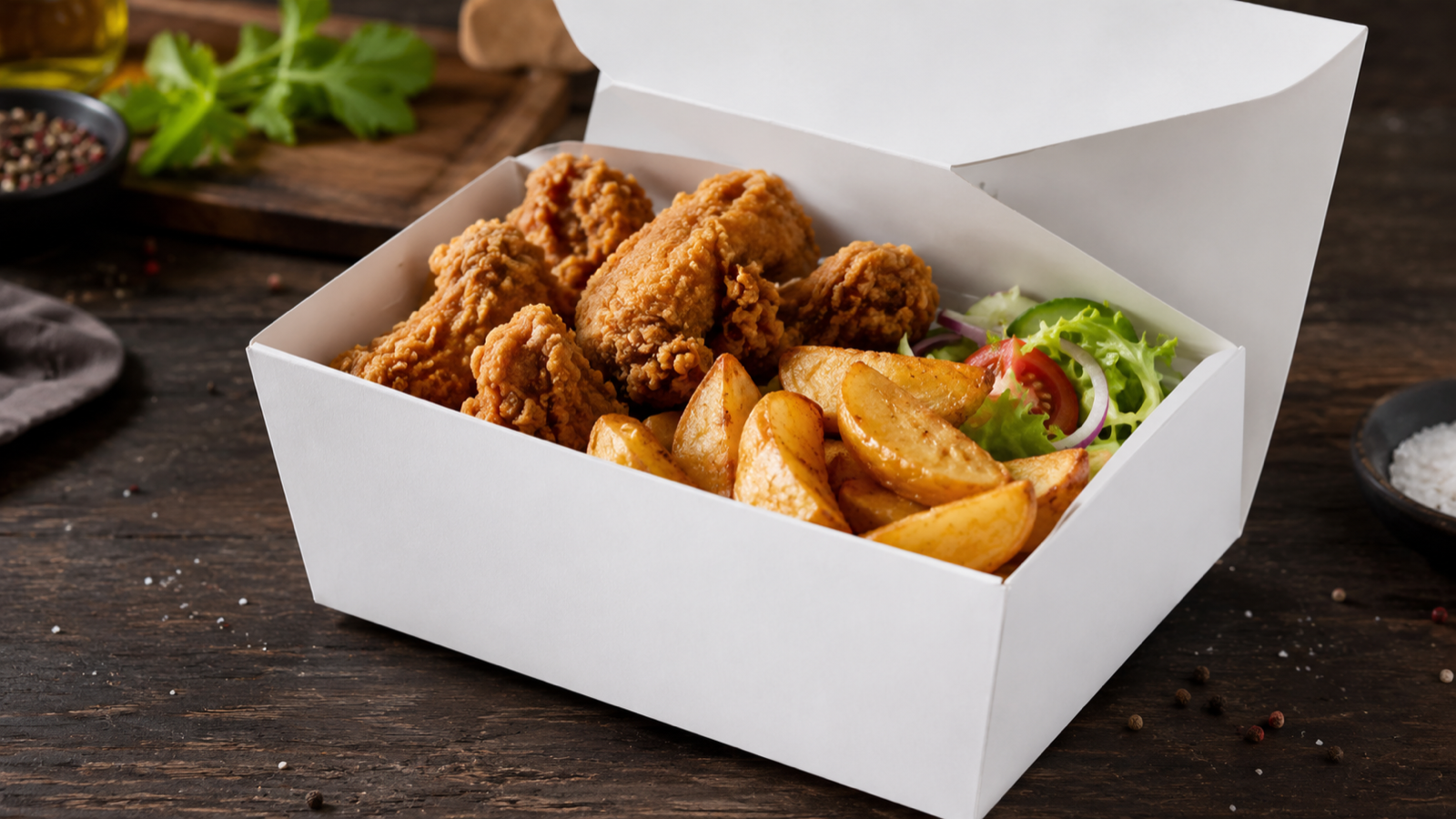
Consider reviewing ventilation for hot foods with a crisp shell, crust, coating, or toasted surface. Examples may include fries, fried chicken, breaded seafood, spring rolls, roasted potatoes, pizza slices, toasted sandwiches, and similar items.
This is not a promise about a specific package or product result. It is a menu-design prompt: identify the qualities customers notice first, then ask how the pack and delivery journey might affect them.
A practical kitchen question
Ask the team to name the first sign that an item has lost its appeal after travel. Is it a softened crust? A damp coating? A less distinct toasted surface?
That description gives procurement and operations teams a clearer brief than a broad request for “better containers.”
When Venting May Be the Wrong Direction
Ventilation should be evaluated alongside the nature of the meal, not treated as a default upgrade.
Dishes that depend on sauce, broth, gravy, or retained moisture call for a different packaging conversation. Soups, stews, curries, braised dishes, sauced pasta, and similar meals should be considered on their own terms. Cold salads and chilled bowls also need a separate review rather than being grouped with hot crispy foods.
A mixed order can require more than one packaging approach. For example, a fried side and a sauced main may have different priorities even when they travel in the same delivery bag.
Build the Decision Around the Delivery Journey
The time from packing to opening is not always predictable. An order may wait for pickup, travel through several stops, or sit briefly after arrival. Rather than choosing by habit, map the real route from the pass to the customer.
Questions to test before changing a format
Use a short trial plan built around the actual menu:
- Select one or two representative dishes with different moisture profiles.
- Define the expected travel conditions, including the longest common delivery route.
- Compare the customer-facing appearance and eating experience at opening time.
- Record staff observations in plain language.
- Decide whether one format fits the item, or whether the menu needs separate packaging paths.
The goal is not to make a broad claim from one shift. It is to create a repeatable decision that a kitchen, purchasing team, and brand team can all understand.
Give Suppliers a Clear Packaging Brief
A useful RFQ makes it easier to compare responses. Describe the food category, intended format, size or capacity, material preference, quantity, customization needs, and destination. Add the delivery scenario and the particular customer experience you are trying to evaluate.
For a vented-format inquiry, it is also helpful to state that the item is being considered for a hot, crisp-surface menu application. That keeps the discussion tied to the food rather than a generic packaging label.
Keep claims separate from questions
Do not assume that a named SKU has a particular performance feature. Instead, ask the supplier to identify the exact configuration under consideration and provide the information needed for your evaluation. Review any claimed attributes against the specific item and intended use before relying on them.
A Sourcing Starting Point for Foodservice Buyers
TakeawayPack’s website presents foodservice packaging categories including cups, containers, bags, and trays. Its RFQ guidance asks buyers to provide product, material, size, quantity, customization, and destination details, so these fields can form a practical starting point for a packaging brief.
For a custom packaging conversation, prepare the menu description and the questions your team needs answered before requesting a quotation. Explore the catalog and submit an inquiry at https://takeawaypack.com