The Steam–Seal Tradeoff: A Takeaway Packaging Test for Crisp Food and Saucy Food
Test steam and liquid paths separately before approving packaging for crisp or saucy hot food.
2026-07-27 - 4 min read
Name the failure that matters most
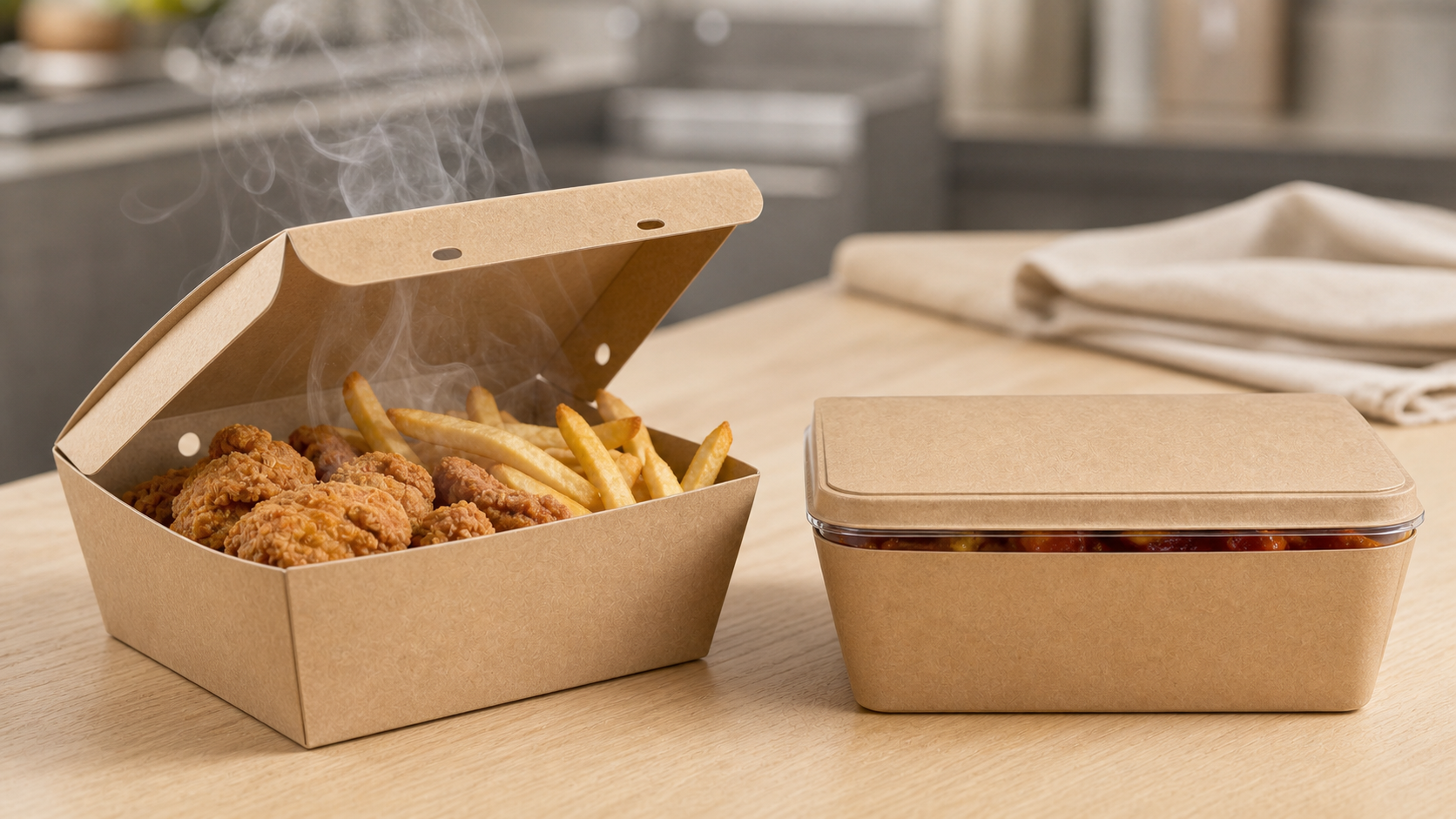
Hot takeaway packaging has two jobs that can conflict. A crisp item needs a controlled path for steam to leave; a saucy item needs a controlled path that keeps liquid inside.
Start with the food, not the container. Decide whether unacceptable failure is texture loss, leakage, collapse, a shifted lid or one meal component damaging another. If an order contains both crisp and saucy items, separation may be the answer rather than a compromise container.
Map steam and liquid paths separately
Ask where hot moisture goes after closure and where liquid can move when the order is tilted, stacked or carried. Do not accept vented as an answer to liquid containment, or leak resistant as an answer to steam management.
Test the assembled system—food, container, closure, carry bag and expected route—with the real serving condition. Record texture, visible moisture, closure condition, leakage, stacking stability and handling failure.
Approve a route, not a claim
Choose the route that controls the menu failure the operation cannot tolerate, then retain the tested version for the next quote or sample. The same container can behave differently with a different portion, hotter fill, longer route or carry configuration. Related: preventing delivery leaks and the carry-system failure test.