
Sushi and Sashimi Takeout Packaging: Clear Containers, Sauce Cups and Crush-Resistant Cold Transport
Premium sushi delivery packaging should work as one system: a close-fitting display tray protects the arrangement, sealed condiments keep moisture away from the food, an insulated carrier supports the cold chain, and a rigid outer layer prevents compression. Start with the finished platter—not a generic container—and test the complete pack on real delivery routes before standardizing it.
2026-09-01 - 7 min read
Summary
Premium sushi delivery packaging should work as one system: a close-fitting display tray protects the arrangement, sealed condiments keep moisture away from the food, an insulated carrier supports the cold chain, and a rigid outer layer prevents compression. Start with the finished platter—not a generic container—and test the complete pack on real delivery routes before standardizing it.
Why Sushi and Sashimi Need a Different Delivery Pack
A high-ticket sushi platter is judged before it is eaten. Customers see whether the sashimi still looks precise, whether the rolls stayed in their rows, and whether the lid is clear enough to show the food.
That makes packaging more than a container. It is the serving surface, the transport restraint, and part of the temperature-control process.
The main delivery risks are simple: movement, lid contact, condensation, sauce leaks, and compression from other orders. Addressing one risk while ignoring the others is how an attractive tray can still arrive looking disordered.
Choose a Clear Tray for the Actual Platter
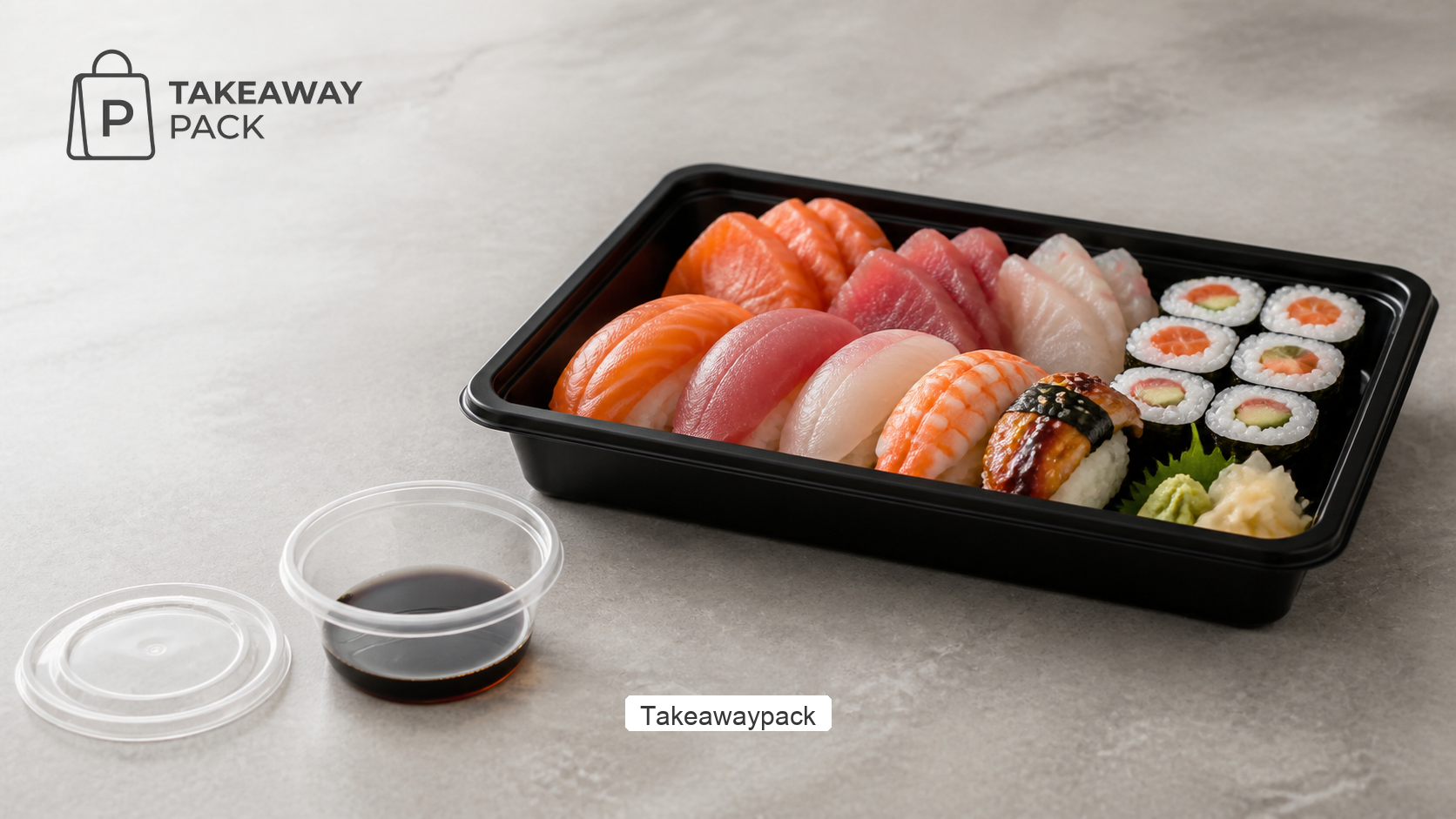
Use a rigid, food-contact-suitable tray with a clear, secure lid. For chilled sushi and sashimi, clarity matters because it preserves the visual appeal of the fish, rice, and garnish without requiring the customer to open the package.
A dark base with a clear lid can create useful contrast for colorful fish. A fully clear tray can suit a lighter, minimalist presentation. Base color is a display decision, not evidence of freshness.
Fit is more important than a nominal piece count. Pack a normal finished order in the candidate tray, close the lid, and inspect it from the side. The lid needs enough clearance for the tallest piece and garnish, but the tray should not leave broad open areas where rolls can slide during turns or braking.
For small sets, a low rectangular tray usually gives good stability. For party platters, use a wide, rigid format designed for the platter footprint rather than forcing the food into several loose containers.
Look for a positive closure and a base that does not flex when held from one side. If a filled tray bends at pickup, it is not a good candidate for premium delivery.
Use Dividers to Protect the Arrangement
A flat open tray may be enough for counter service, but a delivery platter benefits from internal restraint.
Choose integrated compartments, molded wells, or fitted dividers where they suit the menu. They should keep nigiri, rolls, sashimi, garnish, and condiments from colliding without making the arrangement feel crowded.
Separate wet and dry elements. Pickled ginger, sauces, and moist garnishes should not be able to migrate into rice or nori during transport. Crispy side items should travel separately from chilled sushi when their texture matters.
For a mixed platter, build the layout around the pieces most likely to tip or shift. Secure those first, then use the remaining space for stable rolls and garnish. This is more dependable than filling an oversized tray and hoping a lid will hold everything in place.
Keep Soy, Wasabi, and Ginger in Locked Positions
Loose condiment cups can turn into moving weights inside a delivery bag. Put each condiment in a sealed, compatible cup and give it a defined location: a recessed well, a separated corner compartment, or a dedicated side carrier.
Select the cup and lid as a pair. Test the filled cup for leakage, including after it has been tilted and pressed against its lid. A cup that closes on a prep bench may still leak when it is squeezed in a courier bag.
Keep ginger separate from the sushi when possible. Its liquid can make the presentation untidy and affect nearby rice. Sauce cups should not sit on top of a clear lid or directly against delicate garnish.
Portion size should match the menu and local operating practice. Avoid treating a standard cup size as universal; the best size is the one that serves the platter without unused, spill-prone volume.
Build a Cold-Chain Carrier, Not Just a Cold Bag
A tray does not replace temperature control. For raw fish and sashimi, use the restaurant’s approved food-safety procedures, time limits, and temperature controls, along with applicable local requirements.
The carrier should keep the tray level. Choose an insulated bag or cooler with a wide, flat bottom and enough internal height that the lid is not pressed by the bag. A rigid base board or tray carrier inside the insulated bag helps prevent sagging and tilt.
Use cooling media according to the restaurant’s validated process. Keep it from crushing the tray or creating unmanaged condensation around paper components. Do not assume a gel pack, bag, or container alone proves safe holding performance; verify the complete system for the planned route and weather conditions.
Pack close to dispatch, limit unnecessary handoffs, and avoid placing hot items in the same insulated space as chilled sushi. If a route is long or variable, confirm actual product temperatures as part of the delivery trial.
Add an Outer Layer That Resists Compression
For premium platters, a soft delivery bag alone is not adequate crush protection. Add a closely fitting rigid outer carton, mailer, sleeve, or tray carrier that supports the sides and prevents pressure from being transferred to the clear lid.
The outer pack should match the tray footprint closely enough to limit movement. If a platter can slide inside the carton, it can still arrive disarranged even when the carton itself looks undamaged.
A flat, stable base matters as much as wall strength. Avoid stacking unrelated heavy items on the sushi pack. When multiple sushi trays travel together, use a divider or carrier that keeps each lid free from direct load.
For a gift-style or omakase-style order, keep the display layer visible and place branding on a sleeve, band, or outer carton. That protects the unboxing experience without obscuring the food.
A Practical Packaging Specification for Premium Platters
Use this as a starting brief for sampling:
- **Display tray:** rigid base, secure clear lid, sufficient garnish clearance, and close fit to the finished platter.
- **Layout control:** molded wells, compartments, or fitted dividers for pieces and wet components that can move.
- **Condiments:** sealed cups with compatible lids, each held in a defined location away from the sushi.
- **Cold carrier:** insulated, level-bottom carrier with a rigid support layer and a validated cooling approach.
- **Outer protection:** close-fitting rigid carton, sleeve, or carrier that resists lid pressure and limits movement.
- **Presentation:** clear view of the platter, clean opening sequence, and branding placed where it does not hide the food.
Test the Whole System Before a Bulk Order
Do not approve packaging from an empty-container sample alone. Test the exact food, cup fill levels, cooling media, carrier, and outer layer together.
Run a route simulation that includes normal turns, braking, pickup handling, and realistic stacking. Check the result at the end of the intended delivery window: tray position, lid clarity, condiment leakage, food contact with the lid, moisture condition, and product temperature under the restaurant’s control plan.
Ask someone who did not pack the order to open it. If the presentation no longer feels worth the menu price, identify whether the problem is tray fit, internal restraint, carrier support, or handling practice before changing all components at once.
The Best Balance of Display and Protection
The strongest sushi and sashimi delivery design is usually a layered system, not the most expensive individual tray. A clear, close-fitting tray protects the visual promise; dividers and sealed cups control movement and moisture; a level insulated carrier supports safe delivery; and a rigid outer layer protects the platter from compression.
If you are developing a packaging brief for premium Japanese-food delivery, explore practical food-packaging options and planning support at Takeawaypack.