Tamper-Evident Food Packaging With Clear Lids: How to Define the Opening Signal
A clear lid and a seal can serve two different purposes: the lid helps the customer see the food, while the seal gives a visible indication that the pack has been opened. The practical question is not whether a package can stop every form of interference. It is whether staff and customers can quickly recognize an intact pack, a legitimate opening point, and a broken opening signal. Define those points before selecting a container, lid, film, label, or bag closure.
2026-08-19 - 4 min read
Summary
A clear lid and a seal can serve two different purposes: the lid helps the customer see the food, while the seal gives a visible indication that the pack has been opened. The practical question is not whether a package can stop every form of interference. It is whether staff and customers can quickly recognize an intact pack, a legitimate opening point, and a broken opening signal. Define those points before selecting a container, lid, film, label, or bag closure.
What Tamper-Evident Packaging Actually Does
Tamper-evident packaging is designed to show visible evidence that a package has been opened or altered. It is not the same as tamper-proof packaging. A visible signal helps a customer assess the condition of the pack when it reaches them; it does not make interference impossible.
For a takeaway order, that distinction matters. The useful outcome is a simple, recognizable condition: intact before opening and visibly changed after opening.
Pair Food Visibility With an Opening Signal
A transparent lid can make the food visible. A separate sealing feature can show whether the closure path has been disturbed.
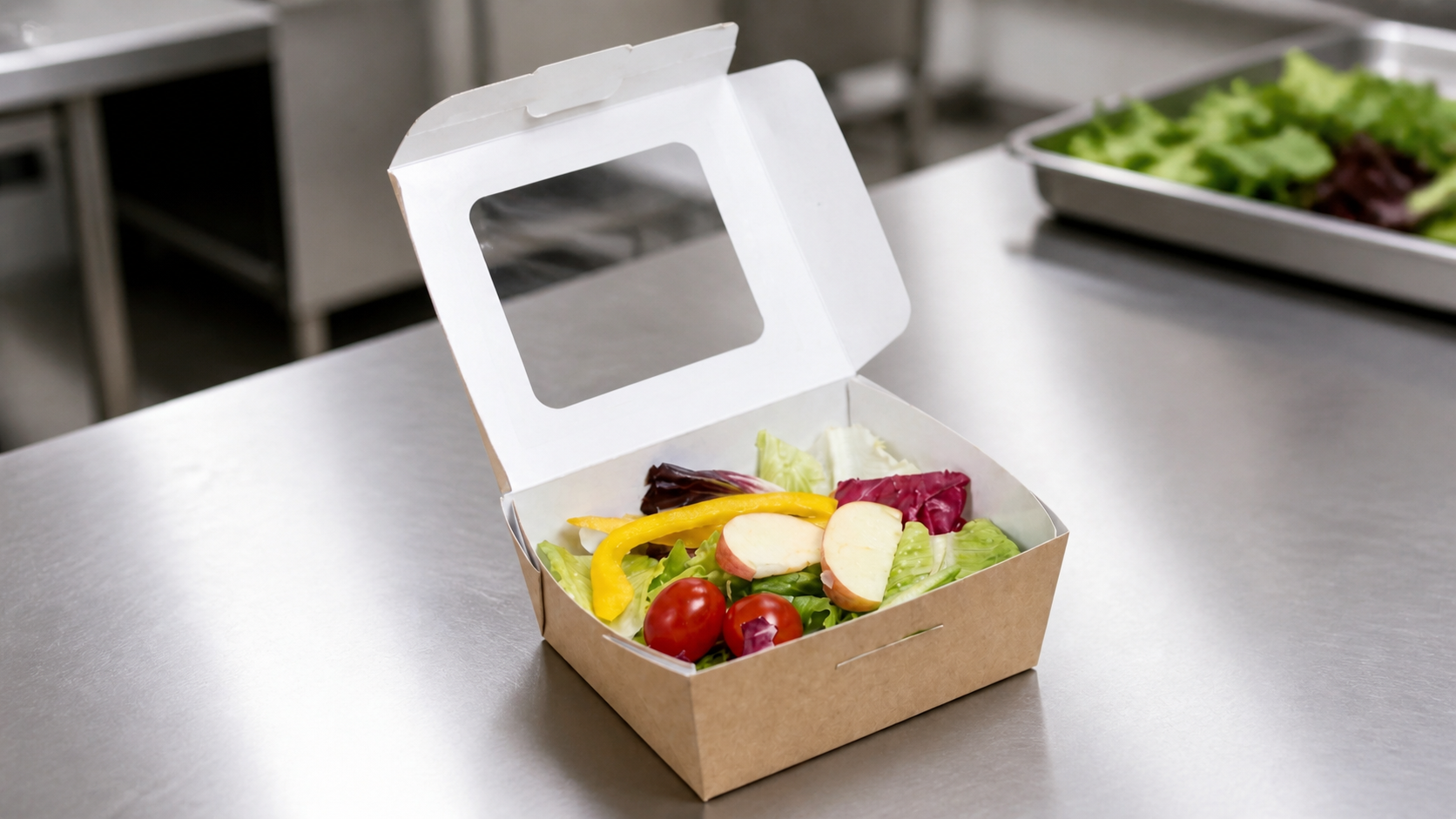
The two functions should be reviewed together. A clear lid alone does not create tamper evidence, and a seal that obscures the food may work against a presentation goal. A film-and-clear-lid combination can be considered when the intended opening route and the visible break point are clear to both packing staff and customers.
Define What the Customer Should See
Before comparing formats, write down the condition that should be visible at handoff:
- the lid, film, label, or closure is intact;
- the intended opening point is easy to identify;
- opening changes or breaks that point in a visible way; and
- the pack can still be presented so the food is visible where that matters.
This turns “tamper evident” from a broad request into a packaging requirement that can be discussed with a supplier.
How an Integrated Opening Signal Works
Some containers use a closure feature built into the lid. Once the lid is secured, a tab, strip, or locking point remains intact until the pack is opened. Breaking that feature creates the visible signal.
The packing workflow should make the sequence easy to repeat: close the pack, check that the signal is intact, and release the order. The customer should not need special instructions to find the opening point.
Questions to Test During Pack-Out
A design review should cover the full order, not just the empty container. Use the actual food, portion, lid, seal, and delivery arrangement.
Ask:
- Can staff close the pack consistently during normal service?
- Is the intact condition visible after packing?
- Does the intended opening create an obvious change?
- Does the selected film, label, or closure interfere with the clear-lid view?
- Does the outer bag or stacked order hide, press on, or damage the opening signal?
These are operational checks, not a claim that any format is suitable for every menu or route.
Choose the Tamper-Evident Method for the Food and Workflow
There is no single tamper-evident method for every takeaway item. A label may span a lid and container edge. A bag closure may provide evidence at the order level. A built-in lid feature may provide evidence at the container level.
The choice should follow the food type, filling method, portion, customer opening experience, and the level at which the order needs an opening signal. If food visibility is important, review the clear-lid area and the seal placement as one system rather than approving them separately.
Bring a Clear Brief to the Supplier Conversation
TakeawayPack’s online catalog includes food-service packaging categories such as containers and lids. Its inquiry process can collect the product category, material, size or capacity, expected quantity, customization needs, and destination information.
For a clear-lid tamper-evident concept, include a photo, drawing, or sample reference; the food type and portion; the desired visibility area; the proposed opening signal; and the destination market. Ask for confirmation of what can be discussed for the specific configuration rather than assuming that a category-level listing proves a particular seal, material, or performance result.
A visible food presentation and an opening signal can work together when the package is specified as a complete system. Start by defining what must remain visible and what must visibly change when the customer opens the order.
https://takeawaypack.com