Tamper-Evident Packaging for Bakery Delivery: A Buyer Verification Checklist
Bakery packaging that shows a visible disturbance after opening can help buyers create a clearer handoff process for self-service, retail, and delivery. The buying decision should start with the sales channel and the exact pack configuration, then move to evidence for the selected container, closure, label, and intended use. A visible feature is not, by itself, proof of food-contact suitability, legal compliance, or transit performance.
2026-08-19 - 5 min read
Summary
Bakery packaging that shows a visible disturbance after opening can help buyers create a clearer handoff process for self-service, retail, and delivery. The buying decision should start with the sales channel and the exact pack configuration, then move to evidence for the selected container, closure, label, and intended use. A visible feature is not, by itself, proof of food-contact suitability, legal compliance, or transit performance.
Start With the Actual Handoff Scenario
A bakery pack has a different job when it is handed directly to a customer, placed in a self-service display, transferred to a retailer, or sent through delivery. Before comparing packaging, write down who handles the product after packing and when the final recipient first sees it.
This step prevents an overly broad request such as “tamper-proof bakery packaging.” It turns the request into a reviewable brief: the bakery item, the pack format, the closure, the distribution path, and the destination market.
Separate Tamper-Evident From Other Packaging Claims
Tamper-evident packaging is intended to show visible evidence that a closure or seal has been disturbed. It is different from a feature designed to make opening difficult, and it is also different from a general statement that a package is safe, compliant, or suitable for every food.
A buyer should describe the feature precisely. For example, the review may concern a breakaway closure, a seal applied across an opening point, or another feature that would visibly change after opening. Do not convert that description into an unsupported claim about food-contact status, leakage resistance, delivery performance, or regulatory acceptance.
Define the Bakery Pack as a Complete Configuration
A verification checklist should identify every relevant part of the pack. That can include the container or box, lid or closure, any applied seal, liner or coating where relevant, and printed components that may affect the requested claim or documentation.
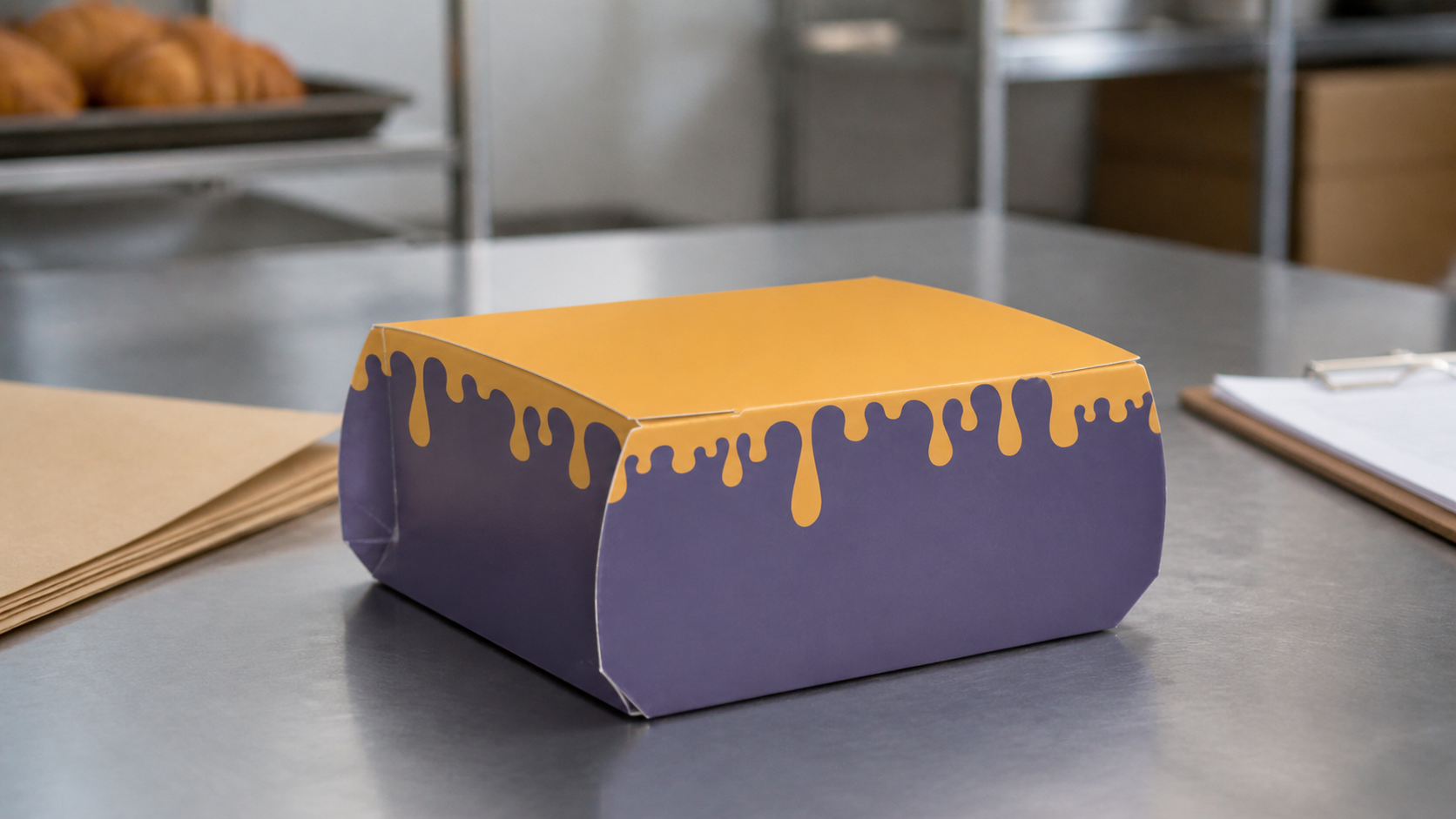
A product photograph alone can help identify a format, but it does not establish the full configuration. Ask for an item identifier, a current specification or drawing, and a description of how the closure is meant to work for the proposed bakery item.
Record the Intended Use Before Requesting Documents
Describe the intended food and service conditions in the same request. Useful fields include whether the item is dry or filled, whether it is sold cold or warm, the expected hold time, the delivery or retail path, and the destination market.
These details do not prove a package is suitable. They give the supplier the information needed to explain what its submitted records cover and what still needs clarification.
Ask for Evidence That Can Be Traced to the Item
Keep a simple evidence register for each candidate configuration. The register should connect the quotation, product identifier, product image or drawing, closure description, and any available food-contact or environmental document to the same proposed pack.
Check the scope of each document rather than treating supplier-level language as a conclusion about an entire catalog. A document may relate to a different item, material, quantity, destination, intended use, or claim category.
Questions to Send With the Packaging Brief
Ask the supplier to identify the exact item or configuration under discussion and explain which components the response covers. Ask what the visible opening indicator is, where it is located, and how the buyer can recognize a disturbed pack.
Request the stated scope of any food-contact, environmental, or other supporting document. The request should also name the destination market and the specific claim the business plans to evaluate. If the response does not connect the record to the proposed configuration, keep the item in clarification rather than treating it as approved.
Use a Practical Review Decision
A candidate can move forward for closer review when the configuration is identified, the intended use is documented, and the available evidence can be connected to the items being considered. This is a purchasing-control decision, not a product certification.
Pause the decision when the closure is unspecified, the seal is described only in generic terms, a document cannot be matched to the quoted pack, or the supplier has not stated the intended scope of its response. A pause is not a finding that the product is unsuitable; it is a signal to request specific clarification.
Make the Feature Part of the Packing Process
The pack design and the packing routine should agree. Document where the bakery team checks the closure or applied seal, what visual condition is expected before handoff, and how exceptions are recorded. This gives the business a repeatable internal check without claiming that the feature eliminates every risk.
For a new bakery-delivery brief, Takeawaypack can use its RFQ process to discuss the product configuration, structure, coating, capacity, print, lid matching, carton packing, quantity, and destination. Its certification-scope discussion is tied to the SKU, quantity, destination market, and requested claim class. Send the exact pack brief and request clarification for the configuration you are evaluating.
https://takeawaypack.com