Tamper-Evident Takeaway Packaging: A Food-Type and Budget Guide
Tamper-evident takeaway packaging fails in specific, predictable ways — a seal that looks great in the shop can tear, peel, or read as "taped shut by accident" by delivery time.
2026-09-07 - 12 min read
Summary: Tamper-evident takeaway packaging fails in specific, predictable ways — a seal that looks great in the shop can tear, peel, or read as "taped shut by accident" by delivery time. This guide covers the four main tamper-evident approaches — seals and stickers, tear-off paper tags, paper bag seals, and tamper-evident lid structures — from a food-type and budget perspective: which option fits which dish, what it adds per order, how to build a complete system across your menu, what US food-contact rules apply, and how to test a seal under real delivery conditions before committing to bulk.
Why Tamper-Evident Packaging Is Different from Ordinary Takeaway Packaging
A container that keeps food warm is not the same as one that proves it was never opened. Customers now look for signs that their food was sealed in the kitchen and untouched in transit. A tight-fitting lid is not tamper evidence — the packaging must show it was not opened, survive the trip, and still open cleanly in the customer's hands.
What a Tamper-Evident Seal Has to Survive
- Extended transit time: the seal must stay intact for 15 to 45 minutes of delivery, through temperature changes that affect adhesives.
- Stacking pressure: delivery bags stack containers vertically and horizontally. A sticker that holds on a counter may lift or tear when another container presses against it.
- Vibration and movement: seals on soup cups and sauce containers get stressed in ways they never do in static counter service.
- Handling by non-kitchen staff: delivery drivers are not trained to seat a lid or center a sticker, so seals requiring careful placement get applied inconsistently.
- Temperature differential: hot food in an insulated bag creates condensation that can loosen adhesive.
The Implication for Packaging Selection
Every tamper-evident option should be tested under simulated delivery conditions, not just at the packing station. Apply the seal the way a busy line cook would, stack the container in your actual delivery bag, carry it for your average delivery time, then check: is the seal still intact? Does it break visibly when opened? Does it look deliberate, or like something taped on as an afterthought? The answer to these tests — not the supplier's sample — decides whether the option works.
The Four Tamper-Evident Approaches Compared
Most delivery operators choose between four approaches. They differ in cost per order, the food types they suit, and how clearly they signal "sealed in the kitchen."
Seals and Stickers
Adhesive seals and stickers are the workhorse of tamper evidence. A custom-printed seal spans the lid-to-container seam and must be visibly torn to open the package. This is the lowest-cost option per order, which makes it attractive for high-volume menus.
Stickers suit hot meals in bowls and tubs, soup containers, and sauce cups — anywhere there is a clean lid seam. They double as branding: a seal printed with your logo and a line like "sealed fresh for you" turns a compliance detail into a marketing touchpoint. The limit is that a sticker only proves the lid seam was untouched.
Tear-Off Paper Seals and Adhesive Tags
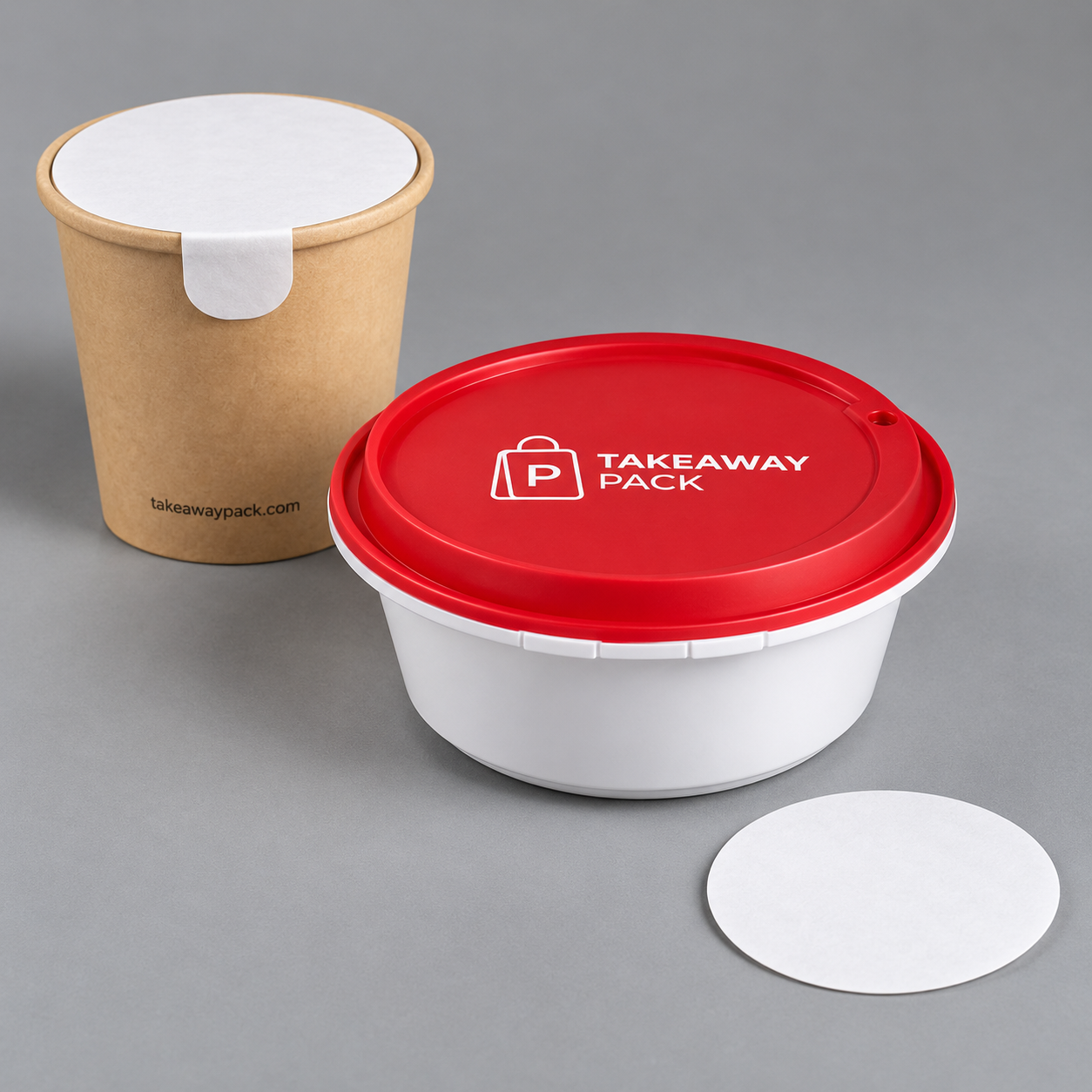
Tear-off paper seals — narrow, perforated adhesive tags ripped along a tear line when opened — sit between a full sticker and a lid redesign. They tear in a clean line and leave obvious evidence of opening. They suit kraft soup tubs, window boxes, and cake boxes, where a full-face sticker can look heavy, and they feel more deliberate than a plain sticker — important for operators who want tamper evidence without the "taped shut" look. Cost is slightly above a basic sticker but still low per order.
Paper Bag Seals and Bag Stickers
For items that travel in paper bags — burgers, sandwiches, wraps, pastries — the bag itself can carry the tamper evidence. A paper bag sealed with a branded sticker or tamper-evident bag seal shows the whole order was untouched, not just one container. This is often the best value for sandwich and bakery operations, because a single seal secures multiple items at once, and custom-printed bags give a clean, branded handoff. The limitation: bag seals do not protect the containers inside, so pair them with a lid-side seal for liquid items.
Tamper-Evident Lid Structures
The most robust option is a lid designed to show tampering structurally, with no sticker at all. Lock-lid bowls that cannot be lifted without visible distortion, and tamper-evident bowls with break-away tabs or ratchet rings, build the evidence into the packaging itself.
This is the premium tier: higher cost per unit, but no application step on the line, no inconsistent placement, and a security signal that tape or paper can never match. It suits high-value dishes and operations that want tamper evidence with zero added labor.
| Approach | Cost per order | Best for |
|---|---|---|
| Seals & stickers | Lowest | Bowls, tubs, soup, sauce cups |
| Tear-off paper tags | Low | Kraft tubs, window & cake boxes |
| Paper bag seals | Low–mid | Burgers, sandwiches, bakery bags |
| Tamper-evident lids | Highest | Premium & high-value dishes |
Which Tamper-Evident Option Fits Which Food Type
The most common mistake in tamper-evident procurement is buying by packaging format rather than by food type. A bag seal that works for a burger does nothing for a soup — start with the dish.
Hot Meals in Bowls
Rice bowls, pasta, grain bowls, and stir-fries are the easiest tamper-evident case: solid food, moderate moisture, and a clean lid seam. Lock-lid PP bowls in the 750–2000 ml range cover most entrée sizes with a positive snap fit; add a custom-printed seal for higher-value dishes. Keep bowls 80 to 85 percent full so the lid seats fully and the seal has a flat surface to grip — an overfilled bowl presses against the lid and can pop the seal open in transit.
Soups and High-Liquid Dishes
Liquid is the highest-risk category. Soup moves inside the container, pressure builds against the lid seam, and any weak point becomes a leak. Kraft soup tubs with PP lids are the standard format, and the seal turns a good tub into a tamper-evident one.
For high-liquid dishes, use a full-face seal or a tear-off tag spanning a dry lid rim, and do not fill containers beyond roughly 75 percent capacity — the air space lets liquid move without pushing against the seal. For large soup programs, a tamper-evident lid design removes the application step entirely.
Burgers, Sandwiches, Wraps
Bread-based items have a different problem: condensation. A hot burger sealed too tightly steams itself soggy, so tamper evidence for these should come at the bag level rather than the container level — a window box that lets the product breathe, packed into a sealed paper bag. A custom-printed bag with a tamper-evident seal secures the whole order in one step, costs less than sealing each sandwich, and keeps the presentation intact.
Beverages
Cups and carriers need their own logic. The most common source of beverage tampering complaints is not a weak seal but a loose cup bouncing in the main bag compartment. Cups should ride upright in a dedicated single or double cup carrier, and the carrier or bag should carry the seal. For cold beverages, a lid plus a seal across the lid seam works well; for hot drinks, keep the seal away from the drinking rim.
Salads and Cold Dishes
Cold food needs moisture management more than heat retention. Clear PET containers show the product and give a clean lid seam for a seal, which is why they dominate salad and cold-bowl programs. Dressed salads travel better when the dressing is packed separately in a sealed sauce cup. For cold dishes, a light seal or tear-off tag is usually enough — chilled produce creates condensation, so test it on a container that has held a dressed salad.
Baked Goods, Desserts, and Pizza
Cake boxes and pizza boxes have large lid surfaces where a small sticker looks lost; a tear-off tag across the box edge, or a full-face seal that doubles as a brand statement, works better. Sushi trays and molded pulp clamshells often use a structural tab or a seal torn on opening. For bakery and dessert lines, a waxed or custom-printed seal on a cake box reads as premium and deliberate.
Building a Complete Tamper-Evident Packaging System
A tamper-evident system is not a collection of single items — it is an integrated set of formats that covers every food type on your menu with one consistent look and one application method.
The Core System Components
A complete system for a standard restaurant or café menu typically includes: lock-lid PP bowls (2–3 sizes) for entrée portions, with seals or tamper-evident lids; kraft soup tubs with PP lids for soups and high-liquid dishes; window boxes or compartment trays for sandwiches and multi-component meals; clear PET containers for salads and grab-and-go items; paper bags (2 sizes), custom-printed if the budget allows, sealed with a branded tamper-evident bag seal; single and double cup carriers to keep beverages upright; and one consistent design system of seals, stickers, and tear-off tags applied across every sealed item.
Budget Tiers and Cost Management
Tamper evidence is one of the cheapest upgrades in takeaway packaging, but cost varies by approach. The entry tier — stickers and seals — is the lowest cost per order and suits high-volume hot-meal and soup programs. The mid tier — tear-off tags and bag seals — is a small step up, justified when one bag seal secures multiple items or when presentation matters. The premium tier — tamper-evident lids — has the highest unit cost but removes the application step and cannot be applied inconsistently.
The real cost driver is usually the application, not the seal itself. If a seal adds a few seconds per order on a busy line, a tamper-evident lid that needs no application can pay for itself in labor alone. Custom printing also rewards consolidation — one supplier printing your seals, bags, and boxes with the same design keeps per-unit costs lower.
One Supplier vs. Many
Single-supplier procurement has measurable advantages for a complete tamper-evident system: one consistent brand look, lid-to-bowl compatibility verified by one party, volume pricing aggregated across formats, and one point of accountability when a seal fails. Mixed suppliers mean mixed quality standards, mismatched application instructions, and higher procurement administration cost.
US Compliance Notes for Food-Safe Tamper Evidence
Tamper-evident packaging sold in the US sits under the same food-contact framework as regular takeaway packaging, with points that matter specifically for seals:
- Food-contact materials: seals that touch food must use food-contact-safe materials and adhesives; confirm with your supplier which side is food-contact and which is label stock.
- State PFAS restrictions: several states, including California, Washington, New York, and Minnesota, restrict intentionally added PFAS in food packaging, including paper and board formats. Ask your supplier to confirm their grease-resistant paper and seal stocks are PFAS-free.
- Printing inks and adhesives: custom-printed seals put ink and adhesive in contact with, or immediately adjacent to, food — reputable suppliers use food-safe inks and can document this.
- Compostable and recyclable claims: if you advertise a seal or container as compostable or recyclable, make sure the claim is accurate for the specific product. Some manufacturers offer select kraft and molded-pulp lines that carry compostable or recyclable certification — ask for the certificate for the specific SKU you are quoting, since certification belongs to the product line, not to the supplier's whole catalog.
The Delivery Simulation Test: Proving the Seal Before You Buy
Before committing to any tamper-evident format at volume, run this protocol with your actual food under simulated delivery conditions:
- Apply the seal the way your line would: have a busy cook apply it in real conditions, not a careful demo.
- Pack a representative order: several containers, a beverage in a carrier, a bagged sandwich — in your actual delivery bag configuration.
- Run a transit simulation: carry the packed bag for your average delivery time with normal movement and stacking. A static desk test is not enough — movement and pressure are the real stress conditions.
- Open and assess: check seal integrity, whether the seal tore cleanly or peeled messily, whether condensation loosened the adhesive, and whether the packaging still looks deliberate and branded when opened.
- Fail criteria: a seal that opens without leaving clear evidence is an automatic fail; a seal that peels or lifts during transit is a fail; a seal that ruins the opening experience is a quality fail. Everything else is a judgment against the standard you want to deliver.
Where to Buy Tamper-Evident Takeaway Packaging Wholesale
If you are building a tamper-evident system across an entire menu, look for a supplier that stocks the full set — lock-lid PP bowls, kraft soup tubs, compartment trays, tamper-evident bowls, clear PET containers, window boxes, cake and pizza boxes, cup carriers, paper bags, and the seals and stickers to close them — in one catalog, with custom printing so the tamper evidence doubles as branding.
A US-based supplier like takeawaypack.com (Casper, WY) sells custom disposable food packaging for restaurants, food trucks, cafes, ghost kitchens, bakeries, and caterers, with a catalog of 950+ products and custom printing at minimum order quantities as low as 500–1000 units. Select kraft and molded-pulp lines are available with compostable or recyclable certification — request the certificate for the specific SKU you are quoting. Because the whole system comes from one supplier, matching lids, seals, and instructions stay consistent across your menu.
Start by mapping your highest-volume dishes to the table above, run the delivery simulation test on the options that fit your budget, then ask your supplier for samples of the full sealed system — containers, lids, and seals together — before committing to bulk.
Frequently Asked Questions
Which tamper-evident option is cheapest?
Seals and stickers are the lowest-cost option per order. They suit any menu with clean lid seams — bowls, soup tubs, and sauce cups — and can be custom printed to double as branding. Paper bag seals are nearly as cheap and secure an entire order of sandwiches or pastries in one step.
Which option does not make food look like it was taped shut?
The "taped shut" look usually comes from a mismatched sticker not designed for the container. Tear-off paper tags and custom-printed seals with your logo and a "sealed fresh" line read as deliberate. Tamper-evident lid structures have no sticker at all.
Do I need tamper evidence on every item?
Not necessarily. Prioritize liquids (soup, sauce cups), open-faced items, and any order category where customers have raised concerns. For most menus, a sealed bag plus sealed liquid containers covers the touchpoints customers actually check.
How much labor does applying seals add?
A few seconds per order. If labor is the constraint, tamper-evident lids or lock-lid bowls that need no application step are the better choice, even at a higher unit cost.
Can I print my logo on tamper-evident seals?
Yes. Custom-printed seals, stickers, and paper bags are standard, and many suppliers offer custom printing at minimum order quantities as low as 500–1000 units. A branded seal turns a security feature into a trust signal customers see the moment they open their food.
If you are ready to build the system, request samples from a packaging supplier that can show you the full sealed setup — containers, lids, and seals — before you commit. Visit takeawaypack.com or reach out at takeawaypack.com/contact to compare options for your menu.