A Wet-Food Container-and-Lid Configuration Needs a Clear No-Advance Rule Before Rollout
Use a clear no-advance rule when a wet-food container-and-lid configuration, its use conditions, evidence mapping, or change history is incomplete.
2026-08-04 - 6 min read
Make the assembled configuration the buying unit
For hot, high-oil or high-liquid foods intended for a 30–45 minute delivery, a packaging candidate should advance only when the buyer can identify one exact container-and-lid configuration, define the conditions in which it will be used, and map every quotation, sample and approval record to that same configuration. If the identity, use conditions, evidence mapping or change history is unclear, the correct decision is to hold the candidate before quotation comparison, test order or multi-location introduction. This is a procurement-control rule, not a claim that any material, closure or supplier will prevent leakage.
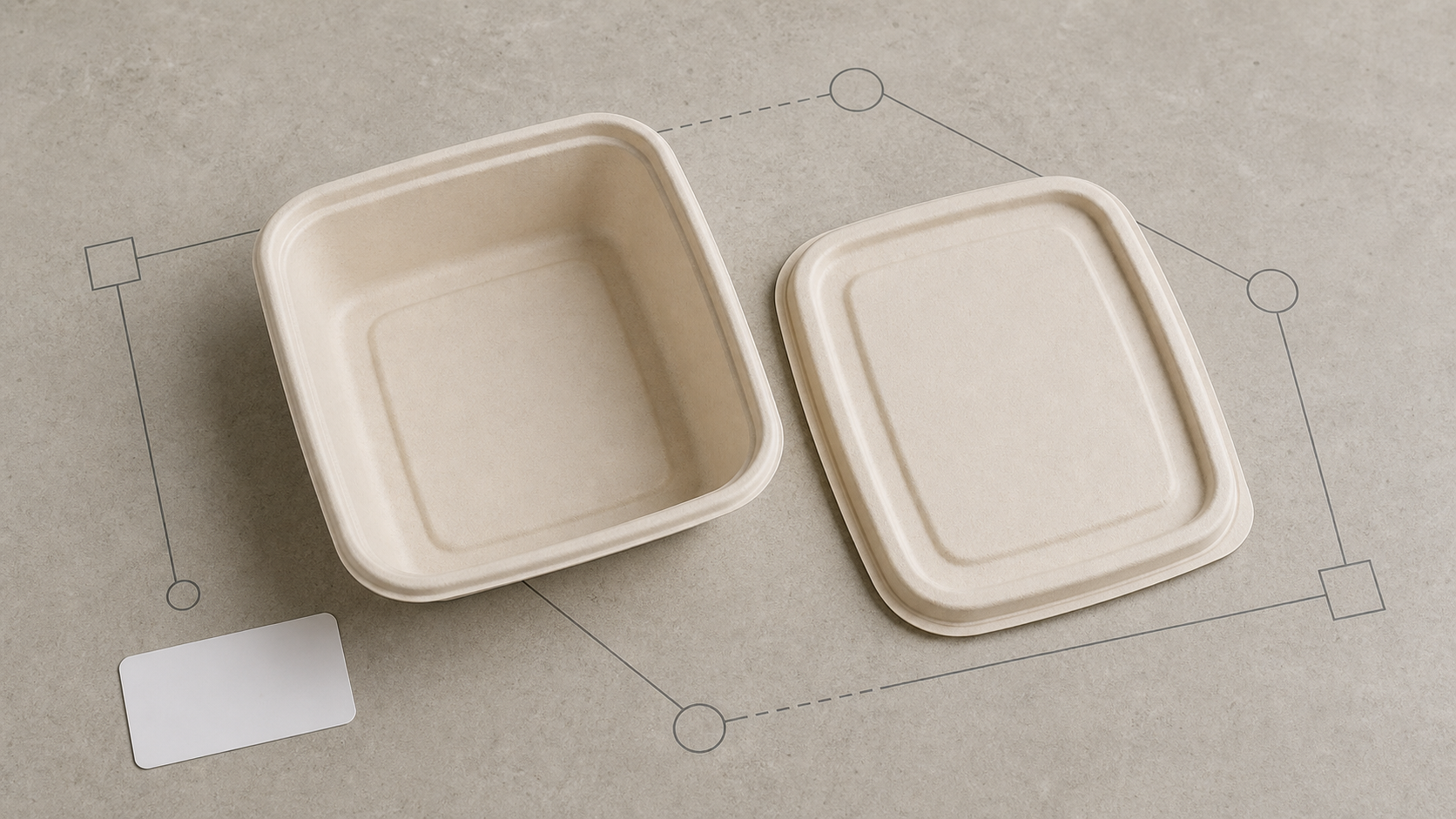
A material name, container family or general lid description is not a complete buying unit. The decision record should name the container and lid together, including their supplier references, size or capacity, closure features, relevant coating where applicable, and any vent, seal or insert that changes the proposed assembly. The buyer should also identify the intended use: the menu family, expected fill, presence of free liquid or oil, and the planned delivery window.
The purpose is not to create a universal specification. It is to prevent evidence for one assembly from being transferred to a similar-looking base, a different lid, another size or an undocumented substitute. The candidate remains on hold whenever the quoted item, supplied sample and proposed order cannot be shown to represent the same assembled configuration.
Do not compare quotations when the match is ambiguous
Before a quotation enters commercial comparison, require the response to identify the container and lid as one proposed configuration. The response should state which component information applies to the intended wet-food use and should identify any stated use limits or handling conditions. A lid described only as “compatible” does not establish which lid is being offered with which container.
Apply the no-advance rule when a quotation identifies only a product family, lists alternative lids without distinguishing them, substitutes a photograph for component references, omits the relevant size, closure or coating, or leaves the intended use implicit. Procurement can request clarification, but it should not rank an incomplete offer as though the configuration were settled.
Do not place a test order when identity or conditions have changed
A test order should preserve the configuration identity and use conditions established during clarification. The sample request, sample label, supplier correspondence and internal evaluation record should all point to the same container-and-lid pairing. Any tooling difference, revised closure, size change, material change or substitution should be recorded and reconciled before the candidate advances.
Hold the test order when the supplier cannot confirm that the sample represents the quoted assembly, when loose components arrive without traceable references, when the evaluation record cannot distinguish one lid from another, or when the intended fill and handling conditions are absent. This is not a rejection of a supplier’s wider range. It is a refusal to decide from an untraceable or undefined sample.
An operational evaluation may include the buyer’s defined delivery scenario, but the no-advance decision does not depend on a route-test method described here. The narrower question is whether any observation can be tied to the exact configuration and conditions that would be purchased. If it cannot, the observation should not authorize the next procurement stage.
Do not introduce the pack across stores without evidence mapping
Before multi-location introduction, the approval basis should be recoverable from purchasing and quality records. The order description, approved sample or drawing, component references, relevant documents, carton or shipment identification, and any agreed change notice should point to the same assembly. Receiving teams should be able to distinguish the approved container and lid from an alternate or replacement.
Apply the no-advance rule when the purchase order allows unspecified equivalents, the approved lid reference is absent, a document cannot be mapped to the ordered configuration, or a supplier change cannot be reconciled to the evaluation record. A prior approval does not cure an uncontrolled order, substitution or cross-store change.
Request a compact, configuration-specific evidence packet
Ask for a product specification or equivalent identifier for both components; the supplier’s written statement of the proposed match and stated conditions of use; the quotation and sample references; any relevant drawing or assembly information; and a record of changes between sample and order. Where food-contact, temperature, reheating or destination-market requirements apply, request documents that identify the intended configuration and conditions rather than relying on a generic label.
Keep document review separate from unsupported performance conclusions. A document can identify what the supplier proposes and the limits it states, but it does not by itself prove leakage performance for every food, fill level, route or store practice. An operational observation can inform a defined use, but it does not replace documents required for the product and destination market.
Use the same advance status at every handoff
Advance means the exact configuration and use conditions are named, the evidence is mapped to them, and the next-stage record preserves that identity. Hold means the candidate may be viable, but a component reference, condition, document match or change explanation is missing. Do not advance means the team cannot establish a reliable link between the proposed assembly and the evidence needed for the decision.
A hold should remain visible until the missing item is resolved. It should not become an informal approval because a price is attractive, a schedule is tight or a similar pack worked elsewhere. The rule is effective only when procurement, quality, supply chain and store operations apply the same status to the same named configuration.
Make the next request specific enough to preserve the chain
For a TakeawayPack inquiry, the RFQ can collect the product or category, material, size or capacity, expected quantity, print or colour requirements, and destination country or port. The discussion can cover structure, coating, capacity, lid matching and carton packaging, while sample, drawing or print-file coordination can also be discussed. These inputs can make a request more specific; they are not evidence that a particular configuration is available, compatible, tested, compliant or suitable for the intended use.
The practical next action is to issue one configuration brief and require the same container reference, lid reference and defined use conditions to appear in the quotation, sample record, internal approval and purchase order. If any handoff breaks that chain, stop the candidate at that stage and reopen it only after the missing identity, condition, evidence mapping or change explanation has been supplied.