When to Use Vented Takeout Containers for Crispy Food Delivery
Vented takeout containers are worth considering when a hot menu item depends on a dry, crisp, browned, or fried exterior and may release steam after packing. The goal is not to promise that food will arrive crisp or at a particular temperature. It is to manage a trade-off: releasing enough moisture to reduce condensation while retaining an appropriate closure and pack-out for the dish.
2026-08-16 - 10 min read
Summary
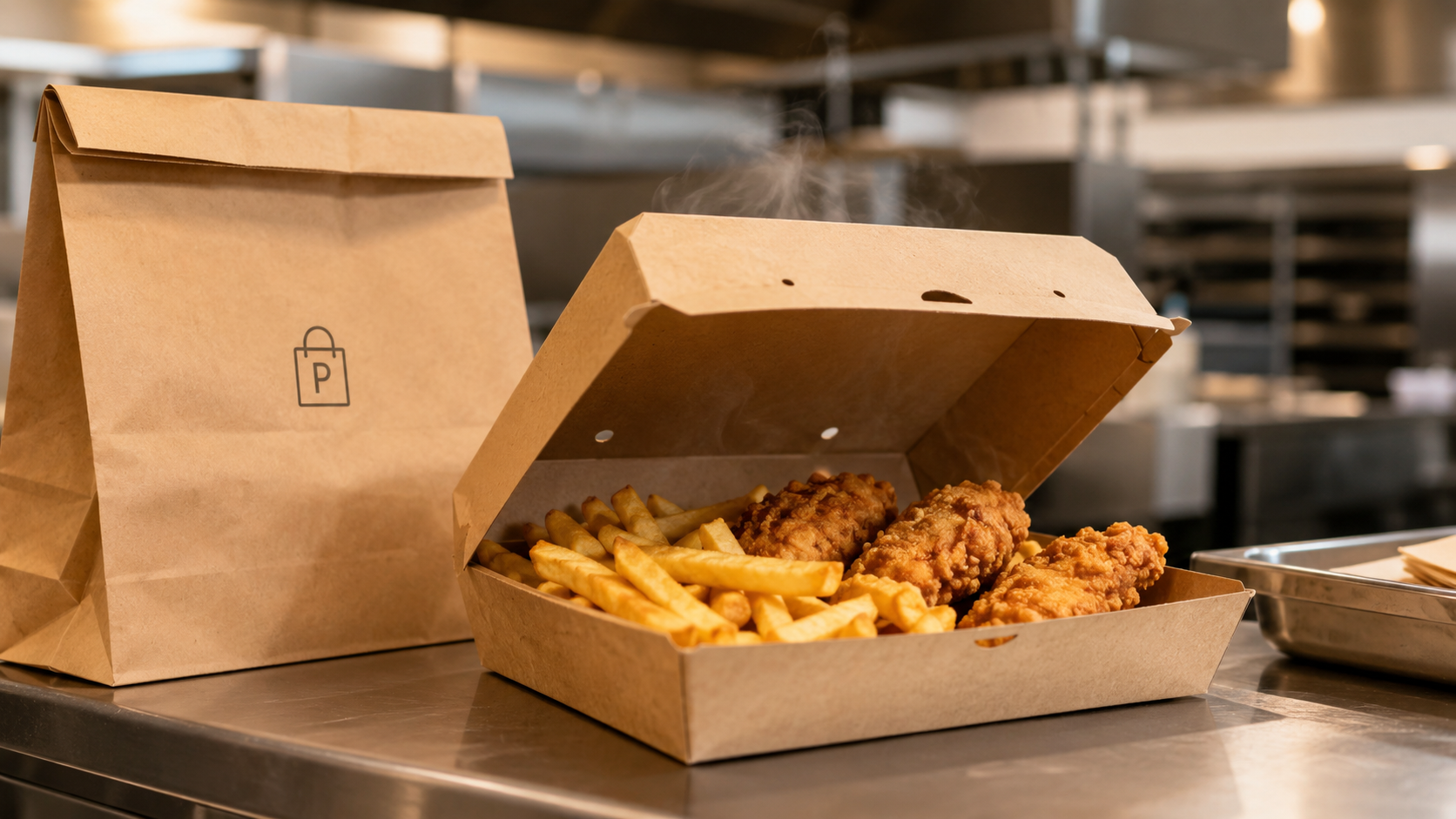
Vented takeout containers are worth considering when a hot menu item depends on a dry, crisp, browned, or fried exterior and may release steam after packing. The goal is not to promise that food will arrive crisp or at a particular temperature. It is to manage a trade-off: releasing enough moisture to reduce condensation while retaining an appropriate closure and pack-out for the dish.
Start with the actual menu item, its filling temperature, sauce and oil load, expected delivery time, lid fit, outer bag, and route conditions. Fried chicken, fries, tempura, toasted sandwiches, and similar items may be candidates for controlled venting. Soups, curries, braises, saucy noodles, and other liquid-heavy meals usually need a secure, non-vented closure instead. Approve a format only after testing the exact container-and-lid configuration on representative orders.
Why Hot Takeout Food Loses Its Crisp Texture
A hot food item continues to release moisture after it is packed. In a fully closed container, water vapor can collect on the cooler inner lid and walls. If that moisture returns to a breaded coating, crust, toasted surface, or fried exterior, the delivered texture may differ from the texture at handoff.
This is a packaging-system issue, not just a container issue. The result can be affected by:
- the food's moisture, oil, sauce, and surface area;
- filling temperature and time between cooking and packing;
- headspace above the food;
- lid design, closure fit, and any vent location or size;
- whether the package is stacked or placed in a hot delivery bag;
- the outer bag or secondary wrap; and
- actual route duration, stops, tilt, vibration, and ambient conditions.
Because these variables interact, an empty sample—or a quick room-temperature check—does not establish that a container will preserve crispness or temperature on a live route.
When Is a Vented Takeout Container a Good Candidate?
A vented format is most relevant when steam management is more important than retaining moisture inside the pack. It may be a sensible configuration to test for hot food whose customer experience relies on a crisp or dry exterior.
Fried and breaded menu items
French fries, fried chicken, tenders, fish, tempura, egg rolls, spring rolls, fried dumplings, and breaded cutlets are common candidates for a vented-lid trial. These foods may be vulnerable to moisture collecting around the crust after packing.
The appropriate degree of venting is not universal. A menu item with a small sauce cup, a high oil load, or a crowded portion can behave differently from the same product packed dry in a shallow layer. Test the real portion, garnish, sauce placement, and packing sequence.
Toasted, baked, and roasted items
Pizza slices, quesadillas, panini, flatbreads, roasted potatoes, and other browned items may also warrant a controlled-venting test. A vented container may help reduce interior humidity, but it may also change heat and moisture retention. The delivered result should be evaluated against the operator's own quality standard rather than assumed from the food category.
Meals with separate wet and crisp components
Some dishes are better solved by separation than by a single highly vented container. For example, sauce can be packed separately from fried toppings, or a crisp side can be held apart from a hot, moist main. This approach may reduce direct moisture transfer while allowing the main meal and crisp component to use different closure strategies.
When a Secure Non-Vented Closure Is Usually the Better Starting Point
A vent opening is not a general-purpose feature. It creates another pathway for vapor and potentially for leakage if the pack is tilted or exposed to movement. Begin with a secure, matched non-vented lid when the meal needs to retain liquid or moisture.
Soups, stews, curries, and saucy meals
Liquid-heavy food needs a container-and-lid pairing that is evaluated for the expected fill level, temperature, stacking pattern, and delivery movement. A vented lid may be the wrong starting point because it can compromise spill control. Test the actual filled configuration for rim migration, lid displacement, corner leakage, and spill exposure inside the delivery bag.
Moisture-dependent starches and delicate cold food
Plain rice, noodles, and some moisture-sensitive dishes can dry during a longer route if too much vapor escapes. For cold salads and leafy items, venting may not solve a steam problem and may be unnecessary. The right choice depends on the food, the holding process, and the desired delivered condition—not a universal material rule.
Mixed menus
One delivery order may include both soup and fried sides. In that case, selecting one container style for every item can force an avoidable compromise. A practical line-up often uses separate configurations: a secure closure for liquid dishes and a separately validated option for crisp foods.
Use Menu Humidity and Temperature to Define the Packaging Question
Before comparing samples, turn the menu into a short test brief. This gives culinary, operations, and purchasing teams a shared basis for judging a package.
Record the food conditions
For each item, document:
- the food name, portion, and fill level;
- whether it is dry, moist, oily, saucy, or a combination;
- filling temperature and the delay before closing the lid;
- whether it is held in a warmer or packed immediately;
- the target delivery window, including a 30–45 minute route if that is representative;
- sauces, condiments, liners, inserts, and component separation; and
- the customer-facing quality priorities, such as crispness, heat, appearance, or spill control.
Do not reduce this to a label such as “hot food.” A steaming fried item, a lidded soup, and a rice bowl may all leave the kitchen hot, but they present different humidity, moisture-retention, and closure requirements.
Define what success and failure look like
Use observable checks rather than broad promises. For a crisp item, assess surface softness, visible condensation, coating integrity, and presentation at delivery. For a liquid item, inspect the rim, lid engagement, exterior, bag, and adjacent items for leaks. For every item, compare the packed food with the restaurant's defined handoff standard.
A test result is specific to its conditions. A result from one portion size, recipe, route, or pack-out should not automatically be treated as proof for another menu item or operating model.
Balance Venting, Lid Fit, Outer Packaging, and Delivery Time
The container does not travel alone. A ventilation decision should be reviewed together with the complete delivery pack-out.
Pair the base and lid as one system
Use the intended container and compatible lid together in testing. Confirm that the lid is fully engaged after hot filling and that stacking does not distort the rim or interfere with closure. If a vented version is being considered, compare it with a non-vented configuration using the same food and route conditions.
A lid that looks acceptable on a counter may respond differently after heat exposure, movement, or pressure from stacked orders. This is why a proposed configuration should not be described as leak-resistant, temperature-retaining, or suitable for a menu until the operator has validated it.
Review the outer bag and packing sequence
A closed delivery bag, insulated carrier, secondary paper bag, or tightly packed order can alter the humidity and heat environment around the container. These layers can be helpful for order handling, but they can also change how quickly steam leaves the food package.
Document the normal sequence: when the lid is closed, whether the container is bagged immediately, how it is stacked, whether it sits on a shelf before pickup, and how the driver carries it. Test the configuration that reflects normal operations, not an idealized single-container scenario.
Treat route time as a test condition, not a claim
If 30–45 minute delivery is the normal service window, include that range in the route test. If longer or shorter routes are common, test those separately. Use representative stops, turns, elevation changes, waiting periods, and order stacking where feasible.
The purpose is to identify a defensible operating choice for the defined route. It is not to claim that venting will keep every order hot, crisp, spill-free, or acceptable under every delivery condition.
A Practical Route-Test Method for Vented Food Packaging
Run a small, controlled comparison before changing packaging across a menu or location.
1. Select comparable configurations
Choose the proposed vented container-and-lid combination and a relevant non-vented alternative. Keep the food portion, cooking method, fill time, sauce placement, and outer pack-out consistent.
2. Pack representative orders
Use actual menu items prepared through the normal kitchen workflow. Include the normal bag, carrier, labels, sides, and stacking arrangement. Avoid basing the decision only on dry substitutes or empty containers.
3. Recreate the delivery journey
Hold, transport, and handle the orders in a way that resembles the actual route. Record the elapsed time, number of stops, stacking pattern, and notable movement or tilt. Where safe and appropriate, repeat the test across more than one route condition.
4. Inspect and score the result at delivery
At the endpoint, inspect:
- food texture and appearance;
- condensation on the lid and inside surfaces;
- food temperature using the operator's own food-safety and quality procedures;
- lid fit, rim condition, and leakage signs;
- the exterior of the container and bag; and
- whether the package remains practical for staff and customers to handle.
Record the findings for each configuration. A decision can then weigh the observed texture, heat, spill control, labor impact, and unit cost instead of relying on a generic “vented is better” rule.
5. Re-test when the system changes
Repeat validation when a recipe, portion, container size, lid, outer bag, holding process, route profile, or supplier specification changes. A package that worked for one defined setup may need another review after a meaningful change.
How to Control the Cost of a Venting Trial
The lowest unit price does not necessarily create the lowest delivered-food cost. But a higher-cost vented option should also not be adopted on assumption alone. Compare the full decision using the same menu and route conditions.
Consider the following questions:
- Does the configuration reduce a documented quality issue for the specific item?
- Does it introduce more leakage, drying, packing time, or SKU complexity?
- Can component separation solve the issue without changing every container?
- Does a shared container format work across a defined group of similarly behaving items?
- What is the cost impact of the container, lid, inserts, bags, labor, storage, and potential remakes?
- Which result matters most for this menu: texture, heat, spill control, presentation, or operational simplicity?
A limited pilot with a clear scorecard is often a more reliable buying method than a broad rollout based only on sample appearance or category claims.
FAQ: Vented Containers for Hot Food Delivery
Do vented containers keep food crispy?
They may reduce trapped steam for some hot, crisp foods, but they do not guarantee crispness. The outcome depends on the food, portion, filling process, lid design, outer packaging, and delivery route. Test the exact configuration with the real menu item.
Will vents keep food hot for a 30–45 minute delivery?
Do not assume a particular temperature result from a vented lid. A 30–45 minute window should be part of the operator's validation plan, with the complete pack-out and route conditions included. Compare results with an appropriate non-vented alternative and follow the business's food-safety procedures.
Can a vented container be used for soup or curry?
A secure non-vented closure is generally the more appropriate starting point for liquid-heavy meals because spill control and moisture retention are central concerns. Any alternative should be validated with the actual fill level, lid, stacking, and delivery movement.
What should be included in an RFQ for a vented food container?
Provide the menu item, portion size, food conditions, expected fill and holding process, target delivery window, closure preference, outer pack-out, expected quantity, destination, and any customization needs. Ask for the discussion to be tied to the proposed SKU and configuration; product performance, food-contact documentation, and suitability should be confirmed for the specific order, use conditions, and destination.
Takeaway
Use vented takeout containers when your test shows that controlled moisture release improves the delivered condition of a defined hot, crisp menu item without creating an unacceptable trade-off in heat retention, leakage, handling, or cost. Use secure non-vented closures as the starting point for soups, curries, and other liquid-heavy or moisture-dependent dishes. The right answer comes from the menu and delivery journey, not from a one-size-fits-all packaging claim.
For a TakeawayPack RFQ or customization discussion, visit the TakeawayPack Contact / RFQ page and share the intended food, container category, size, lid preference, estimated quantity, customization requirements, and destination. Ask to discuss the proposed SKU and configuration against your planned use; validate performance, food-contact documentation, and suitability for the specific order before making a sourcing decision.