Which Boxes and Vented Lids Keep Fries Crispy During 30–45 Minute Delivery?
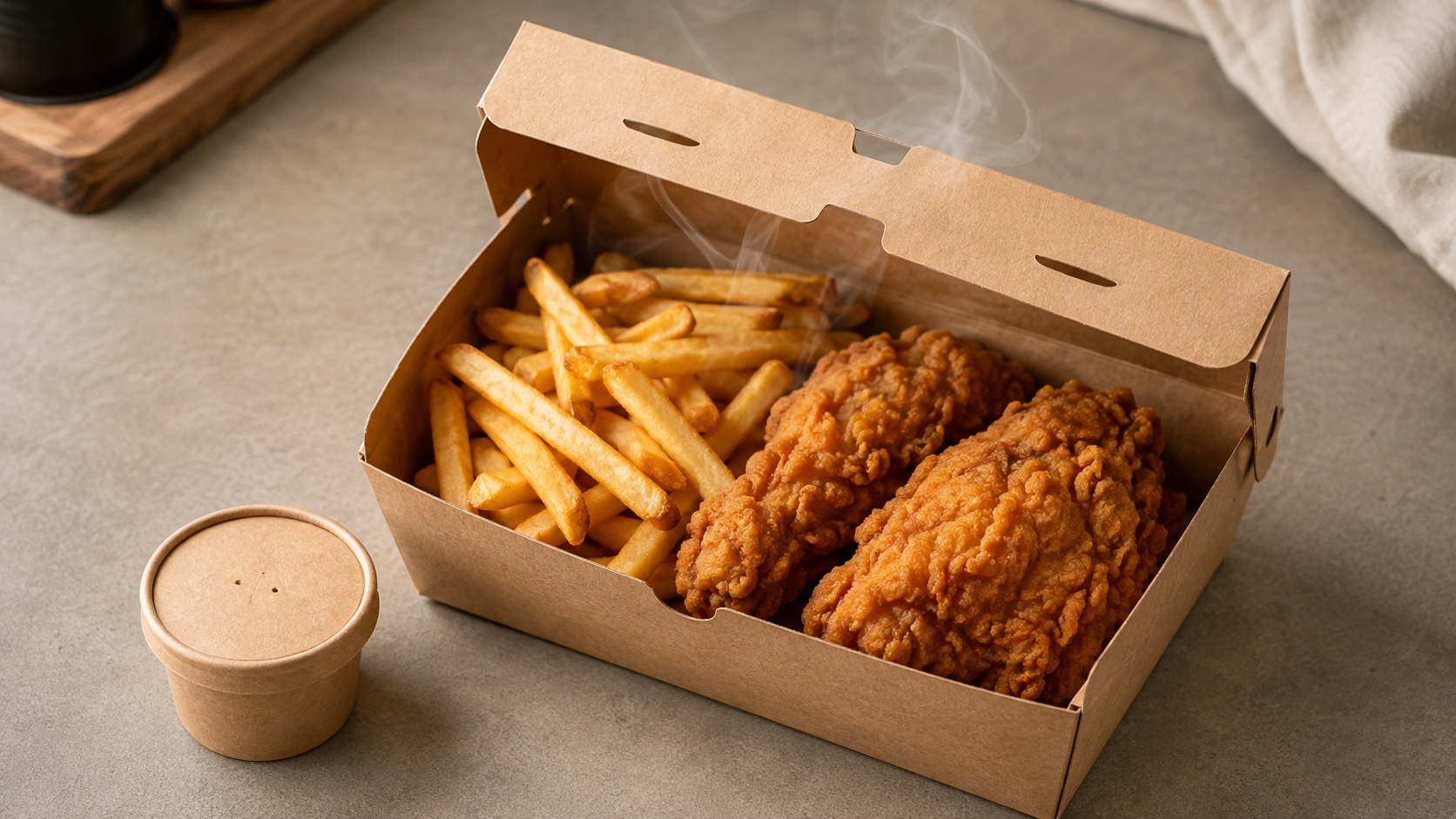
Fries and fried chicken usually lose their crisp exterior when trapped steam turns into condensation inside a closed pack. For a 30–45 minute delivery window, start by testing a box or container with a vented lid or vented structure for hot, dry, texture-sensitive food. Keep sauces and wet sides separate in properly matched sealed containers. The best result comes from validating the complete packaging setup with the real menu, fill level, bagging method, and delivery route.
2026-08-11 - 4 min read
**Summary:** Fries and fried chicken usually lose their crisp exterior when trapped steam turns into condensation inside a closed pack. For a 30–45 minute delivery window, start by testing a box or container with a vented lid or vented structure for hot, dry, texture-sensitive food. Keep sauces and wet sides separate in properly matched sealed containers. The best result comes from validating the complete packaging setup with the real menu, fill level, bagging method, and delivery route.
Why fries turn soft after packing
Freshly cooked fries release heat and moisture after they are packed. In a tightly closed container, steam can collect on the lid and return to the food as condensation. A fried coating that was crisp at handoff then absorbs moisture and softens.
This is a packaging-environment problem, not simply a box problem. The item’s temperature, the amount of food in the pack, the wait before pickup, bagging, stacking, and ride time all influence the final texture.
Use vented boxes or lids for hot, dry fried food
For fries, fried chicken, breaded seafood, onion rings, tempura, and similar hot items, a vented configuration is a practical option to test. Venting gives steam a route out of the pack instead of holding it directly around the food.
A vented lid is not a guarantee that fries will stay identical to their just-fried condition over every route. It does, however, address the main mismatch created when a moisture-sensitive item is held in a fully sealed environment.
When assessing a box or lid, test it with the actual portion rather than judging an empty sample. Confirm that the pack holds the intended fill level, remains easy to close, protects the food during handling, and does not create excessive condensation during the expected delivery time.
Keep wet food and sauces out of the fries box
A crisp component is easier to protect when it does not travel next to a wet component. If the menu allows it, keep fries and fried chicken separate from gravy, sauced entrées, dressings, and dips.
Use separate sauce cups with matching lids rather than placing loose sauce inside the main fries container. This reduces the risk of a spill and prevents direct contact with moisture that can damage the crisp exterior.
For a mixed order, it is often better to use more than one packaging format instead of forcing every item into the same box. A vented pack can serve the hot crisp component, while a sealed container-and-lid pairing can serve soups, curries, gravies, or heavily sauced food.
When a sealed lid is the better choice
Venting is not appropriate for every hot meal. Foods whose main risks are leakage, moisture loss, or movement during transit need a sealed configuration. Soups, stews, curries, braised dishes, and liquid-heavy sauces should be evaluated in a container and lid combination that remains secure at the intended fill level.
The practical rule is directional: consider venting for hot, dry food whose exterior texture depends on staying relatively dry; consider sealing for liquid-heavy, moisture-dependent, or spill-sensitive food. Each menu item still needs its own delivery test.
Test the complete 30–45 minute delivery setup
Cloud kitchens, ghost kitchens, and delivery-only brands should test packaging as part of menu execution. Pack a normal order, including the intended portions, sauces, outer bag, and stacking arrangement. Then evaluate it after a realistic 30–45 minute hold.
Record whether the fries remain acceptably crisp, whether condensation is visible, whether lids stay secure, whether sauces leak, and whether the presentation still works for the customer. Comparing a vented candidate with a sealed candidate under the same conditions gives a more useful answer than choosing from a catalog alone.
A simple operating shortlist can capture the menu item, food condition at packing, target fill level, container and lid pairing, bag position, and test result. That gives every location a repeatable packaging specification.
Build a practical packaging shortlist with TakeawayPack
TakeawayPack is a food-service packaging brand and sourcing coordinator that works with multiple packaging manufacturers. Its online catalog includes cups, bowls, boxes, containers, trays, lids, bags, and cutlery. During an inquiry, TakeawayPack can discuss structure, coating, capacity, lid matching, printing, and carton packing.
For a useful shortlist, share the menu components, required dimensions or capacity, expected quantity, branding needs, destination country or port, and the delivery conditions you need to test. TakeawayPack’s RFQ process can collect these details, and project discussions can include samples, drawings, or print-file alignment. For custom printing, production follows written approval of a digital proof.
For fries and fried chicken, the next step is to test a vented box or lid configuration against the real 30–45 minute delivery route—and keep wet components in their own sealed packs. Start the conversation at TakeawayPack.com.