
Which Takeout Components Must Be Packed Separately? Design for the Last 5 Minutes Instead
Splitting a set meal into five or six containers feels like quality control, but it usually protects nothing while slowing the pass and annoying the customer.
2026-09-03 - 8 min read
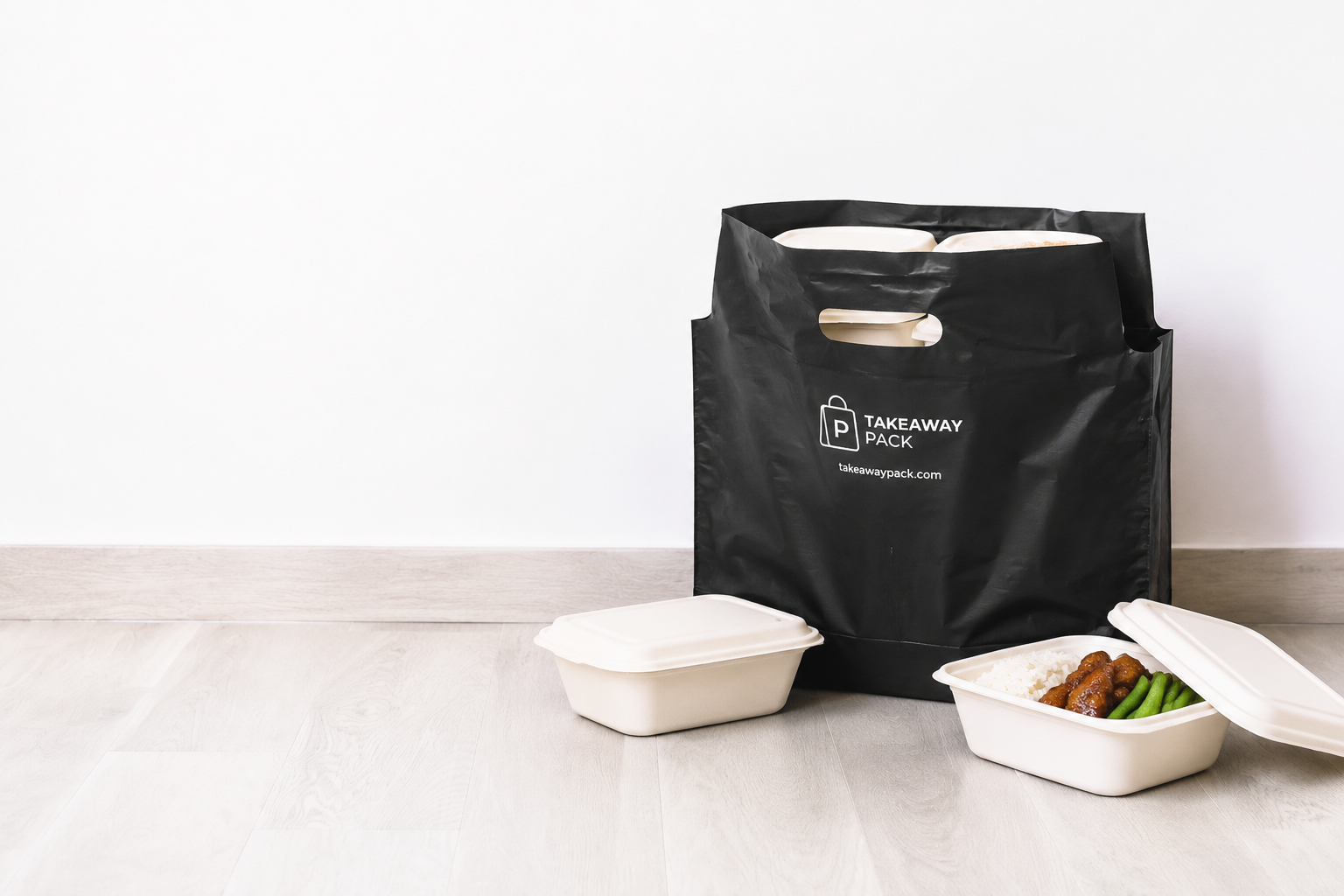
Summary: Splitting a set meal into five or six containers feels like quality control, but it usually protects nothing while slowing the pass and annoying the customer. A better test is the last five minutes: what does the diner actually add, pour, or sprinkle right before the first bite? Sauces and crisp toppings pass that test; rice, protein, and cooked vegetables almost never do. This article turns that question into a component-scoring rule, maps each answer to a specific packaging format, and shows how to validate the result with a packing-time and hold-time trial before you commit to an order.
The problem is not separation. It is separation without a reason.
A typical bowl set gets broken into a rice box, a protein box, a vegetable box, a sauce cup, a crunch cup, and a pickle cup. Six lids. Six pieces to grab during a rush. Six things the customer opens on a desk with no space.
The kitchen chose this because every ingredient looked like a different risk. But separation only pays off when it prevents a real quality loss inside the delivery window. Splitting rice from chicken prevents nothing — both are already moist, both are eaten together, and neither changes texture from sitting next to the other. Splitting fried shallots from a hot curry prevents the single failure the customer will notice.
So the useful question is not "which items are different?" It is "which items lose their value in the last few minutes before eating?"
Why some components fail and others don't
Moisture moves from wet to dry. Inside a closed hot container, steam condenses on the lid and returns to the food surface. That returning water is what kills crunch.
The reason crisp items are the first casualty is structural. Research on deep-fried battered and breaded coatings describes crusted crispness as a dry, brittle surface sitting against a high-moisture core — the contrast between the two is the texture that consumers identify as crispness (Voong, Norton-Welch, Mills & Norton, Journal of Texture Studies, vol. 50, DOI 10.1111/jtxs.12456, accessible via PubMed Central). Once moisture from the core or from the container atmosphere reaches that crust, the contrast disappears and no amount of careful packing brings it back.
Items that already contain a lot of water behave differently. Rice, noodles, braised protein, roasted vegetables, and beans absorbed their moisture during cooking. Placing them in contact does not change their texture in any way a customer can detect over a normal delivery.
That asymmetry is the whole basis for the decision.
The last-5-minutes test
Score each component with one question: would the diner naturally add or mix this at the moment of eating?
If yes, it needs its own space. If no, it belongs in the main compartment.
A second question catches the remaining cases: does this item sit in a different temperature zone than its neighbours? Cold garnish against hot rice creates condensation on both sides, so it separates even if the diner would not add it last.
Always combine — stable base components
- Rice, grains, pasta, noodles
- Cooked protein: chicken, beef, pork, fish, tofu
- Roasted, braised, or steamed vegetables
- Beans, lentils, chickpeas
- Sturdy cooked sides
Always separate — last-moment components
- Fried and crisp toppings: fried shallots, crispy garlic, nuts, seeds, croutons, chips, crisp noodles
- Thin and acidic sauces: vinaigrettes, dipping sauces, soy-based sauces, chilli oil
- Creamy dressings the diner portions themselves
- Fresh herbs and delicate leaves
- Wet pickles and cut raw vegetables
Separate on temperature grounds
- Chilled salad or dessert travelling with a hot main
- Anything the customer will reheat sitting with anything they will not
The structure this produces
Most bowl and set-meal menus land on main compartment + one sauce cup + one crunch portion. A premium tier can justify a fourth piece for a fresh garnish. Beyond that, each extra container should have to earn its place by naming the specific quality loss it prevents.
A useful counter-rule: thick sauces do not need a cup. A heavy curry, glaze, or gravy poured directly over rice travels well because it is already integrated with the base. Reserve cups for thin liquids and for sauces where the diner controls the amount.
Matching each category to real packaging formats
Once the scoring is done, each category has different physical requirements. The formats below are drawn from the Takeawaypack catalogue, with product codes so specifications can be checked directly.
Main compartment: use built-in dividers instead of extra boxes
If two base components genuinely need visual or flavour separation, a divided container does the job with one lid and one hand-off instead of two containers.
| Need | Format | Product code | Listed spec |
|---|---|---|---|
| Three-part hot set, mid portion | 8" 3-compartment plant-fibre clamshell | 800 ml, 203×203×H63 mm, 31 g | |
| Three-part hot set, large portion | 9" 3-compartment plant-fibre clamshell | 1300 ml, 229×229×H77 mm, 42 g | |
| Two-part set, elongated footprint | 2-compartment plant-fibre clamshell | 850 ml, 230×153×H80 mm, 30 g | |
| Two-part rice set, bagasse | Double-compartment lock box | 250×165 mm | |
| Single mixed dish | Single-compartment lock box | 250×165 mm | |
| Three-part set, rigid PP with clear lid | 42 oz rectangular 3-compartment container | top 24×17.5 cm, H 4.7 cm, 42 oz | |
| Multi-item catered plate | 3-, 4-, 5-, 6-compartment plant-fibre trays | 3-comp 232×198×H39.1 mm; 5-comp 267.5×211×H28 mm |
The clamshell and lock-box formats are the practical answer to "we currently use three boxes for one meal." One piece, one closure, portions still visually distinct.
Steam management: vented lids for hot-packed dishes
When a dish is packed hot and closed immediately, a vented lid gives the steam somewhere to go instead of condensing back onto the food.
| Format | Product code | Listed spec |
|---|---|---|
| White cardboard lunch box, vented lid | 1400 ml, top 175×140 mm, H 65 mm, 300 gsm board + PE lamination | |
| White cardboard lunch box, vented lid, large | 3000 ml, top 225×165 mm, H 90 mm |
Note the trade-off honestly: venting releases steam but also releases heat. For long delivery routes, test whether the texture gain is worth the temperature loss on your specific menu.
Sauce: pick the cup by viscosity and by who controls the portion
Sauce is the component most likely to generate a complaint, either because it leaked or because it was already mixed in.
| Use case | Format | Product code | Listed spec |
|---|---|---|---|
| Small dip, single portion | 1.5 oz hinged sauce cup | 45 ml, Φ5.5 cm top, H 2.4 cm | |
| Standard dip | 2 oz hinged sauce cup | 62 ml, Φ6 cm top, H 2.8 cm | |
| Generous dressing or larger pour | 4 oz hinged sauce cup | 130 ml, Φ7 cm top, H 3.5 cm | |
| Fully removable lid preferred | 2 oz / 4 oz separate-lid sauce cup | 70 ml / 150 ml | |
| Two or three sauces in one piece | 5 oz compartmented sauce cup with lid | 142×87×27.5 mm, 400 sets/carton |
Hinged cups matter operationally: the lid is attached, so there is no second piece to find during a rush and nothing to lose in the bag. A 5 oz compartmented sauce cup with an attached lid (142×87×27.5 mm) is the direct answer to a menu that currently sends out three separate ramekins — one piece, multiple wells.
Crunch and dry toppings: keep them dry, keep them countable
Crisp elements need a dry, closed space and no contact with the hot base. Two workable routes:
- A small hinged cup (a 1.5 oz cup at 45 ml is usually enough for a topping portion) sealed and dropped in the bag.
- An insert tray that sits inside the main container instead of adding another loose piece — for example a 34×157 mm or 170×44 mm insert tray, both moulded from cornstarch.
Consolidating toppings is also worth considering. If a set currently uses three tiny cups for seeds, crispy garlic, and herbs, a single pre-portioned mix in one cup removes two pieces from every order without changing what the customer receives.
What changes operationally
Cutting from six pieces to three has effects worth measuring rather than assuming:
- Fewer hand-offs per order. Each container is a grab, a fill, a close, and a placement. Reducing container count reduces all four.
- Lower error rate. Fewer pieces means fewer chances to mismatch a lid, forget a cup, or send the wrong sauce.
- Simpler unboxing. The diner opens one main container, adds one sauce, sprinkles one topping, and eats. No desk-side assembly.
- Consolidated purchasing. One divided container in place of three separate boxes and lids means fewer SKUs to forecast, store, and reorder.
Measure the packing-time change on your own line rather than adopting a number from elsewhere — it depends heavily on station layout and how sauces are pre-portioned.
Run the trial before you order
Three versions, one week, four measurements.
Versions
- Current — as you pack today
- Simplified — base components combined in a divided container, plus sauce cup and crunch cup
- Aggressive — thick sauce applied directly over the base, crunch in an insert tray, nothing else separate
Measurements
- Seconds to pack, timed at the station during a real rush, not a quiet period
- Texture and appearance after your actual median delivery time — hold a sealed sample and open it at that mark
- Complaint and remake rate by cause: sogginess, leakage, cold food, missing component
- Packaging cost per order across all pieces including lids
Decision rule: choose the version that removes the most steps while keeping the crisp and fresh components intact. If versions 2 and 3 score the same on quality, take version 3.
For custom printing, run this trial on stock product first. Confirming the structure before committing artwork avoids paying for printed containers in a format you later abandon.
Ordering and customisation
Once the structure is settled, two practical notes on moving from trial to supply.
Takeawaypack operates its own printing facility and works with multiple disposable foodservice packaging factories, serving buyers in North America, Europe, Australia, and the Middle East. Logo and colour printing is available across these formats — the catalogue lists inkjet printing for the plant-fibre clamshells and trays, screen printing for the PP sauce cups and bagasse lock boxes, and flexographic or offset printing for the cardboard lunch boxes.
Two conditions worth planning around:
- Custom printing runs on confirmed proofs. Artwork is turned into a digital proof from your files, and production starts only after you confirm it in writing. Build that confirmation step into your timeline.
- MOQ is flexible but product-specific. Standard products generally start at 1,000 units and bags at 5,000, with the final figure set in the quotation for your specific item and print method. Several of the divided formats above carry low trade minimums — the plant-fibre clamshells and compartment trays are listed at 50 units for trade orders, which makes them practical to sample before scaling.
Food-contact documentation is confirmed per SKU, per order, and per destination market, so raise your destination country early if your market requires specific declarations.
The short version
Separate what the diner adds last. Combine everything else.
For most set menus that means one divided main container, one sauce cup, and one crunch portion — not six pieces. The crisp topping and the thin sauce are the components that actually degrade in the last minutes before eating; rice and protein sitting together degrade nothing. Use built-in compartments rather than extra boxes, use a vented lid when you pack hot and close immediately, and use a hinged cup so the lid never goes missing.
Then test it on your own line before you order in volume.
To check specifications, compartment layouts, and print options for the formats referenced above, browse the catalogue at takeawaypack.com or send the component list from your trial and ask which divided formats fit your portion sizes.