
Why Your Fried Chicken Goes Soft in 20 Minutes — and How Smart Packaging Fixes It
Fried chicken delivery has a 20-minute window before the coating loses its crunch. The culprit is trapped steam, not the kitchen. This article explains the science behind moisture buildup, compares vented versus windowed boxes, covers grease resistance and heat retention, and offers practical packag…
2026-09-07 - 10 min read
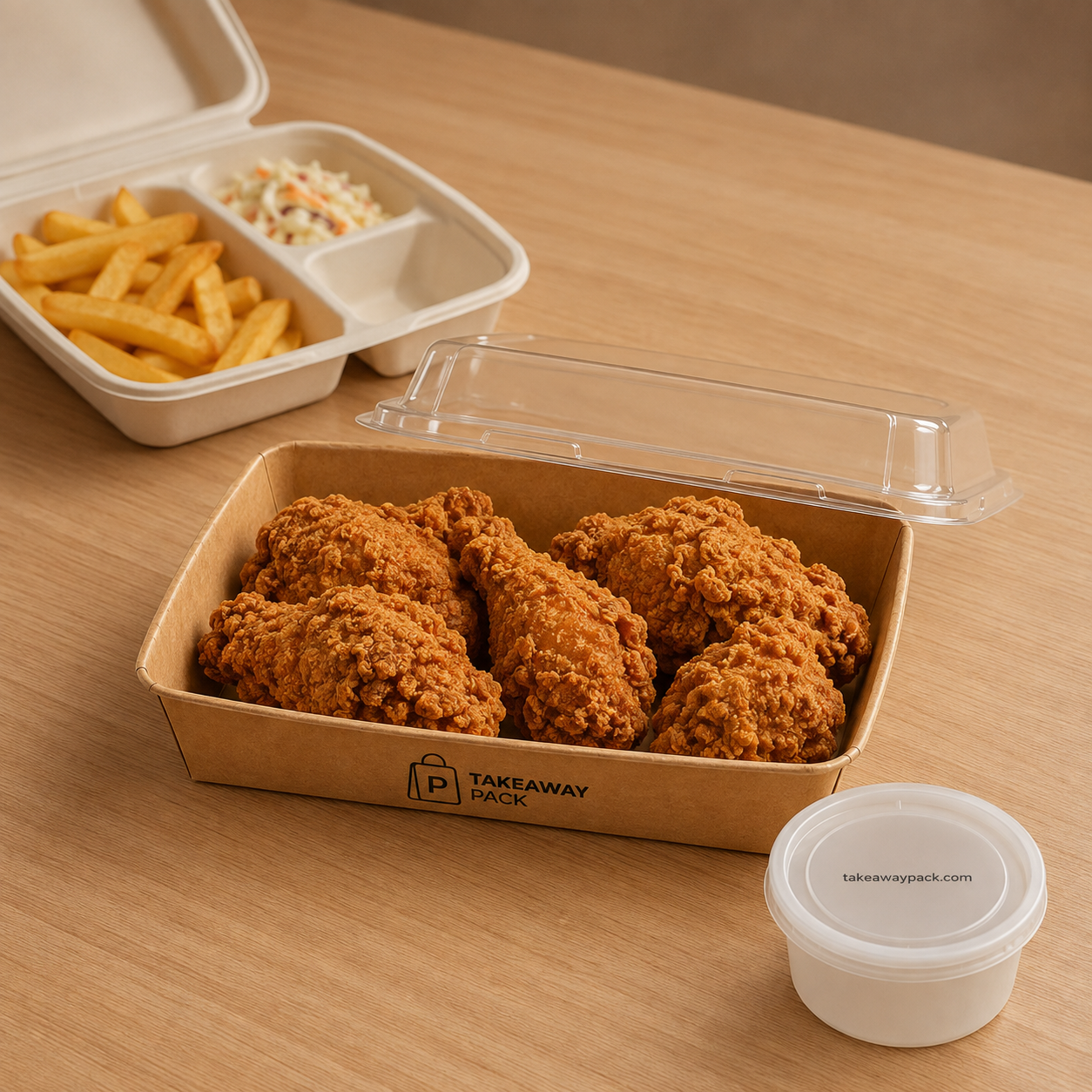
Summary: Fried chicken delivery has a 20-minute window before the coating loses its crunch. The culprit is trapped steam, not the kitchen. This article explains the science behind moisture buildup, compares vented versus windowed boxes, covers grease resistance and heat retention, and offers practical packaging solutions for restaurant owners who want their fried chicken to arrive as good as it left.
The 20-Minute Problem That Every Fried Chicken Shop Faces
You run the fryer right. Your batter is seasoned, your oil is at temperature, and the chicken comes out golden and shatter-crisp. You pack it, hand it to the driver, and within 20 minutes a customer is leaving a review that says "soggy" or "disappointing."
This isn't a kitchen problem. It's a physics problem.
When hot fried chicken goes into a sealed box, the residual heat drives moisture from the chicken's interior into the air inside the package. That humid air condenses on the inner surface of the lid and drips back onto the coating. The result is the same as steaming — the crust softens, the breading peels, and the texture your customer paid for is gone.
The question isn't whether your kitchen is producing good fried chicken. It almost certainly is. The question is whether your packaging is undoing that work before the food reaches the table.
How Steam Destroys Fried Chicken in Transit
The mechanism is straightforward. Freshly fried chicken leaves the oil at an internal temperature of around 165°F. It continues to radiate heat as it sits inside the box. That heat evaporates residual moisture from the surface and from the meat itself. In a sealed environment, that water vapor has nowhere to go.
As the vapor saturates the air inside the container, it reaches the dew point. Tiny droplets form on the inside of the lid and the side walls. Gravity pulls those droplets down onto the chicken. The breading absorbs the moisture, the starch gelatinizes, and what was once a crispy crust becomes a damp, chewy layer.
This process is accelerated by several factors common to food delivery:
- Stacking hot chicken in a single box — multiple pieces increase the total moisture load.
- Using unvented plastic lids — plastic traps heat and moisture more effectively than paperboard.
- Long delivery routes — the more time in the box, the more condensation cycles occur.
- Hot bags that hold heat in — while hot bags keep food warm, they also keep the interior of the box at a temperature that sustains evaporation.
The simple fix is to let the steam escape before it becomes a problem.
Vented Boxes vs. Window Boxes: Which One Preserves Crispness?
The most common debate among fried chicken operators is whether to use vented boxes or boxes with clear windows. The answer depends on what you are optimizing for.
Vented boxes have small perforations — typically laser-cut or die-cut holes — placed in the lid or side panels. These holes allow steam to escape gradually, reducing the humidity inside the box. The result is dramatically less condensation, which means the coating stays crisp for longer. Most vented designs also incorporate a grease-resistant coating that prevents oil from wicking through the paperboard and staining the exterior.
The trade-off is that vented boxes release some heat along with the steam. The chicken will be slightly cooler than it would be in a fully sealed container. For most US delivery windows — 15 to 30 minutes — this is a negligible difference. The chicken arrives warm and crispy rather than hot and soggy. Most customers will prefer the trade.
Window boxes feature a clear PET or PP film insert that lets customers see the product. This is a marketing advantage — golden-brown fried chicken is visually appetizing, and a window box can increase perceived quality. However, the window itself is a vapor barrier. Unless the window is combined with vents elsewhere on the box, the sealed plastic film traps moisture just as effectively as a solid lid.
Some manufacturers solve this by placing vents on the side walls or the back panel while keeping the window on the top. This hybrid design gives you the visual appeal of a window box with the functional benefit of steam release. If you are committed to window boxes, look for a supplier that offers a vented-window combination.
For operators whose primary concern is texture, a vented box without a window is the more reliable choice. The science is clear: steam must be released, not trapped.
Grease Resistance: The Non-Negotiable Barrier
Fried chicken packaging must handle two things well: heat and oil. A box that holds up structurally but lets grease seep through is a liability.
The grease that wicks through uncoated paperboard does more than create an unsightly stain on the outside of the box. It weakens the structural integrity of the container. A grease-soaked box can buckle during handling, spilling its contents. It also transfers oil to the delivery driver's hands, the customer's countertop, and the packaging bag — a chain of small disappointments that adds up to a negative experience.
The industry standard for grease resistance is a polyethylene (PE) coating or a water-based barrier coating applied to the interior surface of the paperboard. PE coatings are effective and widely available, but they are not compostable. Water-based barrier coatings offer comparable grease resistance and are recyclable in standard paper mills, making them the preferred choice for operators who want to offer sustainable packaging.
When evaluating a supplier, ask for the box's grease-resistance rating. Most quality manufacturers test against the TAPPI T-559 or similar standard and can provide a pass-fail result for common food-service oils. A box that resists grease for 30 minutes under a 100°C load is sufficient for most delivery scenarios. Anything less and you risk leaks.
Heat Retention: Keeping It Warm Without Keeping It Steamy
Heat retention and moisture management are often seen as opposing goals. A sealed container retains heat better than a vented one, but it destroys texture. The best packaging strikes a balance.
The material choice matters here. Corrugated cardboard offers better insulation than single-ply paperboard because the fluted layer traps air. A box made from E-flute or F-flute corrugated material will keep the chicken warmer for longer, even with vents, because the air gap slows heat transfer through the walls.
Molded pulp and bagasse (sugarcane fiber) boxes are another option. These materials are naturally insulating and have a porous structure that allows some moisture vapor to escape through the walls rather than condensing on the lid. They are also compostable, which aligns with the growing preference for sustainable packaging in the US market.
The practical takeaway is this: if you use a thin single-ply paperboard box, you need vents to manage moisture, but you will lose heat faster. Switching to a thicker material — corrugated or molded fiber — gives you more room to design effective vents without sacrificing temperature.
Can You Print on Grease-Resistant Packaging?
Yes — and you should.
Custom printing on fried chicken packaging is a direct investment in brand recognition. A box that carries your logo, color scheme, and a compelling food photo is a marketing asset that travels to your customer's home. Every delivery is a brand impression.
The printing process for grease-resistant packaging typically uses flexographic or digital printing. Flexo is cost-effective for large runs and supports spot colors. Digital printing offers full-color CMYK with no plate costs, making it practical for smaller quantities — especially important for operators who need custom packaging but cannot commit to tens of thousands of units.
The key consideration is the coating. Barrier coatings that are applied after printing can reduce the vibrancy of the ink. Work with your supplier to ensure that the printing is done before the barrier layer is applied, or that the barrier is formulated to allow the ink to show through clearly. A good supplier will provide printed samples so you can see how the colors render on the finished box.
For US-based small-to-medium restaurant operators, minimum order quantities (MOQs) are a common barrier. Many packaging suppliers in the US market require MOQs of 5,000 to 10,000 units per design. However, some suppliers like Takeawaypack offer lower MOQs in the range of 500 to 1,000 units, making custom-printed packaging accessible to food trucks, ghost kitchens, and independent cafes.
Sauce Packaging: The Often-Overlooked Detail
A fried chicken meal is not complete without sauce. But the way sauce is packaged can undermine the entire customer experience.
The most common complaint about sauce in a fried chicken box is that the sauce cup tips over, leaks, or bursts. Sauce that spills onto the chicken accelerates sogginess in the specific area it contacts and creates a mess that customers resent cleaning up.
The solution is dedicated sauce compartments. Some fried chicken boxes now include integrated dividers or side compartments that hold a sauce cup securely in place. This keeps the sauce separate from the chicken until the customer is ready to use it, and it prevents the cup from shifting during transit.
If your box does not have a built-in compartment, use a separate sauce bag or a rigid sauce cup with a snap-on lid. Place the cup outside the main box, either in a separate compartment of the delivery bag or in a small paper bag alongside the main order. The added step is worth the reduction in spill-related complaints.
For operators who serve multiple sauces, consider a multi-compartment sauce tray or individual portion cups with foil seals. The seal prevents leaks even if the cup is knocked over, giving drivers and customers one less thing to worry about.
How to Choose the Right Packaging for Your Fried Chicken Business
Every fried chicken operation is different, but the decision framework is the same. Start with these criteria:
- Texture priority. If your customers expect shatter-crisp coating and you have a delivery radius of 15 minutes or more, choose a vented box. Avoid solid sealed lids.
- Grease barrier. Insist on a certified grease-resistant coating. Test a sample with your own fried chicken — pack it, wait 20 minutes, and check the exterior for oil stains.
- Heat retention. If your delivery area is large or your customers are sensitive to temperature, use corrugated or molded fiber rather than single-ply paperboard.
- Branding needs. Determine your budget and quantity. If you are running 500 to 1,000 boxes per design, look for a supplier that offers digital printing with low MOQs.
- Sauce handling. Decide whether you need an integrated sauce compartment or a separate packaging solution. Test the sauce container with the actual sauce viscosity you use.
- Sustainability goals. If your customers value eco-friendly packaging, choose compostable or recyclable materials. Water-based barrier coatings and molded pulp boxes are widely available.
Why the Right Packaging Wins Customer Loyalty
The fried chicken market in the US is crowded. Customers have options, and they are quick to share their experience online. A delivery that arrives hot, crispy, and cleanly packaged generates repeat orders and positive reviews. A delivery that arrives soggy, greasy, or messy generates complaints and lost business.
The cost of upgrading your packaging is small compared to the cost of acquiring a new customer to replace one who left after a bad experience. A vented, grease-resistant, well-branded box costs cents more per unit than a basic commodity box. That investment pays for itself in reduced complaints, fewer refunds, and stronger customer retention.
Packaging is not a line item — it is part of the product. Your fried chicken is only as good as the condition in which it arrives. If you have been blaming the kitchen, it is time to look at the box.
Build Your Fried Chicken Packaging Strategy Today
Choosing the right packaging does not have to be complicated. Start by evaluating your current boxes against the criteria above, then test a few alternatives. A simple switch from a sealed box to a vented, grease-resistant design can eliminate the most common complaint in fried chicken delivery.
If you want to explore custom options — vented boxes, custom printing, or integrated sauce compartments — check with a supplier like Takeawaypack to see what is possible at your volume. Small changes to your packaging can make a measurable difference in how your customers experience your food.
For more information on custom packaging for fried chicken and other takeout foods, visit takeawaypack.com or reach out to the team at info@takeawaypack.com. Your kitchen is doing the work — make sure your packaging is doing its part.