Why Global Food Businesses Are Switching to Sustainable Packaging: A Sourcing Guide
The shift toward sustainable food packaging is no longer a niche preference—it's becoming a business necessity. Across markets in Europe, North America, the Middle East, and.
2026-06-30 - 5 min read
Overview
The shift toward sustainable food packaging is no longer a niche preference—it's becoming a business necessity. Across markets in Europe, North America, the Middle East, and Southeast Asia, restaurants, cafes, and food delivery operators are facing mounting pressure to reduce their environmental footprint without compromising operational efficiency.
For procurement teams and business owners, this transition presents both opportunities and challenges. Understanding what drives the sustainable packaging market—and how to source these products effectively—can help you stay ahead of regulatory changes and shifting consumer expectations.
The Market Forces Driving Sustainable Packaging Demand
Several converging factors are accelerating the shift away from conventional single-use packaging.
Regulatory Pressure Is Mounting
Governments worldwide are implementing stricter regulations on plastic waste. The EU's Single-Use Plastics Directive, various state-level bans in the US, and similar legislation across the Asia-Pacific region are forcing businesses to seek alternatives. For importers and distributors, staying ahead of these regulations is becoming a core business requirement.
Consumer Expectations Have Shifted
Research consistently shows that consumers—particularly in younger demographics—prefer brands that demonstrate environmental responsibility. For food service businesses, packaging is one of the most visible indicators of sustainability commitment. This isn't merely about public relations; it directly affects customer acquisition and retention.
Supply Chain Efficiency Considerations
Sustainable packaging often offers practical operational advantages. Materials like bagasse, kraft paper, and PLA can be lighter to transport, stack more efficiently, and in some cases, reduce waste disposal costs. For businesses operating across multiple locations, these efficiencies compound.
Understanding Your Sustainable Packaging Options
When sourcing eco-friendly packaging, you'll encounter several material categories, each with distinct characteristics and use cases.
Paper-Based Packaging
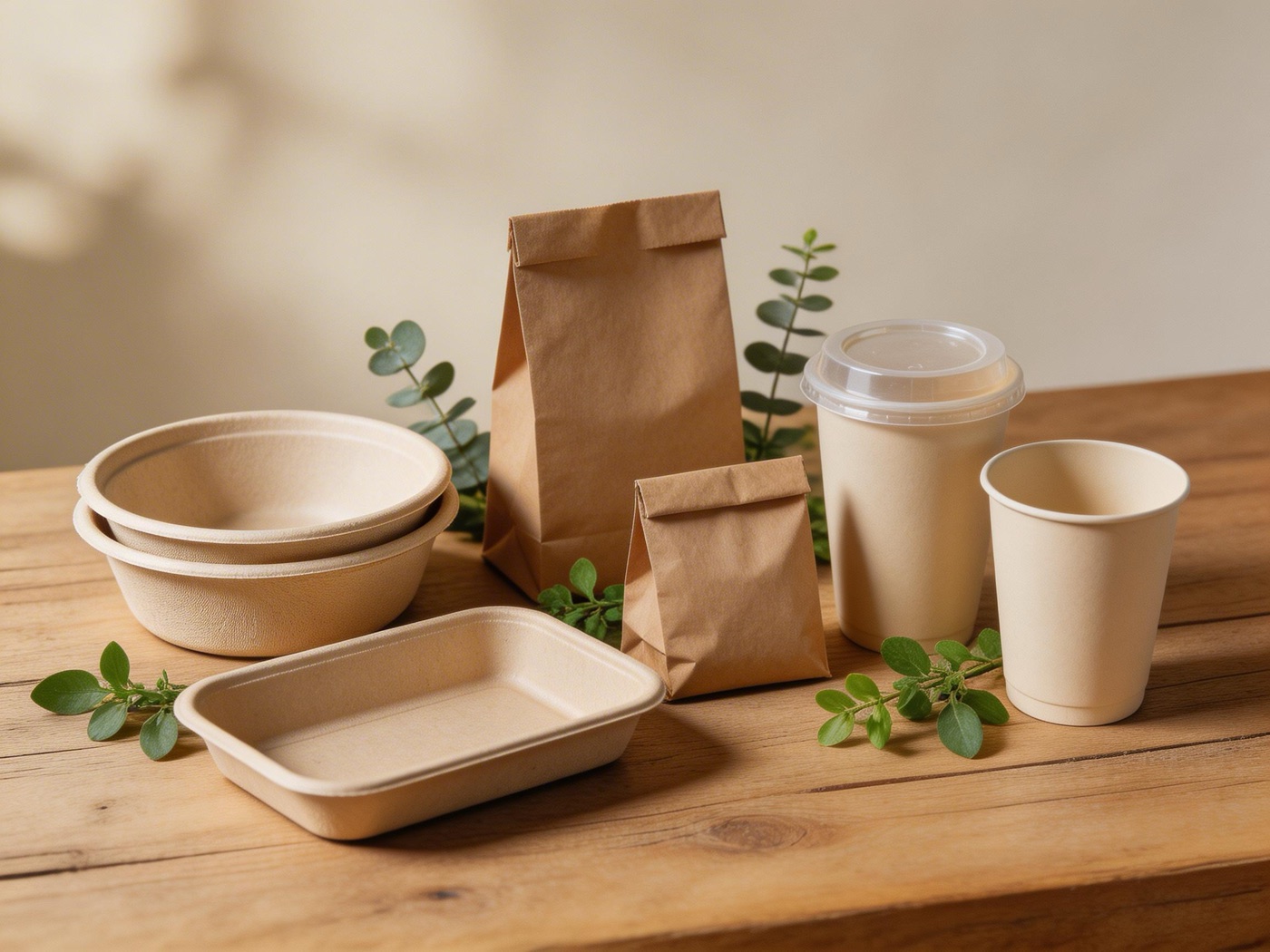
Kraft paper and cardboard remain the most widely adopted sustainable options. They're suitable for dry foods, baked goods, and many takeaway applications. Modern paper packaging often features grease-resistant linings that maintain food quality without compromising recyclability.
For hot food applications, paperboard with appropriate barrier properties can replace plastic containers. When sourcing, consider whether your products require moisture resistance and whether the paper stock meets food-grade standards for your target markets.
Bagasse and Plant Fiber Products
Bagasse—sugarcane fiber left after juice extraction—has emerged as a leading alternative to foam and plastic containers. It's heat-resistant, microwave-safe, and commercially compostable in industrial facilities. Similar materials include wheat straw, bamboo fiber, and palm leaf products.
These options work well for hot meals, rice dishes, and heavier food items. When evaluating suppliers, request documentation on composting certifications and verify whether local composting infrastructure exists in your target markets.
Bioplastics and PLA
Polylactic acid and other bioplastics offer transparency and functionality similar to conventional plastics. Clear PLA cups, for instance, provide the visual appeal of plastic while being industrially compostable. Some formulations are suitable for cold applications, while newer developments handle moderate heat.
The limitation is that most bioplastics require industrial composting conditions—home composting and standard recycling streams are typically insufficient. Your sourcing decisions should account for the waste management infrastructure where your packaging will be disposed.
Edible and Innovative Materials
Emerging options include edible packaging made from seaweed, starch, or other food-grade materials. While not yet mainstream for most food service applications, these innovations represent the frontier of sustainable packaging. For businesses positioning themselves on the cutting edge, pilot programs with edible packaging can generate significant marketing value.
Practical Considerations for B2B Sourcing
When transitioning to sustainable packaging through an international supplier, several practical factors require attention.