Why Reusable Container Programs Need Incentives, Washing, and Logistics Designed Together: Lessons From the Starbucks-Backed Bring It Back Fund
The UK's Bring It Back Fund, a £1.4 million reuse program created by the environmental charity Hubbub together with Starbucks, ran trials across more than 100 food and drink businesses and reported an average container return rate of 57%, with the best locations reaching 92%.
2026-09-03 - 10 min read
Summary: The UK's Bring It Back Fund, a £1.4 million reuse program created by the environmental charity Hubbub together with Starbucks, ran trials across more than 100 food and drink businesses and reported an average container return rate of 57%, with the best locations reaching 92%. That gap is not really about the containers — it is about how merchant participation, return logistics, and customer incentives were designed to support each other. This article breaks down what the UK trials showed about each pillar, why designing them one at a time is the most common reason pilots stall, and which container specifications make a borrow-and-return system operable for restaurants that never asked to become reuse experts.
What the UK reuse trials actually measured
Between 2022 and 2024, Hubbub and Starbucks funded six reuse projects across the UK through the Bring It Back Fund, financed by proceeds from Starbucks' 5p charge on single-use paper cups. The trials covered citywide returnable takeaway packaging, electronic tagging, doorstep collections, and rural deposit schemes, involving over 100 food and drink businesses.
The headline numbers: an average return rate of 57% across the funded projects, with top locations achieving 92%. Those two figures describe the same program with the same kind of packaging. The difference was context and design — return-point density, staff understanding, and how little friction customers faced.
Hubbub distilled the results into five ingredients for successful reuse systems: make reuse nearly as convenient as single use, communicate clearly and consistently, explain the environmental benefit rather than assuming people understand it, keep the cost of use low with incentives or rewards, and secure strong buy-in from the teams running the scheme on the ground.
Read that list again as a restaurant operator. Not one of the five ingredients is about the container. All five are about the surrounding system — the core lesson for any voluntary reusable container trial with nearby restaurants.
Why merchant participation is an operations problem, not a sales problem
When a reuse pilot struggles, the usual diagnosis is "restaurants didn't want to join." A more useful one: restaurants joined when the system asked almost nothing of them, and dropped out when it asked for storage, washing capacity, training hours, or liability they had not budgeted for.
Design for partial participation from day one
Not every merchant will opt in, and a voluntary program that assumes full participation looks broken at 60% uptake. Plan the return network around the merchants who do join, and leave the door open for the rest. A practical structure is tiered roles rather than all-or-nothing membership: some merchants only hand out containers, some only host a return bin, and a smaller group does full issue-and-collect. A small restaurant can join at the lowest tier without committing to washing, storage, or inventory management — and even a restaurant that never issues a container can host a return bin, so customers can return regardless of where they ate.
Keep kitchen involvement close to zero
Merchant drop-out, the UK trials repeatedly found, stems from operational friction, workflow disruption, and fear of food safety liability. The most robust countermeasure is removing washing from the merchant entirely: participating outlets succeeded when their involvement was limited to handing out pre-sanitized containers and stacking empties into a bin, with commercial washing off-site and in bulk.
The moment a pilot asks kitchen staff to wash customer-returned containers during peak hours, participation narrows to the few venues with spare capacity and an appetite for food-safety questions they cannot answer.
Standardize the container line before you recruit anyone
One of the quieter findings from the UK work: across the funded projects, participants used 79 different types and sizes of packaging. Variety complicated sourcing, storage, stacking, portioning, and training at every venue that touched the system.
A pilot container line should be small — two or three sizes covering a bowl, a meal box, and a cup — on a shared footprint so lids, stacking, and washing racks work across the range. Standardization is also what makes later recruitment realistic: a kitchen portioning into the same three containers for every participant does not have to redesign its line when it joins.
Frontline staff decide whether the program gets offered at the counter. Trials showed uptake dropped when staff were not trained to explain the system or treated it as extra work, so onboarding should include a short cashier script — deposit, return location, why it exists — measured in minutes.
Reverse logistics: the part of the pilot that decides return rates
Return logistics is where most reuse pilots are won or lost. Convenience of return is the make-or-break factor across the UK projects: reuse has to come as close to single-use convenience as possible, and every extra step in the return journey shows up directly in the return rate.
Decouple returns from the point of purchase
Customers rarely walk back to the restaurant where they bought their food. Return-to-origin systems suppress returns and concentrate dirty-container storage on the merchants least able to handle it. The better model separates the return network from the purchase network:
Customer → any participating merchant or public return bin → bulk collection route → central wash hub → redistribution to merchants.
Practical density beats theoretical coverage. A common planning benchmark: two to three return points within a short walk of every participating merchant, placed where people already pass — transit hubs, office lobbies, market squares.
Return bins must also work unattended — simple mechanical locks or a scan-to-open flow are enough, because the fastest way to damage trust is an overflowing or broken bin.
Washing is the hidden cost center
Washing is usually the largest recurring cost in a reuse system and the easiest to underestimate. The workable pattern from the UK trials is centralized: collect dirty containers in bulk from high-volume bins, wash off-site to commercial standards, redistribute clean stock. Fragmented logistics — a driver visiting fifteen venues for three containers each — quietly bankrupts pilots.
Loss shows up here too. Plan for meaningful shrinkage in the early weeks before return habits form, and budget replacement cost into the pilot rather than treating losses as failure. Containers need many reuse cycles before they outperform single-use on emissions and cost, which is why durability and washability belong in the container specification, not just the unit price.
Customer incentives: what worked and what did not
The UK experience with cups is the clearest evidence base available on incentives, and it is sobering for anyone planning to lead with discounts.
Discounts alone have a weak track record
Starbucks had offered a 25p discount for customers bringing their own reusable cup for roughly twenty years. At the time the 5p charge was trialed, only about 1.8% of Starbucks customers used it, and across UK coffee shops generally, bring-your-own discounts ran at 1–2% of purchases. Generous discounts moved a small minority of customers for two decades.
Small charges moved behavior more than discounts
The 5p charge trial — run across 35 London branches with proceeds going to Hubbub — was built on loss aversion rather than reward. Before launch, polling found 48% of consumers said they would definitely carry a reusable cup to avoid paying the extra 5p. The broader precedent was England's plastic bag charge, which cut bag usage by more than 83% in its first year. The consistent pattern: a small visible charge on the single-use option changes behavior more reliably than a discount on the reusable one.
For a container pilot, the translation is straightforward: a small packaging charge on single-use across participating merchants, paired with a free or refunded reusable option, gives customers an immediate economic reason to choose the system.
Deposits only work where returns are convenient
Refundable deposits give customers a reason to return containers — with one hard precondition. Where return points are dense, a low, fully refundable deposit functions like a shopping-cart coin: it secures the asset and refunds without friction. Where return points are sparse, the same deposit reads as a tax and suppresses sign-ups.
The sequence matters: build the return network first, then attach the deposit. Keep it low enough to require no deliberation at the counter, and refund automatically at any point in the network.
Do not make an app the price of entry
Several UK trials found app-dependent schemes produced low participation even where return rates among signed-up users were decent — digital registration at the point of sale is friction exactly where friction is most expensive. A staged approach worked better: physical container, deposit, and simple return first; optional QR-based rewards later; analytics in phase three.
Why the three pillars cannot be designed separately
The reason incentives, washing, and logistics have to be designed together is that each one fails silently when the other two are missing.
A deposit without return density becomes a customer tax. Centralized washing without standardization inflates cost per cycle, since every size needs its own handling, rack, and stock-keeping. Merchant recruitment without a washing partner asks restaurants to absorb the exact burden that makes them refuse. An incentive without merchant workflow means the discount never gets offered at the counter. And a charge on single-use without a working reusable alternative just raises prices.
This is why the UK findings keep circling back to one conclusion: reuse is not primarily a packaging problem. It is a network design problem, and the network — merchants, bins, routes, wash hub, incentives — has to reach a minimum coherent size before any single element can be judged.
What to measure in the first 90 days
Pilots that only count containers distributed learn nothing. The metrics that predict viability: merchant retention at 30/60/90 days, staff time per transaction, and complaint volume on the merchant side; first-time adoption, repeat use, return rate, and average days before return on the customer side; and cost per container cycle, loss rate, washing turnaround, and return-point density on the system side.
Set the first goal as proving repeat behavior among a small merchant cluster, not maximum enrollment — a dense cluster of twenty willing restaurants outperforms a thin spread of eighty reluctant ones on every metric that matters.
Container specifications that make or break a reuse pilot
The container itself does not rescue a badly designed network — but a badly specified container can sink a well-designed one. When sourcing for a pilot, the specifications that carry operational weight are:
A small, standardized size range on a shared footprint. Takeawaypack's thickened polypropylene round bowls with lock lids run from 750ml to 2000ml across six capacities while sharing the same 17.2cm top diameter — one lid and stacking logic across the line, which simplifies washing racks, bin design, and staff training in exactly the way the UK trials identified as critical.
A material and closure built for repeated service. Food-grade PP (polypropylene), BPA-free, with a leak-resistant lock-lid closure, holds up to repeated filling, stacking, and transport — and PP is a recyclable resin at end of life, which matters for the exit story of any container pool.
Logistics-ready packing. The same bowl series packs 300 pieces per carton at under 12kg, which makes replenishment plannable: a week of stock for a busy venue is a few cartons, not a pallet problem.
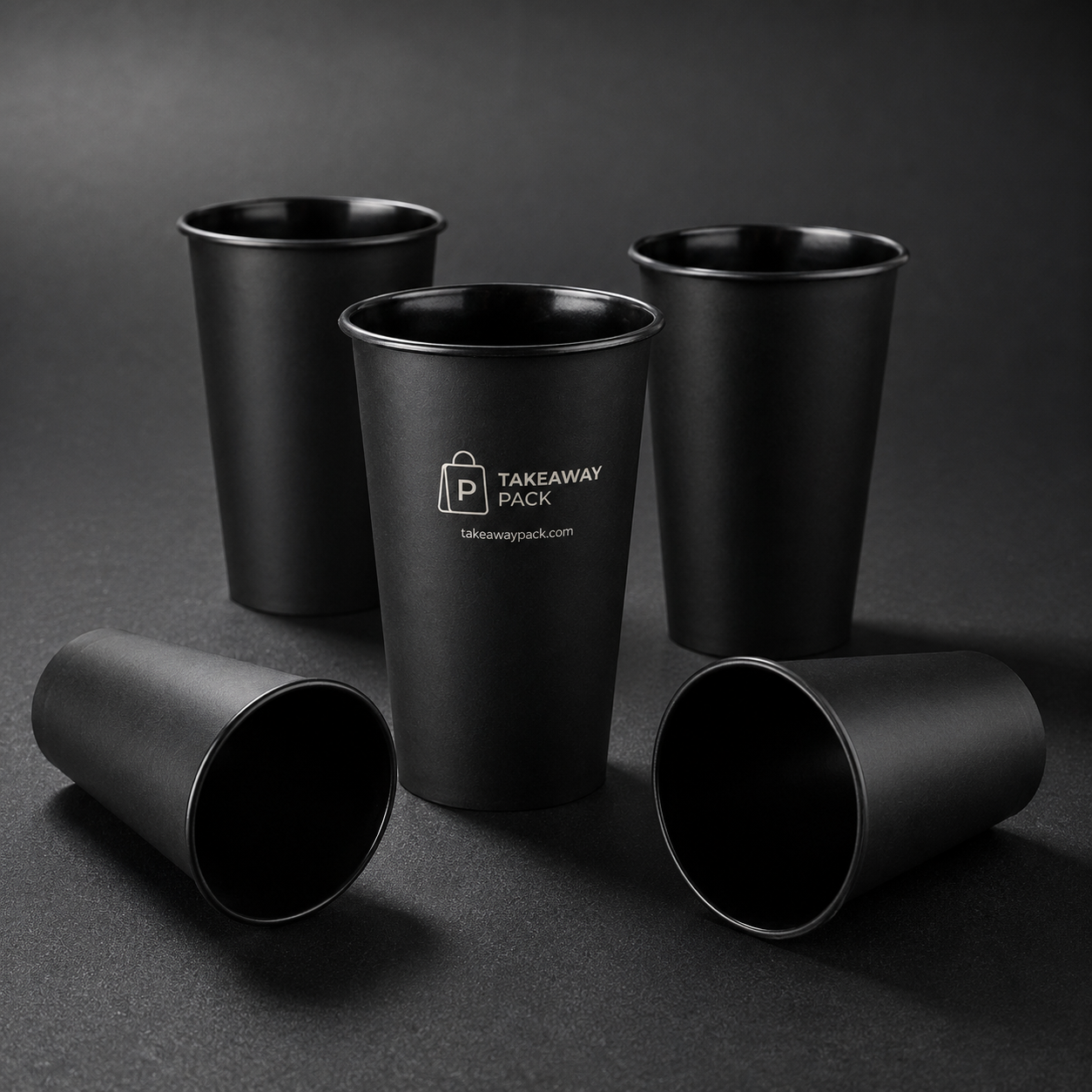
A marking system that survives washing. Distinctive colors and simple screen-printed identification help customers tell a program container from single-use — a real confusion point in the UK trials — and help staff sort returns quickly.
Takeawaypack works with international foodservice buyers across North America, Europe, Australia, and the Middle East, combining its own printing facility with a network of food-packaging factories. For pilot programs, the practical support matters at the edges of the spec: print decisions are aligned on a digital proof before production starts, samples and drawings can be used to match requirements before a bulk order, order quantities are flexible enough to support small trial batches, and compliance documentation is confirmed per SKU, order, and destination market rather than assumed.
One specification no supplier can answer for you: wash-cycle durability under your washing partner's actual process. Validate it with the wash hub before committing the full container order; a serious packaging supplier will support that validation with samples.
Where to start
If you are planning a reusable container trial, start by mapping the return network and the washing partner, then recruit a dense cluster of willing merchants at tiered involvement levels, then layer incentives — a small charge on single-use plus a low refundable deposit — onto a system that already works. Choose a standardized container line that makes all of it cheaper to run, and measure return behavior, not distribution.
For foodservice teams evaluating container options for a reuse pilot, Takeawaypack's catalog covers cups, bowls, boxes, containers, trays, lids, bags, and cutlery at takeawaypack.com, with material, capacity, print, and destination requirements aligned from a single RFQ — including samples and digital proofs before any production commitment.
Sources: Return-rate figures, project scope, and the five success ingredients are from Retail Technology Innovation Hub's coverage of the Bring It Back Fund findings. Discount uptake, the 5p charge trial, and plastic bag charge data are from The Guardian's report on the Starbucks cup charge trial.