
Packaging for Sushi, Salads and Cold Food: A Practical Selection Guide
Use menu-specific tests to balance presentation, component separation, lid fit and cold-food delivery conditions.
2026-07-23 - 3 min read
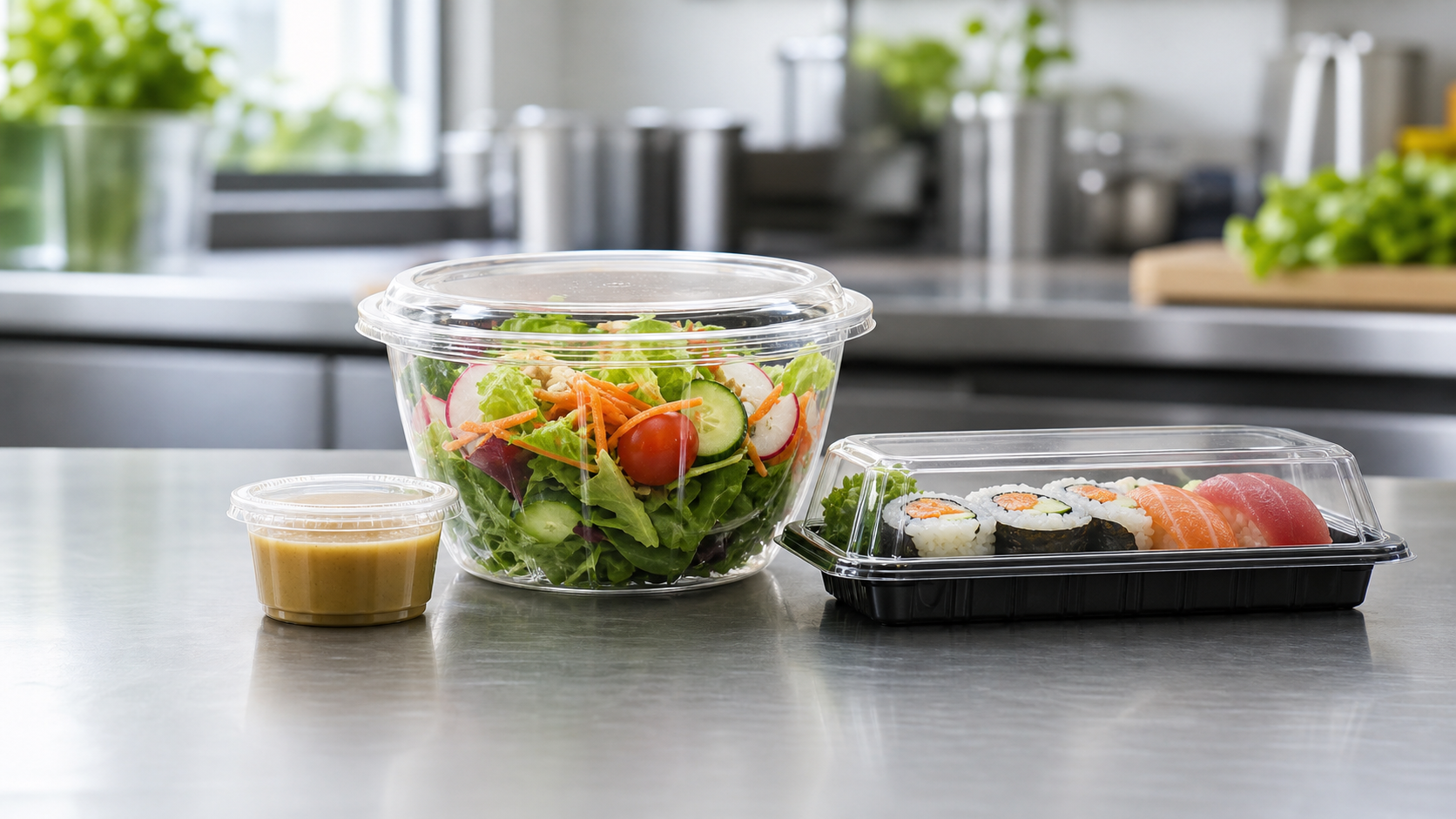
Define what the customer needs to see and keep separate
Cold meals can depend on presentation while dressings, sauces, toppings and delicate ingredients may need separation until opening.
| Menu need | Packaging decision |
|---|---|
| Visual presentation | Is product visibility important? |
| Dressing or sauce | Should it be separate from the main item? |
| Delicate garnish | Will movement damage presentation? |
| Portion control | Does the container match the serving size? |
| Delivery | Can the pack remain level and closed in transit? |
Choose the container around the menu build
Start with the base item, then list every component that can shift, soften or leak. The packaging should suit the actual kitchen assembly sequence.
Test cold-chain reality
Test the selected package after the typical holding period and delivery journey. Condensation, dressing movement and topping condition can change over time even when the package looks suitable at the pass.
Frequently Asked Questions
Is a clear lid always the best choice for cold food?
Not always. Visibility can help presentation, but the lid must also fit the container and delivery condition.
Should salad dressing be packed separately?
It often helps preserve texture, but the choice depends on the menu and service method.
Can one size work for all salad portions?
Use menu-specific portion tests. Oversized containers can let ingredients move, while undersized ones can compromise closure.
How should we protect toppings during delivery?
Identify toppings that can shift or soften, then test separation, a different layout or a more stable pack.
Select against a real menu item
Discuss a cold-food packaging brief with the portion, components, holding time and delivery use. Related: choosing the right food container size.