
Choosing Vented and Sealed Takeout Containers for Better Delivery Food
Use ventilation when trapped steam threatens a crisp exterior; use a sealed format when containment or moisture retention matters, then validate the choice in a delivery trial.
2026-08-07 - 6 min read
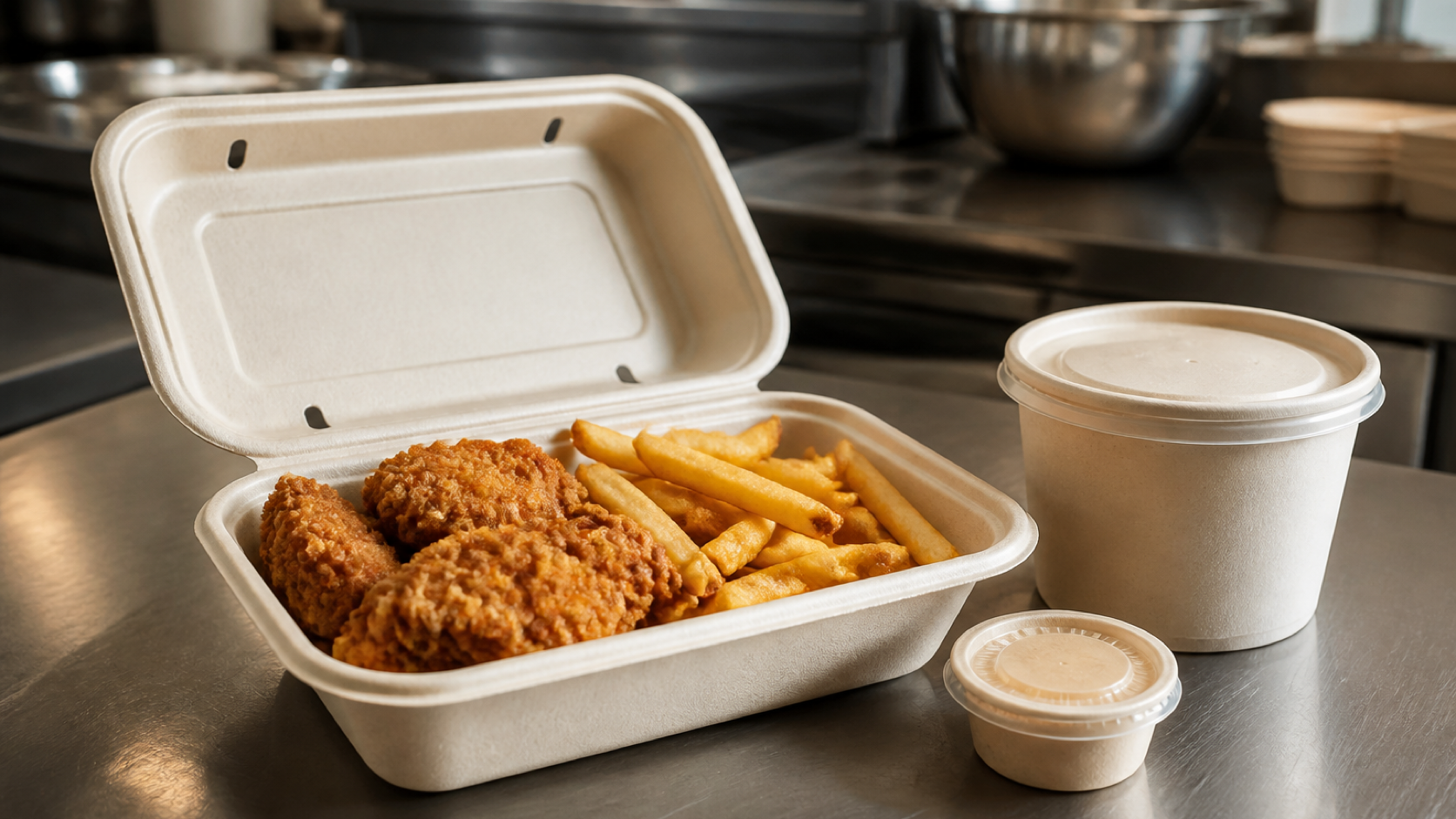
The direct answer: choose by food behavior
A delivery order can leave the kitchen looking exactly right and reach the customer in a very different condition. Crisp fried chicken can soften, a pizza crust can lose its bite, and a sauce that should stay contained can find its way across the bag. For multi-store restaurant groups, the practical question is not whether one container is ‘best.’ It is how to assign the right container and lid behavior to each component of a meal.
Use ventilation when trapped steam is likely to damage a dry, crisp exterior; use a sealed closure when the food needs to retain liquid or moisture. In a mixed order, that often means using more than one packaging format rather than forcing the entrée, sides, and sauces into the same environment.
Why hot crisp food changes in transit
Hot food releases moisture after it is packed. In a fully closed container, that moisture can collect on the lid and return to the food as condensation. Items with a fried coating, browned crust, or toasted surface are particularly sensitive because the eating experience depends on that exterior staying relatively dry.
A vented format gives steam a route out of the pack. It is not a universal cure for a long delivery journey, and its effect should be evaluated with the actual menu and route conditions, but it addresses a clear packaging mismatch: a moisture-sensitive item held in an environment that traps steam.
This is why packaging decisions should be tested with a realistic packed order—not just an empty container on a supplier sample table. The menu, fill level, holding time, bagging arrangement, stacking, and courier handling all affect what the customer finally receives.
Foods that usually benefit from venting
Ventilation is most relevant when a dish’s outside texture is a key part of its quality. Common examples include fried chicken, fries, breaded seafood, egg rolls, tempura, and other crisp fried items. It can also be worth considering for baked or toasted menu items such as pizza, quesadillas, panini-style sandwiches, flatbreads, and roasted potatoes.
The useful decision question is not the food category alone. Ask: would extra humidity noticeably reduce the intended texture? If the answer is yes, a vented container or lid configuration is a candidate for testing.
For a meal that combines a crisp entrée with a wet accompaniment, keep the components physically separate where the menu permits. Separation reduces the chance that steam, sauce, or direct contact changes the crisp component before it is opened.
When a sealed lid is the better choice
Venting is not appropriate for every hot item. Foods that need to stay contained, moist, or protected from drying call for a different approach. Soups, stews, curries, braised dishes, heavily sauced pasta, and gravies should be evaluated with a sealed container-and-lid combination. Their delivery risks are leakage and moisture loss, not a crisp coating becoming soft.
Cold foods also generally do not need steam release. Salads, chilled bowls, cold deli items, and cold sauces should be selected around the needs of the specific food and the delivery setup, with an emphasis on keeping components separate and preventing spills where necessary. Plain rice and noodles may also be poor candidates for venting during a longer hold because losing moisture can work against the intended eating quality.
The principle is directional rather than absolute: vent dry, texture-sensitive hot food; seal liquid-heavy, moisture-dependent, or spill-sensitive food. The final choice still needs a menu-specific delivery test.
A vent-or-seal decision matrix by food type
Use this framework to choose formats for a trial. It is a directional shortlist, not a universal product rule; the actual dish, fill level, delivery route, and handling conditions still determine the final choice.
| Food type | Main delivery concern | Format to evaluate |
|---|---|---|
| Fried chicken, fries, breaded seafood, egg rolls, or tempura | Extra humidity can reduce the intended crisp exterior | A vented container or lid configuration |
| Pizza, quesadillas, panini-style sandwiches, flatbreads, or roasted potatoes | Trapped steam can affect a browned, baked, or toasted surface | A vented format where the menu-specific trial supports it |
| Soups, stews, curries, braised dishes, sauced pasta, or gravies | Leakage, moisture loss, and containment | A sealed container-and-lid combination |
| Salads, chilled bowls, cold deli items, or cold sauces | Separation and spill prevention rather than steam release | A format selected for the specific food and delivery setup |
| Plain rice or noodles during a longer hold | Moisture loss can work against the intended eating quality | A more closed format to evaluate rather than assuming venting is suitable |
Build the meal as a packaging system
A reliable multi-component order is usually a set of coordinated parts rather than one universal box.
- Crisp entrée or dry side: consider a vented configuration when the item is hot and its exterior needs to stay dry.
- Saucy entrée: use a container and lid combination designed to remain closed for the intended fill level and delivery handling; validate it with the actual dish.
- Sauces, dressings, and dips: place them in separate cups with matching lids rather than letting them travel loose inside the main food container.
- Hot and cold components: separate them within the order so that heat, moisture, and movement from one component do not undermine another.
For chain operators, a short SKU shortlist should also record the menu item, food condition at packing, intended fill level, lid pairing, outer-bag position, and test result. That creates a usable operating specification for stores instead of a one-time purchasing decision.
Why the delivery window matters
The longer an order spends between packing and opening, the more important these choices become. Delivery-first operations and ghost kitchens have little opportunity to recover the customer experience once the bag leaves the counter. In that setting, packaging is part of how the menu performs.
Before rolling out a new format across locations, test a representative group of stores and routes. Compare the same item in a candidate vented or sealed setup after a realistic hold, then record texture, visible condensation, leakage, lid security, packing speed, and customer-facing presentation. The goal is not to assume that a vent or a sealed lid works in theory; it is to choose the configuration that works for the chain’s actual order.
Work with TakeawayPack on a testable shortlist
TakeawayPack is a food-service packaging brand and sourcing coordinator that works with multiple packaging manufacturers. Its online catalog includes cups, bowls, boxes, containers, trays, lids, bags, and cutlery. For a delivery-menu project, TakeawayPack can discuss product structure, coating, capacity, lid matching, printing, and carton packing during the inquiry stage.
To make the discussion productive, prepare the menu components, required capacity or dimensions, expected order quantities, any branding requirements, destination country or port, and the delivery conditions to be tested. TakeawayPack’s RFQ process can collect those inputs, and the team can provide samples, drawings, or print-file alignment during project discussions. For custom printing, production proceeds only after the customer has confirmed a digital proof in writing.
That evidence-led process helps procurement teams compare a practical shortlist around the real trade-off: preserve crispness where humidity is the risk, retain containment where liquids are the risk, and validate every container-and-lid pairing in the delivery conditions the restaurants actually operate.
Share the menu, quantities, destination, and delivery-test conditions to discuss a testable vented-and-sealed shortlist.