Factory-Direct Food Packaging from China: A 2026 Verifiable Buyer’s Field Guide
Buying food packaging factory-direct from China lands 30–50% below Restaurant Depot case pricing — but only if you can verify what you’re paying for. This 2026 field guide walks a US foodservice buyer through six verification checkpoints, with actual public URLs and worked examples.
2026-07-20 - 8 min read
Why Factory-Direct Actually Matters in 2026
Factory-direct pricing lands 30–50% below the case pricing you’d see at a US stock retailer — provided lead time and MOQ fit your operation. Here’s the arithmetic that keeps coming up in our RFQ inbox.
A 16 oz kraft bagasse takeout container bought from a US foodservice stock retailer — Restaurant Depot, WebstaurantStore, or a comparable distributor — typically prices in the mid-to-high $0.60s to low $0.80s per piece at case quantities. Buy the same physical product factory-direct from a Chinese manufacturer with FSC chain-of-custody paperwork, at a 10,000-piece container quantity, and the landed price — factory FOB plus ocean freight plus US inland trucking plus duties — typically comes in around $0.24 to $0.56 per piece, depending on material spec, print complexity, and current freight rates. Actual pricing depends on the SKU and the quote you receive; treat these bands as directional, not fixed.
Two conditions need to be true for that arithmetic to work. First, you need to hold the inventory. A 20-foot container ships roughly 15,000–25,000 pieces depending on the SKU. If you burn 800 pieces a week, an entire container is 3–6 months of stock and you don’t have the pallet space. Retailer case pricing is doing exactly what it’s designed to do — buffering the physical inventory problem for you.
Second, you need 4–6 weeks of lead time. Factory-direct means production-to-order, not shelf-to-truck. A typical timeline: RFQ (0–3 days) → sample (7–14 days) → PO (3–7 days) → production (18–25 days) → ocean freight (14–18 days) → US customs and inland (5–10 days). Total: roughly 48 to 78 days from RFQ to delivery. If you need product in nine days, this isn’t your channel.
Assuming both conditions clear, the real question isn’t “should we buy factory-direct?” It’s “how do we tell an actual factory from a reseller pretending to be one?” Every Chinese supplier’s About page says “factory-direct.” In reality, some are trading companies renting a webpage, and some are export offices that share a parking lot with a plant they’ve never set foot in. The six checkpoints below are what an experienced sourcing agent runs before signing the first PO.
What “Factory-Direct” Actually Means: Three Tiers
Factory-direct spans three tiers, each with different economics and verification bars.
Tier 1: Stock retailer or distributor. Restaurant Depot, WebstaurantStore, Webstaurant, Cascades foodservice division. Case pricing, no MOQ, 24–48 hour fulfillment, no customization. Marks up 40–80% over factory.
Tier 2: Custom shop / trading company. MOQ 50–500 pieces, 2–4 week turnaround, marks up 30–60%. Often owns a print station but sub-contracts pressing to real factories. Useful for very small runs; not the economics you’re after at container quantities.
Tier 3: True factory-direct. MOQ typically 1,000 pieces for paper products (5,000 for bags), 4–6 week production, direct from the pressing floor. This is where the 30–50% pricing gap opens up, and where verification matters most because the seller can no longer point at a middleman when something goes wrong.
Six Things to Verify Before You Sign a PO
Each of the six checkpoints below takes 5–15 minutes and uses a public verification URL. Do all six on the same supplier and you have a defensible answer to the “is this real?” question.
1. FSC Chain of Custody Verify at: info.fsc.org Ask the supplier for the FSC-COC number. Format looks like GFA-COC-006105 or SGS-COC-######. Enter it at info.fsc.org’s certificate lookup. You should see the certificate holder’s legal name, scope (chain of custody), issue date, and expiry. Cross-check the legal name against the entity that will invoice you. Red flag: the supplier can only show a PDF of the certificate, not the info.fsc.org lookup.
2. Food-contact safety (FDA CFR 21 / EU 10/2011) Ask for the third-party test report, not a self-declaration. Legitimate suppliers use SGS, Intertek, TÜV, or Bureau Veritas for food-contact migration testing. The report should reference either 21 CFR 176.170 (paper-based) or 21 CFR 177.1520 (polymer-based) for US sale, or EU Regulation 10/2011 for EU sale. Red flag: the phrase “FDA approved” — the FDA does not approve food packaging. Anyone using that phrase is either careless or misleading.
3. Compostable claim (if applicable) Verify at: products.bpiworld.org (US) · tuv-at.be (EU industrial) · okcompost.be (EU/UK home) Compostable is the most-abused claim in the industry. If a supplier calls a product “compostable” without a specific certification number, it isn’t. BPI is the US market standard; EN 13432 (verified via TÜV OK Compost INDUSTRIAL) is EU industrial; OK Compost HOME covers UK/EU household composting. Red flag: “biodegradable” as a stand-alone claim without a certification. In California, that phrase alone violates SB 567.
4. Factory identity (ISO 9001 / ISO 14001) Verify at: certcheck.ukas.com (for UKAS-accredited certifiers) Ask for the ISO 9001 certificate number. UK-accredited certificates look like AMTIVO/CN/230230 (Amtivo Group, UKAS accreditation #8289). Enter at certcheck.ukas.com. You’ll see certificate holder, scope, and validity. The legal name on the certificate should match the entity that owns the physical factory — not the trading arm. Red flag: ISO cert holder legal name differs from the invoicing entity.
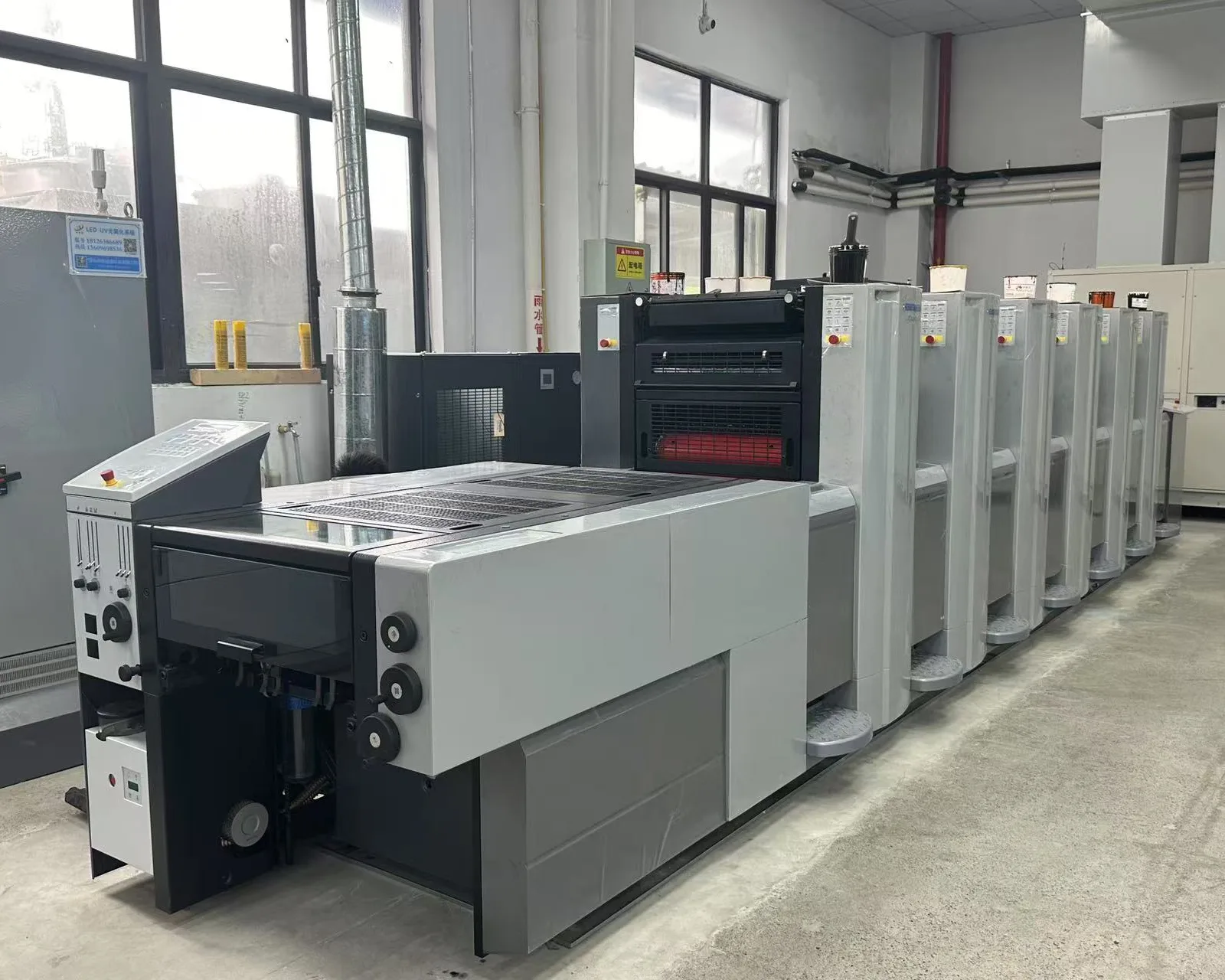
5. Manufacturing capability (press make and model) Ask for the printing press make and model. A serious foodservice printing operation runs a Heidelberg CD 102-6+LX, a Komori Lithrone GX, or a KBA Rapida. These are $2–4M capital investments; a trading company doesn’t own one. Then ask for a photo of the press with the operator on-shift and a visible serial plate. Follow up with a video walkthrough on WeChat or WhatsApp. A real factory does this in ten minutes; a reseller will delay, offer stock photos, or blur the serial plate. Red flag: stock photos, refusal to show the press area, only office/showroom photos.
6. Recycled content claim (GRS) Verify at: textileexchange.org/certificates If the supplier claims recycled content (post-consumer recycled paper or plastic), ask for the GRS (Global Recycled Standard) certificate number. Format: TE-######## (Textile Exchange scope certificate) plus the TÜV Rheinland transaction certificate. Enter at textileexchange.org’s certificate registry. Red flag: vague “eco-friendly / made from recycled materials” without a GRS number.
One Example That Meets All Six
TakeawayPack’s primary manufacturing partner, Zhejiang Chenglong Printing Co., Ltd., holds FSC Chain-of-Custody (GFA-COC-006105, GFA Certification GmbH), GRS 4.0 (TE-00121899, TÜV Rheinland licensed by Textile Exchange), ISO 9001:2015 (AMTIVO/CN/230230, UKAS #8289 accredited), and China National High-Tech Enterprise (GR202333008467). Each certificate is verifiable via the public URLs listed above.
The press floor runs Heidelberg CD 102-6+LX with in-line coating. Ink options are water-based and soy-based. Materials cover kraft paper, paperboard, bagasse, CPLA, PLA, PE-lined kraft, and recycled paper/plastic. MOQ is 1,000 pieces for paper products, 5,000 for bags. Sample turnaround is 7–14 days.
Legal-entity note: Zhejiang Chenglong Printing Co., Ltd. is the current legal name. Some historical certificates were issued under the previous legal name from before the change; the name-change record is available on request. When you run any of the six checks above against a historic certificate, this is the connection to look for.
This is not a pitch — it’s a worked example of what “verified all six” looks like in practice. Every one of those certificate numbers can be checked before you send us a deposit.
Red Flags That Should Kill the Deal
• “We are the factory” — no visible address, no press photo, no serial plate. • Certifications shown only as images, no verifiable number for lookup. • MOQ inconsistent with product line (an FSC-certified paper mill quoting 100-piece runs is a reseller). • Refuses to share press make and model. • No chain-of-custody claim for FSC or GRS despite listing the certificate. • “FDA approved” language. • Compostable claim without a specific BPI / TÜV / OK Compost number.
How This Applies Globally
The six checkpoints are region-neutral — the framework works whether you’re a US, UK, EU, or Australian buyer. The specific certifications that count vary by market:
• US — FDA CFR 21 (176.170 / 177.1520), BPI (compostable), FSC, GRS. • UK — UKCA (food-contact), FSC, OK Compost HOME (for household composting claims). • EU — Regulation 10/2011 (food-contact), EN 13432 (industrial compost), FSC, EUDR (Deforestation Regulation from 2025). • Australia — FSANZ Food Standards Code, AS 4736 (compostable), FSC.
TakeawayPack’s own markets served include US, UK, Europe, and Oceania, and the underlying supplier network holds certifications valid in each — but you should still run all six checkpoints yourself before signing.
When This Guide Applies — and When It Doesn’t
Applies: • Annual purchase ≥ 100,000 pieces • Customization needed (sizes, branding, material spec) • 4–6 weeks lead time is acceptable • Compliance requirement exists (FDA, BPI, FSC, etc.)
Does not apply: • Urgent replenishment (< 48 hours) • Order size below 1,000 pieces total • No compliance requirement (pure commodity buy from a retailer is fine) • EU-only sale with a need for local warehousing
Next Steps
Run the six-checkpoint framework on any Chinese supplier you’re considering before you send the first deposit. All six checks use free public verification URLs; the full cycle takes an experienced buyer roughly 90 minutes.
If you’d like a verified factory-direct quote — with all six certifications ready for you to check yourself before you commit — send an RFQ at /contact with your material, MOQ, target market, and lead time. Verified quotes back in 48 hours.
Full certification detail (including verify URLs and licensed certifier names) is at /certifications-materials. To see production-side evidence — press floor, workflow, sample-approval process — see /direct-factory.
Related reading: Beyond the certificate: how to ensure quality control when sourcing food packaging overseas · Stop shipping empty air: how to reduce freight costs on food packaging sourcing · Plastic food container sourcing: a B2B buyer’s guide for restaurants and takeaway brands